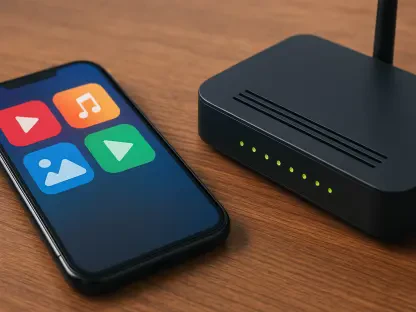

The persistent friction between corporate communication requirements and the user preference for a native smartphone interface has finally met its match in the rise of SIM-based UCaaS technology. This innovation represents a significant advancement in the unified communications sector by integrating cloud-based PBX features directly into a mobile device identity. By merging cellular carrier infrastructure with cloud intelligence, organizations can provide a seamless communication experience that maintains corporate oversight without sacrificing the user experience.
The Evolution of Mobile-Native Enterprise Communication
Mobile SIM-Based UCaaS emerged to resolve the inherent limitations of traditional “softphone” applications. In the past, business mobility relied on third-party apps that often suffered from inconsistent performance and high battery drain. This technology shift embeds enterprise functionality into the physical SIM or eSIM, allowing the business identity to reside within the phone’s primary dialer.
This evolution is driven by the realization that employees prioritize the intuitive, reliable interface of a phone’s native system over secondary applications. By utilizing the SIM as the anchor for business identity, companies effectively turn every smartphone into a full-featured extension of the corporate network. This convergence allows for the simultaneous management of personal and professional personas without the technological “clutter” of traditional VoIP apps.
Technical Components and Core Functionalities
Native Carrier Integration and Audio Quality
The cornerstone of this architecture is its reliance on cellular carrier networks rather than data-dependent Voice over IP. Unlike traditional UCaaS models, calls are prioritized over the carrier voice network, which ensures superior audio clarity even in areas with fluctuating data speeds. This prioritization eliminates jitter and latency, providing a level of reliability that standard mobile apps cannot match.
Furthermore, native integration facilitates seamless handovers between cell towers and Wi-Fi networks. Because the call is handled at the network layer rather than the application layer, the risk of dropped calls during movement is significantly reduced. This technical stability is particularly vital for professionals who operate in environments where high-speed data is not always guaranteed.
Enterprise Governance and Compliance Capture
A critical component of this technology is its ability to bridge the gap between mobility and corporate policy. Because the business identity is tied to the SIM, IT departments can automatically capture call logs and record conversations for legal purposes. All metadata is funneled back into the company CRM, ensuring that mobile interactions are no longer “dark data” outside of administrative view.
This level of control was previously difficult to maintain when staff utilized personal numbers for business tasks. The SIM-based approach provides a structured environment where privacy and compliance coexist. It allows the organization to own the business number and the associated data, while the employee retains control over their personal communications on the same physical device.
Market Trends: The Shift Toward Mobile-First Architecture
The enterprise landscape is currently experiencing a pivot toward “mobile-first” architecture as the primary mode of operation. Major industry players like Cisco Webex, RingCentral, Zoom, and Vonage are forming strategic partnerships with global carriers such as AT&T and Vodafone. This trend reflects an industry-wide realization that the app-heavy approach is no longer sufficient for a workforce that demands instant connectivity.
Moreover, the push for AI-ready data is influencing this shift significantly. Clean, carrier-grade audio is now viewed as a prerequisite for effective automated transcription and sentiment analysis tools. As businesses increasingly rely on AI to derive insights from conversations, the demand for the high-fidelity voice data provided by native SIM integration continues to grow.
Real-World Applications and Industry Use Cases
Public Safety and Institutional Deployment
The technology has seen successful implementation in sectors where mobility and accountability are paramount. For instance, the North Wales Police transitioned to a SIM-based architecture to allow officers to conduct official business directly from the field. This change increased their community presence by reducing the need for administrative desk work and ensuring all official communications remained within the secure institutional ecosystem.
Similarly, the University of Central Florida utilizes this architecture to extend office lines to faculty mobile devices. This ensures that all communications are captured for AI-driven processing and recording, maintaining institutional standards regardless of the user’s location. Such deployments demonstrate the technology’s ability to support complex logistical requirements in high-stakes environments.
Field Services and Customer Trust
In the field services sector, companies are using SIM-based UCaaS to improve customer engagement and trust. Technicians can present a corporate caller ID through their native dialer rather than a personal or blocked number, which significantly increases call answer rates. This ensures that the professional identity is maintained at all times, fostering better relationships with clients.
Additionally, this setup ensures that field data is integrated into corporate records in real-time. By streamlining the workflow between off-site staff and central operations, businesses can respond more quickly to customer needs. The integration of the native dialer with backend CRM systems means that every interaction is logged without requiring manual entry from the technician.
Implementation Challenges and Market Obstacles
Despite its advantages, the adoption of SIM-based UCaaS faces several logistical hurdles. Technical deployment requires careful planning, particularly regarding the management of dual-SIM configurations. Employees must be trained to distinguish between business and personal usage on a single device to avoid privacy concerns or accidental professional use of personal lines.
There are also market obstacles such as additional monthly carrier fees and the initial complexity of porting numbers to a SIM-native environment. While often more economical than paying separate mobile stipends, the recurring costs and the need for compatible hardware remain considerations for smaller enterprises. Organizations must weigh these setup costs against the long-term gains in productivity and data integrity.
Future Outlook and Technological Trajectory
The trajectory of SIM-based UCaaS is closely tied to the advancement of 5G and the deepening integration of Artificial Intelligence. As carrier networks become more programmable, we can expect breakthroughs in real-time language translation integrated directly into the network layer. This will allow for seamless global communication without the need for external processing apps.
Long-term, this technology is likely to make the traditional desk phone obsolete. As the mobile SIM becomes the primary, secure gateway for all professional communication, the need for static hardware diminishes. The focus will shift toward creating more sophisticated AI-driven call summarization and task automation that operates silently in the background of every carrier call.
Assessment of the Current UCaaS Landscape
In summary, SIM-based UCaaS functioned as a strategic bridge between user convenience and corporate necessity. It successfully solved the native experience gap that hindered mobile productivity for years. The technology’s ability to provide high-quality audio and secure data for AI analysis served as a catalyst for deeper organizational insights. As carrier-cloud partnerships matured, this integration provided a clear path for companies to modernize their communication infrastructure while respecting the habits of a mobile-first workforce. Moving forward, the focus should shift toward refining these network-level integrations to further automate the capture of business intelligence.