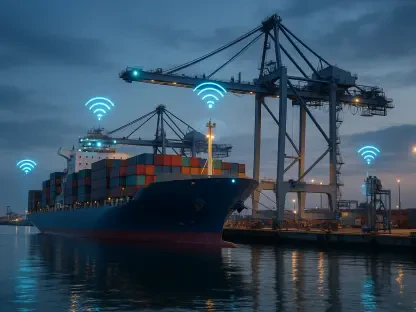

The transition of the Matter protocol from a residential convenience to a robust industrial standard represents a fundamental shift in how large-scale enterprises manage their interconnected hardware ecosystems. While early iterations focused on the interoperability of light bulbs and smart plugs within the home, the arrival of Matter 1.6 introduces the technical maturity required for factories, warehouses, and logistics centers to operate at peak efficiency. This evolution addresses the chronic fragmentation that has long plagued the industrial Internet of Things, providing a unified communication language that bridges the gap between disparate brands and specialized equipment. By standardizing these interactions, the protocol enables facility managers to deploy thousands of devices across expansive environments without the typical bottlenecks associated with proprietary silos. This shift is not merely about connectivity; it is about creating a scalable, secure framework that handles the immense data throughput and administrative complexity inherent in modern industrial operations.
Streamlining Large-Scale Installation and Logistics
Enhanced Commissioning Efficiency. One of the most transformative elements introduced in this version is the adoption of bi-directional Near-Field Communication commissioning, a feature that directly addresses the logistical nightmares faced by technicians during the construction of massive industrial sites. Previously, the setup of environmental sensors or lighting controllers often required an active wireless signal or permanent building power to be fully operational, forcing crews to delay final configuration until the very end of the project. This new one-pass methodology allows electrical contractors to use portable handheld terminals to program and authorize hardware while the devices are still unpowered and inside their shipping containers. This pre-configuration means that as soon as the main breakers are flipped and the network goes live, the entire fleet of devices establishes secure connections instantly. Such a capability effectively decouples the physical mounting of equipment from the digital enrollment process, streamlining the labor workflow significantly.
Economic Impact of Standardized Commissioning. Beyond the immediate technical convenience, the move toward standardized commissioning significantly lowers the barrier to entry for small-to-medium enterprises looking to modernize their logistics operations. By reducing the number of hours specialized engineers must spend on-site, companies can allocate their human capital toward more complex integration tasks rather than repetitive manual pairing. This efficiency becomes even more pronounced when managing thousands of endpoints in a single distribution center where the cost of a configuration error can lead to days of downtime. The protocol ensures that once a device is tapped and verified via NFC, its identity is anchored within the system, eliminating the risk of mismatched hardware during the final power-up phase. This systematic approach to deployment ensures that industrial projects remain on schedule and within budget, even as the density of smart hardware per square foot continues to climb in modern automated facilities.
Facilitating Multi-Admin Control and Asset Handover
Joint Fabric Architecture. The complexity of managing high-density environments is further mitigated by the introduction of the Joint Fabric model, which redefines how multiple administrative entities interact with a single device. In traditional setups, granting control to different departments often led to memory exhaustion on the hardware level or necessitated the use of multiple gateways that complicated the network map. This update allows for a shared datastore architecture where various authorized controllers can manage the same set of actuators and sensors without overwhelming the local processing power of individual endpoints. For instance, an IT department can monitor network health while a facilities team manages climate control on the same hardware mesh. This collaborative environment is secured through a robust administrative hierarchy that ensures every action is logged and every permission is clearly defined. This creates a highly efficient operational ecosystem where data flows freely to those who need it.
Simplified Ownership Transitions. This architectural shift also provides a definitive solution to the long-standing friction between general contractors and facility owners during the final project handover phase. Traditionally, transferring ownership of a smart infrastructure involved tedious manual resets or the handover of insecure master passwords, which often compromised the initial security posture of the building. With the new shared fabric capabilities, a contractor can simply provision the owner’s internal IT department as a primary administrator through the centralized datastore. This process allows the new management team to inherit a fully functional system while retaining the ability to revoke the contractor’s temporary credentials instantly. This seamless transition ensures that no gaps in monitoring or security occur during the change of leadership. It also allows for the long-term maintenance of the system to be handled by third-party vendors without requiring them to have permanent access.
Advancing Operational Intelligence and Safety Auditing
Intelligent Climate Management. Operational intelligence reaches a new milestone through the implementation of advanced thermostat suggestions, which act as a safeguard against conflicting automated commands in large-scale HVAC systems. In a typical industrial plant, multiple energy-saving programs and environmental sensors may attempt to adjust temperatures simultaneously, sometimes leading to inefficient or even hazardous conditions. The current specification allows the hardware itself to evaluate these incoming suggestions against a pre-defined set of local safety rules and physical operational limits. If an external system proposes a temperature change that would stress the equipment or violate safety protocols, the device can intelligently reject the command. Instead of a silent failure, the hardware provides a detailed explanation to the network administrator, explaining why the suggestion was not implemented. This capability prevents accidental damage to sensitive cooling systems and ensures that efficiency goals do not override safety.
Automated Physical Integrity Audits. Safety auditing is equally bolstered by the inclusion of the unmounted state indicator, a feature designed to maintain the physical integrity of safety-critical hardware across vast floor plans. In environments like chemical storage or heavy manufacturing, the correct placement of smoke, carbon monoxide, and air quality detectors is legally mandated and essential for worker protection. The protocol now enables these devices to detect if they have been knocked off their mounting brackets or tampered with by unauthorized personnel, sending an immediate alert to the central management dashboard. This digital oversight eliminates the need for frequent, time-consuming physical inspections in hard-to-reach areas, such as high ceilings or behind large machinery. By automating the verification of physical presence and orientation, safety officers can focus on actual hazard mitigation rather than routine hardware checks. This ensures that the facility remains in constant compliance with industrial safety standards.
Optimizing Security and Network Scalability
Partitioned Revocation and Performance. Security management undergoes a major optimization with the use of partitioned revocation lists, which address the performance bottlenecks typically seen in massive device networks. As the number of endpoints grows into the thousands, broadcasting a complete list of revoked or compromised device certificates can consume significant bandwidth and slow down the entire system. To prevent this, the new specification allows security administrators to segment these lists and push only the relevant updates to specific sections of the network. This targeted approach ensures that compromised hardware is blocked almost instantly without flooding the rest of the communication channels with unnecessary data traffic. By keeping the overhead low, the network remains responsive and agile, even during high-traffic periods or active security incidents. This tiered security model provides the flexibility required for enterprise-grade defense-in-depth strategies, ensuring that local failures do not escalate.
Strategic Roadmap for Enterprise Resilience. Industry leaders recognized that the path to true industrial automation required moving past the experimental phase and into a period of standardized reliability. By adopting these new features, technical directors established a clear roadmap for integrating legacy systems with modern, interoperable hardware. The implementation of Matter 1.6 successfully demonstrated that complex facilities could be managed with the same ease as residential homes while maintaining enterprise-level security and safety. Strategic planners moved to audit their existing sensor networks to identify which segments would benefit most from the new NFC and shared fabric capabilities. This proactive approach paved the way for a more integrated industrial landscape where hardware limitations no longer dictated the pace of digital transformation. Moving forward, the focus shifted toward utilizing the newfound data transparency to feed predictive maintenance models and autonomous optimization algorithms.