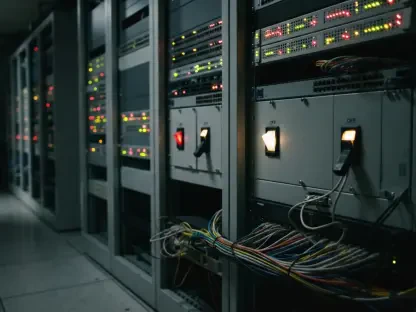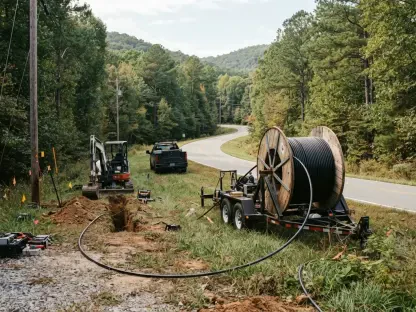

The corporate world stands on the precipice of a massive technological revolution where autonomous agents manage complex workflows, yet the physical wires and servers beneath these systems are quietly buckling under the pressure. Currently, organizations find themselves trapped in a high-stakes disconnect where the fervor for deploying autonomous agents far exceeds the actual physical capacity to host them. While nearly every executive recognizes agentic AI as the definitive future of business operations, a skeletal 23% of companies possess the hardware and software foundations to make it work.
This significant gap is not merely a technical oversight; it represents a deepening financial drain. Early adopters are already sliding into the red as infrastructure costs spiral well beyond initial projections. Without a stable foundation, the ambition to automate decision-making remains a costly aspiration rather than a functional reality.
The 96% Paradox: Why Ambition Outpaces Ability
Most organizations are caught in a mismatch between strategic goals and technical reality. While 96% of leaders view agentic systems as essential, the lack of robust infrastructure creates a bottleneck that prevents these tools from moving beyond the pilot phase. This discrepancy often leads to “shadow AI” deployments that lack the oversight needed for enterprise-grade security.
Furthermore, the financial implications are becoming impossible to ignore. As firms attempt to force sophisticated agents onto legacy hardware, the resulting inefficiencies drive up energy consumption and maintenance costs. This fiscal pressure forces many to reconsider their deployment timelines, as the hidden costs of inadequate preparation begin to outweigh the projected benefits of automation.
The Shift from Generative to Agentic Requirements
Understanding the failure of current systems requires a look at how AI consumes data. Unlike standard generative models that provide static answers, agentic AI functions as a continuous reasoning engine that interacts with multiple systems in real-time. This evolution renders traditional data dashboards and legacy telemetry systems obsolete, as they lacked the design to handle the velocity of autonomous decision-making.
The shift requires a move toward systems that prioritize low-latency processing and high-bandwidth connectivity. These agents do not just respond to prompts; they navigate complex environments, requiring a level of digital agility that traditional stacks cannot provide. Consequently, the hardware requirements have transitioned from simple storage to active, high-speed computation.
Breaking the Operational Black Box and Managing Data Velocity
The transition is triggering an unprecedented surge in telemetry data, with many firms seeing their data loads more than double almost overnight. These massive volumes create “operational black boxes” where the logic behind an AI action becomes impossible to trace, leading to significant risks in oversight. Organizations must address a 30% annual growth in data while grappling with stagnant budgets and a shortage of specialized talent.
Management teams are finding it difficult to maintain accountability when underlying processes are obscured by data noise. As agents take more control, the need for transparent telemetry becomes paramount to ensure safety and regulatory compliance. Without this visibility, the risk of “hallucinations” or logical errors in the agent’s reasoning goes undetected until a failure occurs.
Evidence of the Infrastructure Deficit
Research highlights the severity of the preparation gap, noting that 76% of organizations struggle with increased data loads that threaten to overwhelm current stacks. Experts agree that the “plug-and-play” era of AI has ended. Without a fundamental re-engineering of the environment, companies will hit an “operational ceiling” where performance plateaus despite increased investment.
The primary barrier to success is no longer the complexity of algorithms, but the fragility of systems they run on. Scaling these initiatives requires more than just faster chips; it requires a holistic rethink of how information flows through the enterprise. Firms that ignored this structural reality saw their projects fail during the integration phase.
Frameworks for Re-Engineering Your Data Ecosystem
To bridge the gap, leadership shifted focus from purchasing isolated tools to building interoperable platforms. This transition required moving away from historical data silos toward flexible architectures that merged human input with machine-generated telemetry. Organizations began auditing their telemetry foundations to ensure they could support multi-system reasoning and invested in privacy-centric pipelines.
Future success depended on the ability to scale alongside the 30% annual growth rate of corporate information. By prioritizing high-speed, real-time analysis, businesses moved toward a model where infrastructure served as a catalyst for innovation rather than a bottleneck. Leaders prioritized interoperability to ensure that every agentic action remained visible and justifiable to stakeholders.