
The ubiquity of high-speed wireless connectivity in 2026 has transformed the average household into a dense hub of invisible data streams, yet the humble copper cable remains an indispensable tool for those demanding peak performance. While the convenience of roaming from room to room with a tablet or smartphone is undeniable, the physical limitations of radio waves often lead to frustration during bandwidth-intensive tasks. As smart home devices and high-definition streaming services continue to proliferate, the underlying infrastructure that supports these technologies must be both robust and consistent. Many users find themselves caught between the aesthetic appeal of a wire-free existence and the technical necessity of a stable connection that only a physical link can provide. This tension defines the current landscape of home networking, where the choice between Wi-Fi and Ethernet is no longer just about hardware, but about prioritizing either mobility or raw efficiency.
The Reliability: Physical Infrastructure
The fundamental reliability of a wired connection is derived from its ability to bypass the volatile nature of the unlicensed radio spectrum used by wireless devices. In a world where every household appliance and neighbor’s router competes for a limited amount of airtime, physical cables provide a dedicated, interference-free highway for data. This physical isolation ensures that signal strength does not fluctuate based on environmental factors like wall density, distance, or electromagnetic noise from high-voltage equipment. For professionals and power users, the peace of mind that comes from a guaranteed connection is invaluable, particularly when executing tasks that require absolute uptime. By establishing a fixed infrastructure, users can avoid the unpredictable dead zones that often plague even the most advanced mesh Wi-Fi systems. This commitment to physical connectivity serves as a baseline for any high-performance network, ensuring that core devices remain accessible regardless of external conditions.
Technical Stability: Historical Continuity
The technical maturity of the Ethernet standard, governed by the IEEE 802.3 protocols, provides a level of stability that wireless technologies are still struggling to replicate in high-interference environments. Because a wired connection relies on twisted pair cabling to transmit pulses of electricity, the transmission path is entirely enclosed and protected from the unpredictable disruptions of the open airwaves. Unlike Wi-Fi, which must constantly negotiate for channel space and manage signal collisions, Ethernet operates with a high degree of efficiency that minimizes packet loss. This structural advantage is why the technology has remained relevant for decades, evolving from simple coaxial cables to the sophisticated Category 6a and Category 8 standards used today. For tasks that involve transferring massive datasets or maintaining a continuous stream of information, the lack of signal attenuation over distance makes Ethernet the most reliable choice for a backbone.
Beyond the enclosure of the signal, the physical isolation of Ethernet ensures that data transmission remains immune to common environmental factors that typically degrade wireless performance. In urban settings where dozens of neighboring routers compete for the same frequency bands, the airtime fairness issues inherent to wireless protocols can lead to significant drops in throughput. A physical cable effectively eliminates this competition by providing a dedicated lane for information that is not shared with any other device or network. This consistency is particularly important for maintaining a stable ping or latency, which is the time it takes for data to travel from the device to the server and back. By establishing a fixed infrastructure, users can avoid the unpredictable signal fluctuations that often plague even the most advanced wireless access points, ensuring that every connected device performs at its absolute theoretical maximum without interference.
Operational Consistency: Enterprise Standards
In professional sectors where operational downtime can lead to catastrophic financial or safety consequences, the reliance on physical infrastructure is not merely a preference but a mandatory requirement. Hospitals, for instance, utilize wired connections for diagnostic imaging equipment to ensure that large medical files are transmitted instantly without the risk of dropouts during critical surgical procedures. Similarly, financial trading platforms rely on the ultra-low latency provided by fiber-optic and copper Ethernet to execute transactions in microseconds, where even a slight delay in a wireless signal could result in significant losses. This institutional trust in wired networks stems from the fact that physical cables offer a predictable performance profile that does not fluctuate based on the number of devices in the vicinity. While wireless systems have improved, they still cannot offer the 99.999% uptime that modern enterprise-grade switches provide.
The security benefits of a wired network further solidify its role in professional environments, offering a formidable barrier against unauthorized access that wireless signals cannot inherently provide. Because Wi-Fi signals travel through walls and into public spaces, they are susceptible to various forms of interception, such as packet sniffing or man-in-the-middle attacks, even with modern encryption. In contrast, gaining access to a wired network requires a physical connection to the hardware, making it significantly more difficult for an external actor to infiltrate the system without detection. This is particularly relevant in high-density office complexes where the volume of detectable wireless networks creates a target-rich environment for malicious actors. By keeping data within the confines of a physical cable, organizations maintain a much higher level of privacy and control, ensuring that sensitive proprietary information remains protected.
Performance Advantages: Wired Connections
Achieving the maximum throughput promised by modern internet service providers often requires bypassing the wireless gateway entirely in favor of a direct wired link. While Wi-Fi 7 and subsequent iterations advertise impressive theoretical speeds, these numbers are frequently halved or even quartered once the signal encounters a single interior wall or moves a few meters away from the access point. Ethernet connections using Cat6a or Cat7 standards easily support 10Gbps speeds over significant distances without any measurable degradation in performance. This makes a wired connection the only viable option for power users who frequently engage in 8K video editing, large-scale cloud synchronization, or competitive gaming where every millisecond of jitter can impact the outcome. By eliminating the overhead associated with wireless encryption and collision avoidance protocols, Ethernet provides a raw, unadulterated stream of data that allows the hardware to operate at its full potential.
Unlocking Speed: Maximum Throughput
For the gaming community and creative professionals, the reduction of latency and jitter is the most compelling reason to maintain a wired connection to their primary workstations. In competitive online environments, the ping or delay between a user’s action and the server’s response can be the difference between victory and defeat. Wi-Fi signals are prone to sudden spikes in latency caused by other devices performing background updates or simply by someone moving between the router and the client. Ethernet provides a steady, low-latency path that ensures a smooth experience during high-stakes gaming or real-time collaborative video editing. Additionally, the ability to sustain high-speed uploads and downloads without interruption is critical for those who work with cloud-based assets or large media files. By removing the variables associated with wireless transmission, users can focus on their tasks with the confidence that their network hardware will not become a limiting factor.
The transition to multi-gigabit internet plans has further exposed the limitations of wireless hardware that cannot keep pace with the raw speed of fiber-optic delivery. While a consumer might pay for a 2Gbps or 5Gbps service, they will rarely see those speeds on a mobile device due to the bottleneck of the wireless interface. Ethernet acts as the primary conduit that allows the full potential of the internet connection to reach high-demand devices like network-attached storage units and media servers. This is especially important for households with multiple users who are simultaneously streaming 4K content, attending video conferences, and downloading large software updates. A wired backbone ensures that these activities do not conflict with one another, providing sufficient bandwidth for every task. By prioritizing wired connections for stationary hardware, the overall capacity of the home network is increased, preventing the slowdowns that occur when the wireless spectrum is overextended.
Strengthening Security: Data Privacy
In an era where digital privacy is increasingly under threat, the physical containment of data within an Ethernet cable offers a significant advantage over the broad broadcast nature of wireless signals. Wi-Fi networks, regardless of their encryption strength, are essentially radio stations that anyone within range can listen to, provided they have the right tools and persistence. Ethernet eliminates this specific vulnerability by ensuring that data only moves between connected ports on a switch or router. For home offices handling confidential client information or personal financial data, this physical layer of security is an essential component of a comprehensive defense-in-depth strategy. Furthermore, wired networks are immune to deauthentication attacks, a common technique used by hackers to disconnect devices from a Wi-Fi network. By relying on a physical tether, users can ensure their connection remains active and secure against most external wireless interference.
Practical implementation of a secure wired network also simplifies the management of smart home devices that may have weak built-in security protocols. Many Internet of Things devices, such as smart cameras and sensors, are notorious for having vulnerabilities that can be exploited if they are easily accessible over the airwaves. Connecting these devices via Ethernet where possible or isolating them on a wired segment of the network reduces the risk of a single compromised device providing a gateway to the rest of the home’s digital life. Additionally, a wired setup allows for more granular control over network traffic through the use of managed switches, which can monitor and block suspicious activity at the port level. This level of oversight is difficult to achieve with standard consumer wireless routers, making Ethernet a preferred choice for those who take a proactive approach to their digital security and want to minimize the potential for unauthorized network intrusion.
Practicality: The Modern Home
The primary drawback to a wired network in 2026 is the logistical complexity and aesthetic impact of managing physical cables throughout a modern living or working space. As architectural trends lean toward open-concept designs and minimalist interiors, the sight of blue or gray cables running along baseboards is often viewed as a significant downside. Professional installation, which involves fishing wires through drywall and installing wall plates, can be a costly and time-consuming endeavor that many homeowners are unwilling to undertake. Furthermore, the consumer electronics industry has largely moved toward an all-wireless philosophy, leading to the removal of RJ45 ports from the majority of thin laptops, tablets, and even some desktop monitors. This shift necessitates the use of docking stations or USB-C adapters, adding another layer of cost and clutter to the setup. Consequently, the convenience of Wi-Fi often outweighs the performance benefits for the casual user.
Overcoming Obstacles: Cable Management
Implementing a wired network requires a strategic approach to cable management to ensure that the infrastructure remains functional without becoming an eyesore. For those living in rented spaces where drilling through walls is not an option, creative solutions like flat Ethernet cables or decorative raceways have become popular methods for hiding wires along floors and ceilings. These products allow users to run high-speed connections to their primary devices while maintaining the aesthetic integrity of their living environment. In newer home constructions, the inclusion of structured cabling—where every room is pre-wired with Cat6a ports—has become a standard feature that adds significant value to the property. This foresight allows future occupants to simply plug in their devices and enjoy immediate, high-speed access without the need for additional renovations. For existing homes, focusing on key areas like the entertainment center or the home office provides the most significant performance gains.
The evolution of power-over-ethernet technology has also simplified the installation of peripheral devices like security cameras and wireless access points. By delivering both data and electricity over a single cable, this standard eliminates the need for separate power outlets near every device, reducing the overall complexity of the wiring project. This is particularly useful for mounting hardware in hard-to-reach locations like the eaves of a roof or high on a wall. Additionally, high-quality switches now feature silent, fanless designs that can be easily tucked away in a closet or under a desk without creating noise pollution. As more devices become compatible with these standards, the logistical burden of maintaining a wired network continues to decrease. For users who are willing to invest a small amount of effort into the initial setup, the long-term benefits of a clean and organized wired infrastructure far outweigh the temporary inconvenience of the installation process.
Hybrid Solutions: Maximum Flexibility
Rather than viewing these technologies as mutually exclusive, the most effective modern networking strategy involves a hybrid implementation that leverages the strengths of both systems. A common solution is the use of a wired backhaul for mesh Wi-Fi systems, where the primary nodes are connected via Ethernet to ensure maximum speed between access points while allowing end-user devices to roam freely. This approach ensures that stationary high-demand hardware, such as smart televisions, gaming consoles, and network-attached storage devices, remains plugged in for reliability, while the wireless spectrum is reserved for mobile devices. By offloading heavy data traffic to physical cables, the overall congestion on the Wi-Fi network is reduced, leading to better performance for smartphones and tablets that cannot be wired. This balanced configuration provides the uncompromising stability required for professional hubs while maintaining the fluid mobility that defines contemporary digital life.
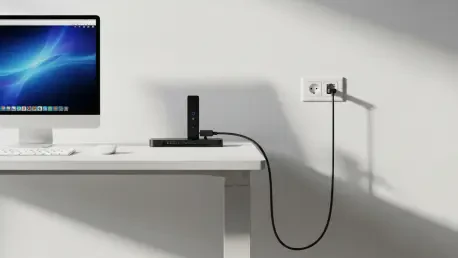
The integration of high-speed docking stations has further bridged the gap between mobile convenience and wired performance for laptop users. By connecting a single cable to a workstation, a user can instantly gain access to a gigabit Ethernet connection, multiple monitors, and high-speed peripherals, transforming a portable device into a powerful desktop alternative. This setup allows for maximum productivity during the workday while preserving the ability to disconnect and move to the couch for more casual tasks. For home entertainment, wiring the primary streaming device ensures that high-bitrate 4K or 8K content is delivered without buffering, even if other family members are using the Wi-Fi for gaming or social media. By identifying the specific needs of each device and user, a hybrid network creates a seamless environment where technology adapts to the lifestyle of the inhabitants rather than forcing them to compromise on performance or mobility.
Implementation Results: Strategic Networking
The decision to integrate physical Ethernet into a modern digital environment proved to be a strategic move for those who prioritized long-term stability over short-term convenience. Users who took the time to map out their data requirements identified the specific locations where high-bandwidth tasks occurred and prioritized those areas for wired installations. Investing in high-quality cabling, such as Cat6a, ensured that the infrastructure could handle subsequent speed increases without the need for additional renovations. Furthermore, the implementation of a hybrid network allowed for a more efficient use of the available wireless spectrum by removing stationary devices from the airwaves. By treating the home network as a critical utility rather than a simple convenience, individuals achieved a level of reliability that supported both professional productivity and high-end entertainment. This approach successfully addressed the limitations of wireless signals while capitalizing on the unmatched consistency of a dedicated physical connection.