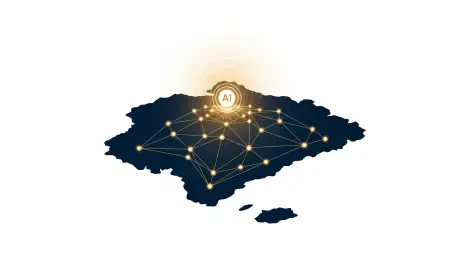

Indonesia’s vast archipelago has long demanded more than just a basic signal; it requires a sophisticated neural network that can process complex data at the speed of thought across seventeen thousand islands. As the nation pivots toward a high-tech future, Indosat Ooredoo Hutchison has moved beyond its role as a service provider to become a master architect of a new digital reality. This transformation represents a departure from the days when telecommunications was merely about the pipes that carried data. Today, the focus has shifted to the intelligence that lives within those pipes, turning a standard mobile network into a nationwide AI Grid that serves as the foundation for the next industrial revolution.
This initiative is not just a technological upgrade but a fundamental restructuring of how a nation connects and thinks. By integrating high-performance computing with massive connectivity, the company is ensuring that the digital divide is bridged not just with voice and text, but with the predictive power of artificial intelligence. The transition signifies a change in identity for the organization, moving from a traditional provider to a pioneer of national intelligence.
A New Era of Intelligence: Moving Beyond Simple Mobile Connectivity
The evolution of Indosat Ooredoo Hutchison marks a definitive break from the “bit-pipe” model, where the primary goal was the simple transit of data from one point to another. In a modern economy, such a model is no longer sufficient to support the weight of digital transformation. Instead, the company has repositioned itself as a national AI pioneer, focusing on the quality and utility of the data being transmitted. This paradigm shift ensures that the network does more than just connect people; it empowers them with localized intelligence.
The introduction of the AI Grid serves as the backbone for this industrial transformation. By embedding processing power directly into the network architecture, the infrastructure can now handle complex workloads that were previously relegated to distant data centers. This move allows for a more responsive and intelligent digital environment, where the network itself acts as a cognitive layer for the entire country.
Why an AI-Ready Network Is Essential for Indonesia’s Future
Bridging the digital divide across a diverse and vast archipelago presents a unique geographical challenge that traditional connectivity cannot solve alone. Indonesia’s Fourth Industrial Revolution requires an infrastructure that offers more than just broad coverage; it demands high bandwidth and ultra-low latency to fuel national growth. An AI-ready network addresses these needs by bringing computational power closer to the end-user, ensuring that even remote regions can participate in the digital economy.
The transition from centralized cloud computing to localized, edge-based intelligence is a necessity to meet domestic demands. As more industries adopt real-time data analytics, the reliance on distant servers creates bottlenecks that hinder productivity. By localizing intelligence at the edge of the network, the country can maintain data sovereignty and improve the performance of critical applications in logistics, finance, and public services.
The Technical Blueprint: Merging 5G RAN With AI-RAN Architecture
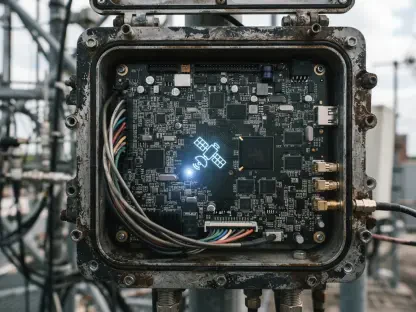
The nationwide 5G modernization program relies on the deployment of Nokia’s advanced Habrok and Pandion radio families. These technologies provide the foundational coverage necessary for a robust mobile network while significantly increasing energy efficiency. By utilizing Levante basebands, the infrastructure is prepared to handle the immense throughput required for next-generation digital services, creating a resilient physical layer for the AI Grid.
A two-tiered strategy ensures that the network expansion is both broad and deep. The plan involves maintaining nationwide low-band 5G for foundational access while aggressively expanding mid-band coverage in industrial hubs. The current goal is to reach 80% mid-band coverage within the next three and a half years, providing the high-capacity connectivity needed for manufacturing and urban centers to thrive.
Integrating AI-RAN architecture turns the network into a multipurpose platform that processes AI workloads alongside traditional connectivity. This innovation, developed in collaboration with global partners, allows the radio access network to become a distributed computer. Under the current 2026 roadmap, field trials for these integrated systems are commencing, paving the way for a future where the network optimizes itself in real time to meet changing user demands.
Democratizing Artificial Intelligence Through Localized Language Models
The Sahabat AI initiative is a central pillar of the strategy to ensure that technology remains culturally and linguistically relevant. By creating a large language model specifically tailored for Indonesian languages and nuances, the project ensures that the benefits of AI are accessible to all citizens, not just those in major urban centers. This localized approach prevents the homogenization of intelligence and preserves the unique cultural heritage of the archipelago.
Global partnerships with Nvidia and Nokia provide the computational scale necessary to offer intelligence-as-a-service. This model allows businesses and government agencies to tap into powerful AI resources without needing to build their own massive data centers. By democratizing access to high-level computing, the initiative fosters an environment where innovation can emerge from any corner of the country, regardless of local resource constraints.
A Roadmap for Scaling AI Across Indonesia’s Industrial Landscape
Empowering human capital is the ultimate goal of the AI Grid, starting with healthcare and education. AI acts as a digital co-pilot for medical professionals, assisting in diagnostics and patient care in underserved areas, while localized learning tools provide students with personalized educational experiences. These tools ensure that technology serves as an equalizer, enhancing the capabilities of the workforce and preparing the next generation for a digital-first world.
The industrial impact extends into the physical realm through the use of Vision AI and robotics. Drones equipped with real-time analytics are optimizing agricultural yields, and smart city sensors are improving public safety and resource management. This infrastructure is preparing the nation for the Physical AI era, where automation redefines traditional industries like mining and logistics, driving efficiency and safety to unprecedented levels.
The project moved toward a new phase of industrial integration as the focus shifted to the maintenance of high-performance autonomous systems. Stakeholders prioritized the deployment of Vision AI for smart city management, which provided the necessary stability for long-term urban growth. These actions ensured that the digital economy remained inclusive while the focus eventually transitioned to scaling Physical AI in heavy manufacturing. By refining these specialized systems, the nation achieved a level of technical autonomy that redefined regional productivity.