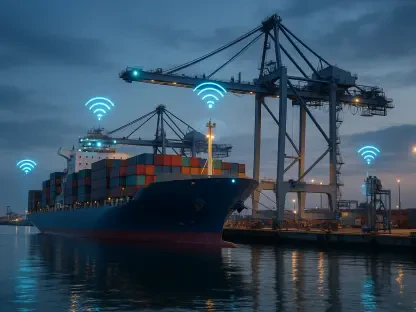

The sudden convergence of generative AI applications and autonomous driving systems has pushed global IP traffic patterns into a state of permanent unpredictability that renders traditional management models obsolete. As these demanding technologies become standard components of the digital landscape, the pressure on IP network infrastructure has reached a critical tipping point where human intervention alone is no longer sufficient to maintain performance. This current era, often described as the AI supercycle, demands a radical departure from reactive troubleshooting toward a framework of governed autonomy. Modern networks now produce an overwhelming volume of telemetry and log data that completely dwarfs the analytical capacity of even the most experienced engineering teams. Without the implementation of intelligent tools capable of filtering this immense noise, critical signals remain buried, leading to inevitable service degradation. Agentic AI serves as the bridge, ensuring the operational layer scales at the same rate as the physical infrastructure assets.
Addressing the Expertise Deficit: Why Specialized Agents Matter
One of the most pressing challenges facing the telecommunications sector today is the widening skills gap as veteran engineers retire and network complexity grows. Deep expertise in IP networking has become a dwindling resource, particularly as environments become increasingly fragmented across various vendors and specialized hardware. Agentic AI addresses this deficit by providing specialized agents that function as digital mentors or advanced assistants, allowing less experienced operators to navigate complex, cross-domain tasks with confidence. These agents possess the ability to ingest vast amounts of technical documentation and historical configuration data, providing instant access to advanced knowledge that would otherwise take years to acquire. By maintaining operational consistency at a massive scale, these tools ensure that even the most intricate network changes are executed according to best practices, regardless of the individual operator’s tenure or specific vendor familiarity.
This shift toward workforce augmentation also facilitates a fundamental move from reactive maintenance to a state of proactive health management. Instead of waiting for a network alarm to trigger a response after a service has already failed, AI models analyze historical trends and real-time telemetry to predict potential issues before they manifest. By identifying subtle correlations that human eyes might easily miss, such as a slight increase in packet loss on a specific optical link that precedes a major hardware failure, these tools allow operators to intervene early. This predictive capability transforms the daily routine of network operations centers from constant fire-fighting to a structured, preventative workflow. Consequently, service providers can significantly reduce their mean time to repair while simultaneously improving the overall quality of experience for their end-users. The focus shifts from managing individual devices to managing the end-to-end service health.
Overcoming Operational Barriers: Moving Beyond Pilot Purgatory
Despite the clear potential advantages of AI integration, many telecommunications providers currently find themselves stuck in a cycle of experimentation known as pilot purgatory. This stagnation occurs when AI initiatives fail to move beyond small-scale tests because organizations struggle to demonstrate a clear business impact or connect AI performance to specific key performance indicators. Furthermore, the fragmented nature of network data makes it difficult to maintain the high level of data integrity required for reliable AI reasoning and decision-making. Without a cohesive data strategy, AI models often produce inconsistent results that discourage wider adoption across the enterprise. To overcome this hurdle, service providers must focus on aligning their AI strategies with tangible operational goals, such as reducing energy consumption or optimizing traffic steering. Moving beyond simple automation toward comprehensive agentic systems requires a commitment to transforming internal processes.
Trust remains the most significant psychological and technical barrier to the widespread adoption of autonomous systems in mission-critical environments. The fear of an autonomous system making an unexplainable error that leads to a major regional outage is a constant concern for network executives and operations managers. For AI to be fully embraced within the core of the network, its decision-making processes must be completely transparent and auditable by human supervisors. This requires the implementation of explainable AI frameworks that allow operators to trace the logic behind every recommendation or action taken by an agent. By establishing a system where human operators remain in control of the underlying business rules and logic, organizations can build the necessary confidence to let AI handle more complex tasks. Establishing these trust-based safeguards is essential for transitioning from human-led operations to a truly collaborative environment where humans and AI work in tandem.
Integrating Unified Data Structures: The Path to Network Truth
The Nokia Network Services Platform introduces a structured framework designed to resolve persistent trust and data fragmentation issues through a unified ontology layer. By organizing disparate data points from various vendors and network layers into a consistent and singular network truth, the system allows AI agents to understand the complex relationships between different network elements. This unified view is critical because it prevents the AI from making decisions based on incomplete or contradictory information. Every action proposed or taken by the AI is governed by policy-aligned guardrails that ensure the network remains within its intended operational parameters. This ontological approach allows for a more sophisticated level of reasoning, where the AI can predict how a change in one part of the network will impact services in an entirely different domain. Such holistic visibility is the foundation upon which reliable and scalable network automation is currently being built for the modern era.
Practical tools like the Network Services Platform Troubleshooting Agent demonstrate the immediate value of this framework by automating the complex correlation of topology and telemetry. Instead of requiring human operators to spend hours manually digging through disparate logs and traceroutes, the agent provides contextual remediation options that significantly shorten the time to resolution. When a service degradation occurs, the agent identifies the root cause by analyzing the relationship between the physical infrastructure and the logical services running over it. This automation does not replace the human operator but rather empowers them by filtering out the noise and presenting only the most relevant information and solutions. As these technologies continue to mature and integrate deeper into the operational stack, the role of AI will continue to expand from simple assistance to autonomous management. This evolution makes AI-run networks a strategic requirement for any provider hoping to survive in the digital landscape.
Establishing Sustainable Governance: Next Steps for Network Leaders
The transition toward agentic AI has reached a point where the focus must shift from technical feasibility to long-term governance and strategic scaling. Organizations that succeeded in this transition prioritized the creation of a centralized data lakehouse that standardized telemetry formats across all vendor platforms. This groundwork proved essential for training specialized agents that could operate across diverse environments without losing accuracy or performance. Engineering teams also implemented rigorous testing protocols that simulated catastrophic failures to verify that AI guardrails would hold under extreme pressure. By treating the AI as an evolving member of the workforce rather than a static software tool, these leaders fostered a culture of continuous improvement and adaptation. The integration of AI became a journey of incremental gains that eventually compounded into a complete transformation of the operational model, allowing for unprecedented levels of efficiency and network resilience.
Strategic leaders recognized that the ultimate goal was not the total removal of human oversight, but the elevation of human roles to high-level strategic management. They invested heavily in retraining their workforce to focus on policy definition, ethical AI governance, and the management of complex digital ecosystems. The successful implementation of these systems was measured not just by speed, but by the stability and predictability of the network under fluctuating loads. Future success will depend on the ability to maintain this balance between autonomous execution and human intent as traffic demands continue to grow. Moving forward, the industry must develop open standards for AI interoperability to prevent new forms of vendor lock-in that could stifle innovation. The path toward fully autonomous networking was paved by those who embraced transparency and built the necessary data foundations. Actionable progress now requires a commitment to rigorous auditing and the continuous refinement of the underlying ontology layers.