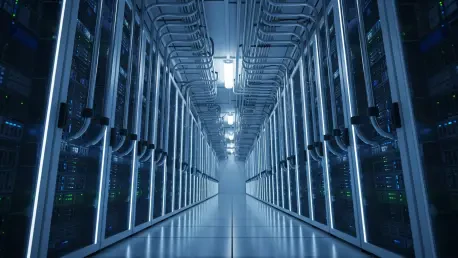

The architectural blueprint of the modern data center reflects a complex journey from specialized military installations to the hyper-dense powerhouses that define the current artificial intelligence era. While early computing facilities were designed to solve singular ballistic equations or encrypt secret communications, today’s facilities operate as the central nervous system for global commerce and generative innovation. This evolution was not merely a change in scale but a total reimagining of how hardware and physical space interact to facilitate the movement of massive datasets. As requirements shift from simple data storage to the intense processing power needed for real-time model training, the industry faces an unprecedented pressure to optimize energy consumption and thermal management. Understanding this transition requires looking past the rows of generic server racks to see the sophisticated engineering that allows for the seamless integration of hardware and software at a scale that was once unimaginable.
Early Foundations: From Military to Enterprise
Military Origins: The Era of National Security
The origins of modern digital infrastructure can be traced back to the mid-20th century when projects like ENIAC and the Semi-Automatic Ground Environment (SAGE) required massive, climate-controlled environments to function. These early systems occupied thousands of square feet and relied on vacuum tubes that generated immense heat, necessitating the first industrial-scale cooling solutions within a computing context. During this period, the concept of a data center was synonymous with national security and scientific research, characterized by centralized control and limited access. The SAGE system, in particular, introduced the idea of networking geographically dispersed computers to provide a real-time picture of airspace, establishing the fundamental principles of redundancy. These military-grade facilities laid the groundwork for the structural requirements of later enterprise systems, emphasizing physical security and massive power intake as the primary pillars of operation.
Networking Shifts: The Global Backbone
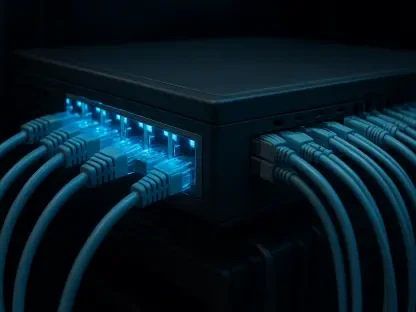
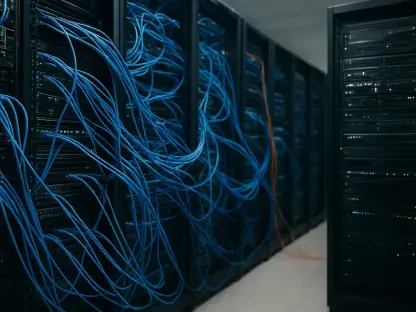
As the corporate world moved into the late 20th century, the demand for local server rooms transitioned into a need for dedicated colocation and enterprise data centers to support the burgeoning internet economy. This era marked a significant shift from specialized military hardware to standardized rack-mounted servers, allowing for greater flexibility and rapid scaling of compute resources. Networking technologies like Ethernet and the implementation of robust TCP/IP protocols transformed these facilities from isolated islands of processing into interconnected hubs of global information exchange. The focus during this phase was on uptime and reliability, leading to the development of Tiered classifications that standardized everything from power backup systems to physical cooling paths. Companies realized that managing their own hardware was less efficient than leveraging centralized facilities, setting the stage for the massive cloud-service providers that dominate the current landscape.
The AI ErScaling High-Performance Compute
Technical Needs: Cooling and Power
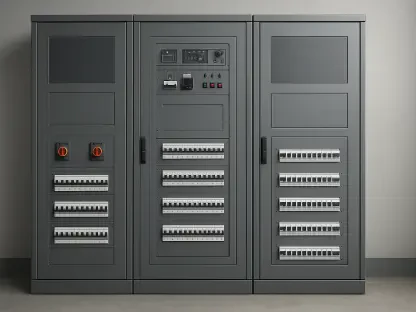
The rise of artificial intelligence has fundamentally altered the physical and thermal profile of data centers, moving away from traditional CPU-heavy racks toward high-density GPU clusters. Modern workloads associated with large language models and neural network training require significantly higher power per rack, often exceeding 60 kilowatts compared to the 10 kilowatts seen in older enterprise environments. This surge in power density has rendered traditional air-cooling methods insufficient, prompting a widespread shift toward liquid-to-chip cooling and immersion systems. These technological advancements are not just optional upgrades but necessary requirements for maintaining the operational integrity of high-performance computing hardware. Engineers are now tasked with redesigning floor plans to accommodate specialized power delivery systems and heavy fluid-based cooling infrastructure, ensuring that hardware can operate at peak efficiency without thermal throttling.
Strategic Progress: Modular Architectures
The transformation of the data center industry reflected a broader trend toward specialization and efficiency in the face of skyrocketing computational demands. Facilities that once focused on simple web hosting successfully pivoted to support the complex, interconnected ecosystems required for modern generative AI applications. Moving forward, organizations prioritized the adoption of modular designs that allowed for rapid cooling retrofits and power scaling without disrupting existing operations. Decision-makers increasingly focused on the environmental footprint of these hubs, integrating sustainable energy sources and advanced waste-heat recovery systems into their long-term strategies. It was essential for managers to invest in AI-driven monitoring tools that could predict hardware failures and optimize energy usage in real-time. By embracing these innovative cooling technologies, the industry ensured that the digital foundations of society remained robust enough to handle breakthroughs.