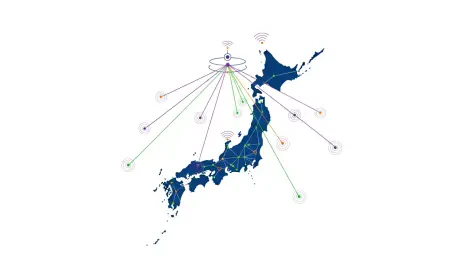

The regional security environment surrounding the Japanese archipelago has reached a critical juncture where traditional surveillance methods no longer provide the necessary tactical advantage for national defense. As adversaries develop increasingly sophisticated methods to mask military intentions, the government in Tokyo has turned its focus toward the deployment of hyperspectral satellite constellations to fill critical intelligence gaps. Unlike standard optical sensors that merely capture what the human eye perceives, hyperspectral imaging breaks down the electromagnetic spectrum into hundreds of narrow bands, allowing operators to identify the specific molecular composition of objects from orbit. This capability fundamentally alters the strategic calculus by making it nearly impossible to hide hardware under camouflage netting or within dense vegetation. By transitioning from visual reconnaissance to deep spectral analysis, Japan is positioning itself to monitor terrestrial and maritime activities with a precision that was previously considered unattainable.
Strategic Capabilities: Advancing Intelligence
The core strength of hyperspectral technology lies in its ability to detect the unique spectral fingerprints of different materials, regardless of their visual appearance or color. Conventional satellites often struggle to distinguish between a green-painted tank and the surrounding forest foliage, but a hyperspectral sensor identifies the difference between chemical pigments in paint and the chlorophyll in living plants. This specific technological leap allows the Japan Self-Defense Forces to peer through deception tactics that have traditionally neutralized orbital observation. Beyond identification, these satellites can detect moisture levels in soil to predict recent troop movements or analyze chemical runoff from industrial facilities to monitor unauthorized weapons production. By capturing data across a range of wavelengths, the system provides a comprehensive data set that can be processed by automated algorithms to flag anomalies in real-time. This ensures that no material change in a sensitive area goes unnoticed.
Building on this foundation, the integration of hyperspectral data into existing maritime domain awareness frameworks significantly enhances Japan’s ability to police its vast Exclusive Economic Zone. The ocean is an environment where glare and cloud cover often obscure illegal fishing or illicit ship-to-ship transfers. Hyperspectral sensors, however, can detect oil slicks, chemical plumes, and even the specific metallic signatures of vessels that have disabled their automatic identification systems. This level of detail is crucial for maintaining the rule of law in disputed waters where gray-zone tactics are frequently employed to test national sovereignty. Moreover, the high-revisit rates planned for upcoming satellite launches mean that the Ministry of Defense will have a nearly continuous stream of high-fidelity data. This shift from intermittent snapshots to persistent monitoring represents a paradigm change in how regional threats are assessed and managed by the defense establishment.
The transition toward a hyperspectral-centric intelligence model proved to be a decisive step in modernizing the regional security architecture of the Japanese archipelago. Authorities successfully integrated sophisticated spectral data with artificial intelligence to automate the detection of strategic threats, which allowed for a more rapid response to emerging crises. Moving forward, the government established a framework for private sector collaboration to ensure the continuous replenishment of orbital assets. It was observed that maintaining a resilient data downlink was just as critical as the sensors themselves, leading to the deployment of high-speed laser communications. This initiative transformed the national defense posture by providing a transparent view of regional military developments. Furthermore, the defense ministry initiated training programs for a new generation of spectral analysts to maximize the utility of the incoming data streams. These steps ensured that the technological advantage remained sustainable against evolving countermeasures.