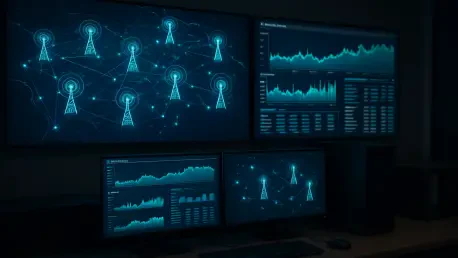

The overwhelming hum of a thousand simultaneous network alarms often defines the stressful atmosphere within a modern network operations center, leaving engineers buried under a mountain of digital noise. For decades, the “alarm storm” has been a persistent nightmare, paralyzing response times and forcing technicians to spend hours sorting through repetitive data rather than solving architectural problems. This relentless cycle historically led to burnout and a reactive maintenance culture that struggled to keep pace with the sheer speed of global data traffic.
The transition from manual troubleshooting to a high-speed, assistant-driven workflow marks a fundamental shift in how connectivity is maintained. By deploying Gemini-powered AI agents, organizations moved away from the chaotic triage of the past toward a more streamlined operational model. These agents act as a sophisticated filter, translating a barrage of metrics into actionable intelligence. This change was not merely about speed; it focused on reclaiming the engineering workday and reducing the human cost associated with 24/7 network monitoring.
The End of the Endless Alert: Reclaiming the Engineering Workday
The complexity of modern infrastructure means that manual intervention is no longer a sustainable strategy for maintaining uptime. Traditional methods of managing high-volume network metrics often resulted in delayed responses, as humans simply cannot process thousands of data points every second. By introducing AI-driven assistants, the burden of initial data sorting was lifted, allowing the engineering staff to focus on high-priority system design and long-term network health.
Furthermore, this shift addressed the psychological strain on operations teams who previously operated in a state of constant emergency. The implementation of intelligent automation provided a buffer, ensuring that only significant events reached human eyes. This transition allowed for a more balanced workload where engineers utilized their expertise to oversee system evolution rather than getting lost in the weeds of routine maintenance tasks.
Why Legacy Systems Are Failing the Next Generation of Global Connectivity
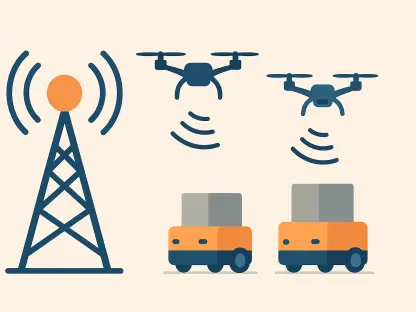
Traditional automation tools were built for a static world, yet the dynamic requirements of 5G infrastructure demand a level of adaptability that legacy systems cannot provide. As network slicing and edge computing became standard, the volume of variables exceeded the capacity of hard-coded scripts. The strategic partnership between Nokia and Google Cloud emerged as a necessity, providing a framework that bridged the gap between old-school monitoring and the intelligent orchestration required for modern connectivity.
General-purpose large language models often struggle with the precision required for telecommunications, which is why the “agentic” AI approach gained significant traction. Unlike a standard chatbot, these specialized agents were fine-tuned for specific telco workflows, allowing them to understand the nuances of signal interference or packet loss. By addressing these specific domains, the technology offered a more reliable alternative to the broad outputs of general AI, ensuring that the network remained stable under pressure.
The Mechanics of Change: Specialized Agents and the 80% Efficiency Leap
At the heart of this transformation was a six-agent ecosystem coordinated by a central “router agent” that interpreted natural language requests from operators. This hub ensured that every action complied with strict operational rules before delegating tasks to specialized subordinates. For instance, the event triage agent investigated historical patterns and network topology to pinpoint root causes, while the anomaly reasoning agent detected subtle deviations in performance before they escalated into full-scale outages.
The technical backbone of this system relied on Kubernetes-based infrastructure, which allowed the generative AI to scale across global deployments. This architecture enabled the remediation agent to suggest configuration fixes in real-time, often before a human could even finish reading the initial alert. The operational value was substantial, as early data indicated that this agent-driven model facilitated a 50% to 80% reduction in problem-solving timelines, drastically lowering the cost per ticket.
Industry Perspectives on the Shift Toward Agentic Telecom Cloud Solutions
The competitive landscape for telco cloud solutions intensified as Google Cloud and Nokia positioned their Gemini-integrated offerings against established rivals. This race was not just about storage or compute power; it was about who could provide the most effective “brain” for the network. Experts noted that the winner would be the platform that balanced high-level automation with the transparency required for mission-critical infrastructure, a concept known as glass box autonomy.
This model emphasized human oversight, ensuring that while the AI handled low-risk adjustments independently, any significant change to the core network required explicit approval. This safeguard was crucial for maintaining trust in a SaaS-based AI environment. As these tools became more accessible via the Google Cloud Marketplace, the industry saw a shift toward standardized AI solutions that allowed various carriers to leverage the same sophisticated diagnostic capabilities.
Implementing a Phased Roadmap for AI-Driven Network Assurance
Navigating the multi-year rollout of these autonomous systems required a disciplined approach that balanced innovation with stability. Following extensive internal testing, the full software-as-a-service package reached the market in September 2026, marking a new era in network assurance. Organizations integrated these tools into their daily operations, starting with non-critical monitoring before gradually granting the AI more control over remediation tasks as confidence in the system grew.
Engineering teams underwent a significant transition, moving from manual data sorters to high-level system overseers who focused on strategic optimization. The framework for this shift prioritized a gradual handover of responsibilities, which ensured that human expertise remained at the center of the decision-making process for complex core changes. This phased integration established a foundation for future advancements, where the collaboration between human intelligence and agentic AI proved to be the most effective way to manage the complexities of modern telecommunications.