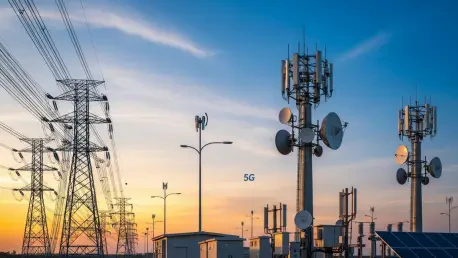

The true strength of the American digital economy now rests not just in the complex code of generative models but in the physical hardware of the towers that broadcast them across the nation. While the global race for dominance in Artificial Intelligence is frequently framed as a high-stakes battle of software and silicon, there is a silent engine powering this entire revolution. This engine is the physical wireless network that delivers the power of intelligence directly to the palm of a user’s hand. An algorithm might exist in a sophisticated data center, but its actual utility is realized only when it is accessible, mobile, and functioning in real-time. Without the robust “pipes” provided by wireless infrastructure, even the most advanced AI remains a stationary curiosity rather than a truly transformative utility for the modern world.
The “Last Mile” of Intelligence: Why Algorithms Are Not Enough
The disconnect between digital potential and physical reality often goes unnoticed by the average consumer. However, the efficacy of generative tools and machine learning systems depends entirely on the reliability of the “last mile” of connectivity. If a network cannot support the high-bandwidth requirements of modern intelligence, the most brilliant software in the world becomes functionally useless in a mobile environment. For the United States to maintain its competitive edge, the focus must expand beyond the borders of the research lab and into the steel and fiber of the telecommunications grid.
This physical foundation is the only way to turn abstract computations into concrete economic value. Real-time data processing requires a seamless handshake between centralized servers and mobile devices, a process that is only possible through high-density wireless arrays. As industries transition toward automated decision-making, the necessity for a persistent, high-speed connection has moved from a convenience to a critical requirement. Consequently, the strength of the nation’s wireless backbone has become the ultimate arbiter of how effectively AI can be integrated into the daily lives of citizens and the operations of businesses.
From Labs to the Palm of Your Hand: The Mobile AI Shift
The landscape of artificial intelligence has underwent a fundamental shift from confined research environments to a ubiquitous mobile utility. This transition has created a new set of demands that tether digital innovation to the physical world more tightly than ever before. With roughly 74% of U.S. adults now actively using AI tools, the majority of these interactions happen while users are on the move. This “mobile-first” behavior places an immense strain on existing networks, requiring constant, high-speed connectivity that can handle the complex data packets required by natural language processors and image generators.
The economic weight of this data shift is already manifesting in the financial reports of major carriers. AI-driven traffic currently consumes over 4% of total network volume, a figure that is rising rapidly. Managing and maintaining the infrastructure to support this specific type of traffic costs the wireless industry nearly $3 billion annually. Beyond simple chatbots, AI serves as the backbone for modern navigation, industrial automation, and real-time logistics. This reality makes network reliability a matter of national economic productivity, as any lag in connectivity results in a direct loss of efficiency in the field.
The Physical Foundation: Towers, Cells, and the Edge
Maintaining leadership in this space requires a massive, sustained commitment to the physical components that make connectivity possible. This infrastructure is the unsung enabler of the digital age, consisting of over 158,500 purpose-built towers and hundreds of thousands of smaller cell installations. These physical nodes provide the necessary density to prevent data bottlenecks in crowded urban centers and rural corridors alike. As the demand for data continues to grow, the proliferation of these sites becomes the only way to ensure that the promise of AI is not throttled by inadequate signal strength.
Furthermore, the emergence of Edge AI is moving processing power closer to the user to reduce latency for high-stakes applications. By integrating computing capabilities directly into the wireless network, the system can support autonomous vehicles and augmented reality without the delays associated with distant data centers. The network itself is also becoming more “intelligent” through the use of AI-driven Radio Access Networks, which optimize traffic flows and manage energy consumption automatically. With data consumption projected to surge by 80% over the next five years, the pace of infrastructure expansion must match the lightning speed of software innovation.
Breaking the Bottlenecks: Expert Insights on the Policy Gap
Industry leaders and researchers increasingly agree that the greatest threat to American AI leadership is not a lack of internal talent, but a significant lack of supportive public policy. Bridging the gap between software potential and physical deployment has become the most urgent priority for stakeholders across the tech sector. A primary concern is the current spectrum scarcity crisis, as spectrum represents the fundamental “fuel” for all wireless communication. Current pipelines are dangerously thin, making it essential for the government to release more licensed spectrum in the 4 GHz and 7 GHz bands to accommodate the coming wave of traffic.
In addition to spectrum issues, regulatory permitting hurdles often stall the deployment of essential infrastructure for months or even years. Inconsistent local and federal processes create unnecessary delays in network densification, preventing the timely rollout of the very tools that enable AI at scale. Experts at major technology firms view the upcoming 6G era as a critical turning point where AI and the network become inseparable. However, they warn that this connectivity fabric will only succeed if the underlying infrastructure is ready to support the massive throughput required by next-generation applications.
A Strategic Framework for Sustained AI Dominance
To ensure that American innovation remained at the forefront of the global economy, it was necessary for leaders to adopt a strategy that treated wireless networks as essential infrastructure. Policymakers eventually realized that streamlining the siting process for towers and small cells provided a predictable timeline for national deployment. This shift allowed for a more rapid expansion of the network, which in turn supported the growing demands of industrial and consumer AI. The establishment of a national permitting framework was a vital step that reduced bureaucratic friction and encouraged private investment in the telecommunications sector.
The focus also turned toward replenishing the spectrum pipeline through a forward-looking schedule that prioritized high-capacity, licensed frequencies. By making these resources available, the government provided the necessary headroom for commercial AI applications to flourish without interference or congestion. This strategic move elevated wireless networks to the same status as semiconductor manufacturing in federal policy discussions, recognizing their role as the bedrock of digital progress. Ultimately, the integration of 5G and 6G technologies bridged the gap between the cloud and the device, allowing intelligence to move seamlessly throughout the physical world. These coordinated efforts ensured that the infrastructure was prepared for the massive wave of data that defined the modern era.