
The global digital infrastructure that instantly connects billions of people relies on the near-magical transmission of data as pulses of light through glass fibers, a reality made possible by a handful of visionary scientists. The world of engineering and technology now mourns the loss of one of its most pivotal figures, William H. Steier, an internationally celebrated pioneer in fiber optics and polymer photonics, who passed away on November 9 at his home in San Marino at the age of 92. As the esteemed William M. Hogue Professor of Electrical Engineering at the USC Viterbi School of Engineering, Dr. Steier’s groundbreaking work was not merely academic; it laid the foundational architecture for the high-speed digital world that defines modern existence. His career was a masterclass in relentless innovation, transformative academic leadership, and a profound, lifelong commitment to mentoring the next generation of researchers who would continue to push the boundaries of what is possible in optical communications. His passing marks the end of an era for a field he helped create from its theoretical infancy to its current state of global ubiquity.
The Polymer Photonics Revolution
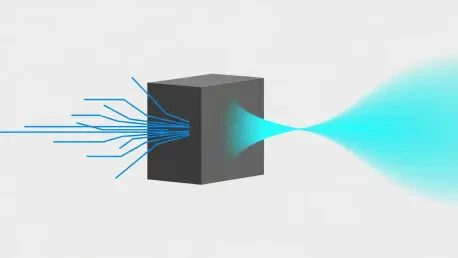
Dr. Steier’s most enduring scientific achievement was his revolutionary research into electro-optic polymer materials, which fundamentally altered the trajectory of optical communications. This seminal work, conducted in a powerful interdisciplinary partnership with chemist Larry Dalton and the USC Loker Hydrocarbon Institute, targeted a critical bottleneck in the emerging field of fiber optics: the efficient conversion of electronic data into light. The team succeeded in developing devices that could translate electrical signals into optical signals with unprecedented performance. These polymer-based modulators operated at speeds ten times faster than the prevailing technology while consuming only a small fraction of the power. This leap in both speed and power efficiency was not an incremental improvement but a paradigm shift. It effectively removed the major obstacles that had constrained bandwidth, unlocking the potential for the massive data-carrying capacity that now forms the bedrock of the global high-speed internet, cloud computing, and on-demand video streaming services that are integral to the global economy and daily life.
The collaborative spirit that defined Steier’s research consistently pushed the frontiers of what was considered possible in photonics. A prime example was the research team he led at the University of Southern California, which engaged in a sustained, decade-long effort with colleagues at the University of Washington. This synergy among chemists, electrical engineers, and optical engineers culminated in the creation of polymer modulators that required less than one volt to operate—a dramatic improvement over the 4 to 5 volts needed by traditional lithium niobate technologies. This low-voltage operation was a critical enabler, opening the door to a wide array of practical applications. It promised more efficient and compact broadband telecommunications networks and led to the development of highly sensitive optical gyroscopes used in advanced airborne and space-based guidance systems. His later research continued this focus on real-world application, concentrating on developing cost-effective manufacturing methods like molding and embossing for polymer integrated optical devices to facilitate their wider commercial adoption and prove their viability outside the laboratory.
A Legacy of Leadership and Innovation
After earning his bachelor’s degree from the University of Evansville and completing his doctorate at the University of Illinois, Urbana-Champaign, in 1960, Steier began a distinguished career path that would place him at the center of optical engineering for over half a century. Following a brief period as an assistant professor, he joined the prestigious Bell Laboratories in 1962, a hotbed of technological innovation. There, he made crucial early contributions to the nascent field of fiber optic communications and was a key member of the team that achieved the first-ever demonstration of the phase locking of lasers, a foundational technique for coherent optical systems. In 1968, he began his long and impactful tenure at USC, where he would remain for 46 years. His leadership was particularly transformative during his time as chair of the electrical engineering department from 1970 to 1984. In this role, he established multiple world-class research centers and cemented USC’s reputation as a global powerhouse for optical engineering. His influence also extended to the national stage, as he directed the Joint Services Electronics Program and served as the principal investigator for the DARPA National Center for Integrated Photonic Technology.
The far-reaching impact of Steier’s work extended from terrestrial networks to the frontiers of space exploration, highlighted by the selection of his 60-gigahertz electro-optic modulator by NASA’s Jet Propulsion Laboratory for a deep-space telescope mission. This specialized device, which uniquely featured a gold USC School of Engineering logo meticulously etched by photolithography, was designed for a mission-critical task: helping to maintain micron-level precision in satellite positioning over vast distances of up to six miles in space. This level of accuracy was essential for the telescope’s scientific objectives. In a 2002 interview reflecting on this ambitious project, Steier offered a poignant perspective on his contribution. He acknowledged that, due to the long timelines of deep-space missions, he might not live to see the telescope’s ultimate findings. However, he expressed profound satisfaction and a sense of purpose in knowing that his work would contribute to answering fundamental astronomical questions “that people have pondered around campfires for millennia,” linking his cutting-edge engineering to humanity’s oldest quest for knowledge.
An Enduring Influence on Technology and People
William Steier’s legacy was defined not only by his immense scientific output but also by his widespread recognition and profound influence as a mentor and educator. Throughout his career, his research group published over 300 papers and conference proceedings, forming a significant body of knowledge in the field of photonics. His contributions were recognized with numerous prestigious honors; he was named a Life Fellow of the IEEE and a Fellow of the Optical Society of America, and he received the University of Illinois’s Distinguished Alumni Award in 2002. At USC, his deep commitment to the institution was honored with the Faculty Service Award in 1985 and the Senior Faculty Research Award in 1996. Beyond these personal achievements, he was an exceptionally dedicated mentor to a multitude of doctoral students who went on to secure faculty positions at leading universities worldwide. In doing so, he was instrumental in establishing USC’s electrical engineering program as a premier training ground for the next generation of photonics researchers. His remarkable 46-year career was celebrated by USC in 2014 with a symposium and dinner attended by approximately 120 colleagues, collaborators, and former students, a testament to the wide-reaching impact he had on his field and community before his retirement that same year. He left behind a body of work that traced the arc of optical communications from abstract theory to its current status as the invisible backbone of the modern world.