
The Dawn of a New Era in Universal Connectivity
The global telecommunications sector is currently navigating a tectonic shift as SpaceX transitions from a specialized aerospace manufacturer into a multifaceted digital powerhouse. With its valuation recently surpassing the $1 trillion mark and whispers of a massive initial public offering (IPO) filling the halls of Wall Street, the company is no longer just launching rockets; it is actively constructing the infrastructure for a borderless internet. This evolution signifies a move toward a world where connectivity is decoupled from terrestrial limitations. By analyzing recent strategic acquisitions, regulatory milestones, and technical breakthroughs, one can see how this venture is positioned to disrupt a century-old telecommunications model, fundamentally changing the way humanity accesses the digital world.
From Rocket Launches to the Digital Divide: The Evolution of Starlink
To understand the current trajectory of the company, one must examine the foundational success of Starlink. Initially conceived as a financial engine to fund deep-space exploration, Starlink quickly addressed a critical market failure known as the “digital divide.” For decades, traditional fiber and cable providers bypassed rural and underserved regions because the capital expenditure required for physical infrastructure was simply too high. SpaceX circumnavigated these terrestrial barriers by deploying a low-earth orbit (LEO) constellation that offers high-speed broadband to any location with a clear view of the sky. This logistical success provided the cash flow and operational framework necessary to move beyond home internet into the complex world of mobile telephony.
The Strategic Shift to Direct-to-Device Connectivity
Breaking the Dependence on Terrestrial Partnerships
The most significant leap in the current corporate strategy is the transition toward a Direct-to-Device (D2D) model. While early efforts relied on partnerships with existing carriers like T-Mobile to provide emergency satellite-to-cell services, the company is increasingly moving toward independence. Recent moves, including the acquisition of EchoStar spectrum and reported interest in GlobalStar’s assets, suggest a clear desire to own the airwaves rather than leasing them. By controlling its own spectrum, SpaceX avoids the “roaming partner” trap, where it would be beholden to the pricing models of traditional national carriers. This allows for a vertically integrated service that functions seamlessly whether a user is in a skyscraper or a remote mountain range.
The Power of the Unique Mobile Network Identifier
A critical milestone in this journey is the decision by the International Telecommunication Union (ITU) to grant the company its own unique mobile network identifier (MCC/MNC 901-08). This code serves as the digital DNA of a mobile operator, allowing the company to function as a native network on a global scale. Unlike traditional carriers that are confined by national borders and must negotiate complex international roaming agreements, SpaceX can now manage its own subscriber base and billing systems globally. This technical autonomy is a clear indicator of the intent to compete directly with giants like AT&T or Vodafone as a primary service provider rather than a mere secondary backup.
Navigating Regulatory Hurdles and Spectrum Scarcity
Despite technological dominance, the venture faces a labyrinth of regional complexities and regulatory pushback. Spectrum is a finite resource, and terrestrial operators are fiercely protective of their frequency rights, often citing potential interference as a reason to block satellite-to-cell expansion. Furthermore, different nations have varying laws regarding data sovereignty and telecommunications oversight. The company must navigate these geopolitical waters while simultaneously proving that its “space-native” network can handle the high density and capacity demands of modern smartphone users. Overcoming the misconception that satellite mobile is only for emergency use remains a primary hurdle for achieving mass-market adoption.
The Future of Telecommunications: A Borderless Wireless Market
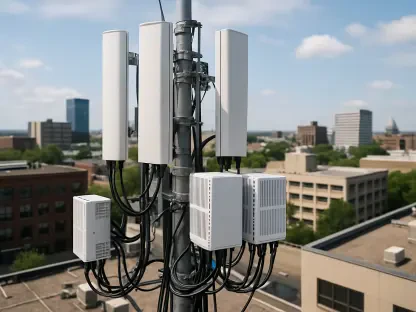
The future of the industry is likely to be defined by the total convergence of terrestrial and celestial networks. We are moving toward a reality where the “dead zone” essentially ceases to exist. Forecasts suggest that as the technology matures, “Satellite-First” mobile plans will emerge, where users no longer worry about local tower coverage or international roaming fees. This shift will likely force traditional operators to either innovate their physical infrastructure or become specialized “last-mile” partners for satellite behemoths. Economically, the entry of a global operator with zero terrestrial maintenance costs could trigger a massive price correction in the mobile data market, making high-speed connectivity a universal commodity.
Strategic Takeaways for the Global Digital Landscape
The transformation of this aerospace leader into a global mobile operator provides several key insights for businesses and consumers. For the telecommunications industry, the primary lesson was that vertical integration—owning both the launch vehicle and the service delivery platform—created an insurmountable competitive advantage. Consumers should prepare for a shift toward device-agnostic connectivity, where hardware becomes less important than the network’s global reach. Professionals in the tech sector should monitor further moves in the spectrum market, as these acquisitions will likely dictate the next decade of mobile standards. Adapting to this new paradigm means embracing a world where connectivity is no longer tied to a physical location.
Final Thoughts on the SpaceX Paradigm Shift
The trajectory from an ambitious aerospace startup to a potential global mobile operator represented one of the most significant industrial shifts of the early 21st century. By securing its own network identifiers and aggressively pursuing spectrum ownership, the company laid the groundwork for a truly unified global communications system. This evolution remained significant because it challenged the very notion of national telecommunications borders, offering a glimpse into a future where the entire planet was covered by a single, seamless network. Stakeholders began to realize that the sky was no longer a limit but rather the world’s largest cell tower, necessitating a complete rethink of digital infrastructure investments.