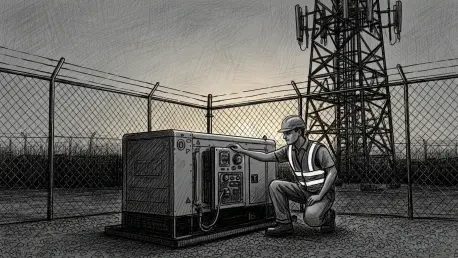

In an increasingly connected world, the sudden inability to make a call, send a message, or access the internet can bring daily life and commerce to a grinding halt, a reality recently faced by countless subscribers in Nigeria’s capital, Abuja. Recent and widespread disruptions in network services have left residents and businesses grappling with the consequences of intermittent connectivity, raising urgent questions about the resilience of the nation’s telecommunications backbone. The Nigerian Communications Commission (NCC) has now provided a clear answer, pinpointing a surprising culprit not within the complex world of fiber optics or satellite technology, but in the logistical challenges of the diesel supply chain. This situation has exposed a critical vulnerability in the infrastructure that underpins modern communication, demonstrating how a disruption in one essential sector can trigger a cascade of failures in another, affecting everything from personal communication to the core functions of a burgeoning digital economy. The core of the problem lies in the inability to fuel the generators that power the very cell towers connecting the city.
The Anatomy of a Communications Breakdown
The Diesel Dependency Dilemma
The primary cause of the significant network service disruptions has been officially traced to logistical failures within the diesel fuel supply chain, a problem that directly impacts the operational capacity of essential telecommunications infrastructure. The Nigerian Communications Commission (NCC) identified that actions taken by the National Oil and Gas Suppliers Association created a bottleneck, preventing the timely delivery of diesel to numerous vital telecom sites. These sites are managed by IHS Nigeria Limited, a major independent operator of shared infrastructure like cell towers. Because these towers serve multiple mobile network operators, the fuel shortage had a far-reaching effect across different carriers, impacting a broad base of subscribers simultaneously. The generators at these sites are not merely a backup; they are a primary power source in many areas, making a consistent and reliable fuel supply an absolute necessity for maintaining network uptime and service quality for millions of users who depend on it.
The heavy reliance on diesel-powered generators to sustain telecommunications services in regions like Abuja underscores a fundamental vulnerability in the existing infrastructure. In areas where the primary electrical grid is often unstable or insufficient, these generators become the lifeblood of connectivity, ensuring that cell towers remain operational around the clock. The business model of infrastructure providers such as IHS Nigeria Limited is built upon guaranteeing this uptime to their clients—the mobile network operators. When the fuel supply is interrupted, this guarantee is broken, leading to a direct and immediate degradation of service quality. This dependency creates a fragile ecosystem where the stability of the entire mobile network is contingent upon external factors like fuel logistics. The recent events serve as a stark reminder that the digital world is deeply intertwined with and dependent upon the physical world’s supply chains, and a failure in one can swiftly cripple the other, leaving a digitally-reliant population disconnected.
The Ripple Effect on the Digital Economy
For the average subscriber in Abuja, the fuel shortage translated into a tangible and frustrating decline in everyday communication. The network instability manifested as dropped calls during important conversations, the inability to send or receive messages, and excruciatingly slow or non-existent data services. This breakdown went beyond mere inconvenience, severing critical links for personal and professional interactions. Families were unable to connect, and individuals found themselves isolated from the digital platforms that have become integral to modern life. The widespread nature of the outages meant that switching between different mobile carriers offered little relief, as the shared infrastructure model meant multiple providers were simultaneously affected. This created a pervasive sense of disconnection, highlighting how deeply dependent society has become on the seamless functioning of mobile networks for basic communication, information access, and social engagement, with its sudden absence causing significant disruption to daily routines.
The economic consequences of the service disruptions were particularly severe, delivering a significant blow to businesses of all sizes that rely on stable connectivity for their operations. Small businesses and service providers, which form the backbone of the local economy, were hit especially hard. Many depend on reliable data services for processing digital payments, managing online orders, and engaging with customers through social media and other digital channels. The inability to perform these basic functions resulted in lost sales, operational hurdles, and damage to customer relationships. For the burgeoning digital economy, which thrives on constant connectivity, the impact was profound. Digital transactions failed, online services became inaccessible, and the overall pace of commerce slowed, demonstrating the critical role that telecommunications infrastructure plays in economic stability and growth in the 21st century. The outage served as a powerful illustration of how network failures are no longer just a technical issue but a significant economic threat.
Charting a Course Toward Stability
Regulatory Intervention and Mediation
In response to the growing public frustration and the clear impact on connectivity, the Nigerian Communications Commission (NCC) took a proactive and public-facing role to address the crisis. The commission officially acknowledged the source of the problem, confirming that the service interruptions were a direct result of the diesel supply challenges affecting key infrastructure provider IHS Nigeria Limited. By transparently identifying the root cause, the NCC aimed to manage public expectations and provide clarity amid the widespread disruptions. More importantly, the regulatory body moved swiftly from acknowledgment to action by initiating high-level discussions between the affected service providers and other relevant stakeholders. This intervention was crucial, as the NCC positioned itself as a mediator to facilitate a resolution. The commission’s primary objective was to ensure that the logistical bottlenecks were cleared as quickly as possible, thereby enabling the refueling of the generators that power the nation’s critical communication towers.
The NCC’s strategic approach focused on fostering dialogue and collaboration to untangle the complex supply chain issue. The commission’s public statements underscored its commitment to restoring normal service levels as its top priority, assuring consumers that it was working diligently behind the scenes. This involved close coordination with various government agencies and the affected operators to find a sustainable solution to the diesel supply impasse. The intervention was not merely about addressing the immediate fuel shortage but also about reinforcing the regulatory framework that governs critical infrastructure. While thanking subscribers for their patience during the disruptive period, the NCC leveraged its authority to apply pressure and guide the involved parties toward a swift and effective resolution. This hands-on approach demonstrated the vital role a regulator can play in not only overseeing the telecommunications sector but also in actively troubleshooting and resolving external threats that jeopardize its stability and reliability for the public good.
Lessons in Infrastructure Resilience
The incident served as a critical stress test for Nigeria’s telecommunications infrastructure, revealing a significant vulnerability in its reliance on a single energy source for its backup power systems. This episode highlighted the urgent need for a strategic diversification of power solutions for cell towers, moving beyond an over-dependence on diesel generators. Exploring and integrating alternative energy sources, such as solar power, hybrid systems, and improved battery storage technologies, could create a more resilient and sustainable network. Such a transition would not only mitigate the risks associated with fuel supply chain disruptions but also align with broader environmental goals and potentially reduce long-term operational costs. The events in Abuja underscored that the future of reliable connectivity hinges on building a more robust and adaptable infrastructure that is not easily compromised by a single point of failure, particularly one that lies outside the direct control of the telecommunications industry itself.
Ultimately, the Nigerian Communications Commission’s intervention proved to be a pivotal moment in navigating the crisis. Through focused mediation and decisive action, the commission successfully facilitated the necessary conversations between IHS Nigeria Limited and the National Oil and Gas Suppliers Association. These efforts were instrumental in resolving the logistical standoff, which allowed the flow of diesel to resume to the affected telecommunication sites. The NCC’s public assurances were followed by tangible progress, and its commitment to ensuring high-quality service was demonstrated through its active role in stabilizing the network. The resolution brought relief to millions of subscribers and allowed businesses to resume their normal operations. The swift handling of the situation reinforced the commission’s role as a guardian of the nation’s digital infrastructure and provided a valuable lesson on the importance of regulatory oversight in preempting and resolving crises that threaten essential public services.