
The relentless countdown to the next generation of wireless technology has become a familiar rhythm in the tech world, but the loudest buzz may be distracting from the real transformation happening right now. While headlines chase the distant promise of 6G, a more profound and immediate revolution is quietly reshaping the digital landscape. This evolution is not about achieving theoretical speed records but about delivering tangible value through a convergence of smarter, more accessible, and more practical technologies that are already beginning to redefine what it means to be connected.
Beyond the Hype Is the Race to 6G Masking a More Immediate Revolution
For decades, the wireless industry has been defined by a race toward the next generational standard. Each “G” has promised a monumental leap forward, driving investment and capturing public imagination. However, a significant shift is underway. The industry is beginning to pivot from the single-minded pursuit of future standards toward maximizing the potential of technologies available today and in the very near future.
This strategic realignment is not a sign of slowed innovation but rather a maturation of the market. Instead of focusing resources on a distant and abstract 6G, operators and tech companies are turning their attention to practical applications that solve current problems. The new frontier is about building a more resilient, intelligent, and versatile network ecosystem rather than simply a faster one.
Why a Shift from Speed to Substance Matters Now
The move away from chasing speed benchmarks is directly tied to evolving consumer and business demands. Users now prioritize reliability and consistent performance for daily activities like video conferencing, cloud gaming, and remote work over the theoretical allure of multi-gigabit download speeds they may rarely utilize. A stable connection that supports seamless communication is proving far more valuable than a network that is occasionally faster but less dependable.
From a business perspective, this pivot is a pragmatic response to economic realities. The enormous capital expenditure required to roll out a new generational network does not automatically guarantee a return on investment. Carriers are becoming more discerning, prioritizing profitability and sustainable growth. This means investing in upgrades and technologies that offer clear use cases and meet genuine market needs, ensuring that innovation translates directly into commercial success.
The Three Pillars of a Tangible Wireless Future
The immediate future of wireless connectivity rests on three key developments. First is the impact of artificial intelligence, which raises a critical question: where will AI processing occur? Whether it happens on the device, at the network edge, or in the cloud will fundamentally reshape network demands. This elevates the importance of low latency and robust upload speeds, as AI applications often rely on sending data for analysis, a stark contrast to the traditional focus on download-heavy content consumption.
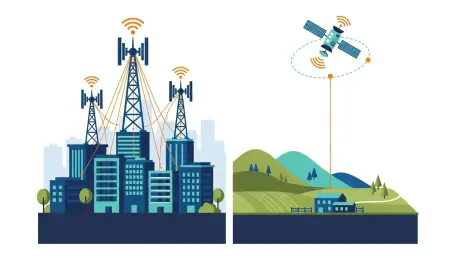
Second, new connectivity options are emerging from both the ground and the sky. The low-earth orbit (LEO) satellite market is set for explosive growth, with players like Amazon LEO entering the fixed wireless space and companies like AST SpaceMobile pioneering direct-to-device satellite services. Simultaneously, 5G Fixed Wireless Access (FWA) has become an unexpected triumph, having already captured nearly 10% of the U.S. broadband market by offering a viable alternative to traditional cable and fiber.
Finally, the rollout of next-generation standards is proceeding at a much more measured pace. Network operators are taking a deliberate, profitability-focused approach to adopting 5G-Advanced, carefully selecting which new services to implement rather than rushing into a full-scale deployment. In parallel, 6G remains largely conceptual through 2026, characterized more by industry discussions and presentations than by any tangible technological progress.
An Expert View Insights from Network Intelligence Leader Ookla
This shift toward practical application is validated by industry analysis. According to Mike Dano, lead industry analyst at network intelligence firm Ookla, the focus for the next couple of years will be on the immediate impact of AI, LEO satellites, and FWA, not on future standards. This perspective underscores a broader industry consensus that tangible results are now taking precedence over long-term roadmaps.
Reinforcing this theme, the analysis predicts that 6G will largely remain “vaporware” through 2026, existing more in theory than in practice. Furthermore, Dano noted that there will not be a “mad rush” for 5G-Advanced, as carriers prioritize return on investment over being the first to market with every new feature. This cautious, business-driven approach signals a new era of strategic deployment in the wireless sector.
How to Spot the Real Wireless Revolution
For consumers, tracking this evolution means looking beyond the headline download speeds. Key performance indicators to watch are now latency and upload speeds, as these metrics will determine a network’s readiness for the next wave of AI-driven applications and services. It is also a good time to evaluate emerging FWA and LEO satellite internet options, which are quickly becoming competitive alternatives to traditional broadband providers.
For industry watchers, distinguishing genuine progress from marketing hype involves monitoring concrete market data. Tangible indicators include FWA subscriber growth and the successful commercial launch of direct-to-device satellite services. In contrast, the extensive discussions and presentations surrounding 6G should be viewed as long-term strategic planning rather than signs of imminent deployment.
The conversation around the future of wireless had fundamentally shifted. It was no longer a story defined by a singular, monolithic standard, but by a dynamic and complex interplay of complementary technologies working together. The real revolution was not in the distant promise of 6G, but in the practical, intelligent, and diverse connectivity solutions that were already beginning to build a more connected world.