
As a veteran of the telecommunications industry, Vladislav Zaimov has built a career navigating the intricate intersections of enterprise technology and risk management. With extensive experience in safeguarding vulnerable networks and optimizing infrastructure for large-scale operations, he offers a unique vantage point on the shifting dynamics of global connectivity. Today, we sit down with him to discuss the emerging partnership between Vodafone Idea and BSNL in India—a move that could redefine the competitive landscape of the world’s second-largest mobile market.
Our conversation explores the strategic imperatives driving this collaboration, from the technical logistics of merging fiber and tower assets to the regulatory hurdles of spectrum sharing. We delve into how such a partnership might level the playing field against dominant market leaders, the potential impact on equipment vendors, and the delicate balance required when private and state-owned enterprises attempt to align their operational goals.
Sharing towers and fiber networks can reduce duplication, but it introduces significant operational complexity. What are the primary technical hurdles in integrating these disparate assets, and how can teams ensure service quality remains high?
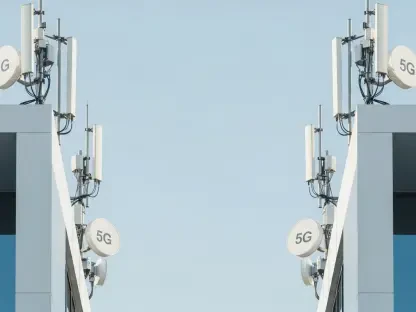
Integrating two distinct physical networks begins with a comprehensive audit of current tower locations and fiber capacity to identify redundant sites that can be decommissioned without creating “dead zones.” The technical teams must then navigate the challenges of backhaul synchronization, ensuring that fiber lines from both entities can support increased traffic loads and maintain low latency for data-heavy applications. To ensure service quality, engineers typically implement a phased migration strategy, where traffic is incrementally shifted onto shared equipment while real-time monitoring tools track signal strength and handover success rates. The logistics involve standardizing hardware interfaces across thousands of sites and establishing a unified network management system that provides a single pane of glass for maintenance and fault detection. It is a grueling process that requires precise execution to avoid the sensory frustration of dropped calls or sluggish data speeds for the millions of end-users relying on these connections.
Spectrum sharing is a bold strategy for managing high capex costs. What specific financial savings are realistic under this model, and what regulatory milestones are necessary for a successful implementation within a six-month window?
Under a spectrum-sharing model, operators can see a dramatic reduction in the billions of rupees typically required for individual license acquisitions and the subsequent deployment of radio equipment. By pooling assets, Vodafone Idea and BSNL can effectively split the costs of site maintenance and power—which often account for a massive portion of operational expenses—while maximizing the efficiency of every megahertz of bandwidth. For this to materialize within a six-month window, the Department of Telecommunications must first issue a clear regulatory framework that outlines the pricing for shared airwaves and the legal liabilities of each party. We would evaluate the success of this arrangement by tracking the “cost-per-bit” delivered and the reduction in idle capacity across the combined spectrum portfolio. It is a race against time that requires the government to act as a facilitator rather than a bottleneck, ensuring that the financial relief reaches the operators before their capital reserves are further depleted.
Some operators are currently expanding 5G coverage while others are still deploying domestic 4G upgrades. How does infrastructure sharing help smaller players reach parity with market leaders?
Infrastructure sharing acts as a force multiplier that allows smaller or financially constrained players to leapfrog traditional deployment timelines that would otherwise take years of solo investment. For instance, BSNL can leverage Vodafone Idea’s existing 5G-ready towers to accelerate its transition from 4G, while Vodafone Idea gains access to BSNL’s vast rural footprint to fill critical coverage gaps. This synergy creates a more balanced competitive landscape, preventing a duopoly from dominating the market and ensuring that consumers in remote areas receive the same high-speed connectivity as those in urban hubs. We expect to see a more “dense” network experience for the average user, where the handoff between different generations of technology becomes seamless and the overall reliability of the connection improves regardless of the provider’s individual market share. This collaboration turns a struggle for survival into a strategic offensive, allowing both players to present a united front against the scale of Reliance Jio and Bharti Airtel.
Procurement cycles often slow down when companies shift toward collaborative infrastructure models. How should equipment vendors navigate this transition, and what are the trade-offs between immediate cost-cutting and long-term network innovation?
Equipment vendors must brace for a period of uncertainty, as the six-month analysis phase likely leads to a “wait-and-see” approach where new orders may soften while the sharing details are finalized. To navigate this, vendors should pivot their offerings toward software-defined networking and interoperable hardware that can easily serve a shared environment, rather than proprietary “walled garden” systems. The immediate trade-off is a potential dip in short-term revenue as duplication is eliminated; however, the long-term reward is the creation of a more stable and financially viable client base that can afford consistent, high-value upgrades in the future. If the partnership succeeds, it will eventually generate a surge in demand for 5G equipment as the combined entity pushes to reach parity with its larger rivals. Vendors who position themselves as partners in this collaborative efficiency, rather than just sellers of hardware, will find themselves integral to the next phase of India’s digital evolution.
Aligning a private firm with a state-owned enterprise requires a careful balance of competing interests and resources. What are the practical steps to coordinate these two different organizational structures, and what metrics determine if the partnership is working?
The coordination begins with the establishment of a joint steering committee that operates independently of the political cycles that often influence state-owned enterprises like BSNL. Practical steps include harmonizing procurement protocols and creating a shared service-level agreement (SLA) that treats both the private and public entities as equal stakeholders with clearly defined key performance indicators. We measure success through metrics such as “time-to-market” for new services and the reduction in customer churn, which indicates whether the improved network quality is translating into brand loyalty. Resource allocation must be prioritized based on network “pain points”—allocating fiber to high-congestion urban areas first, while using shared towers to expand rural reach simultaneously. It is a delicate dance of balancing a private firm’s need for profitability with a state enterprise’s mandate for public service, requiring transparency and a shared commitment to the INR450 billion investment roadmap.
What is your forecast for the Indian telecom market under this sharing model?
I forecast that the Indian telecom market will shift from a two-horse race into a much more resilient three-player ecosystem, which is vital for maintaining competitive pricing and innovation. Within the next two to three years, the successful integration of Vodafone Idea and BSNL’s assets will likely result in a significant “network effect,” where the combined footprint reaches 5G parity in key circles much faster than anticipated. While the initial six-month phase will be marked by cautious procurement and heavy regulatory scrutiny, the eventual rollout will likely force the market leaders to further refine their own service offerings. Ultimately, the biggest winner will be the Indian consumer, who will benefit from broader coverage, improved signal penetration in buildings, and a more robust digital infrastructure that supports the country’s ambitious growth targets. This model of radical collaboration will likely serve as a blueprint for other emerging markets where the high cost of spectrum and hardware threatens to leave smaller operators behind.