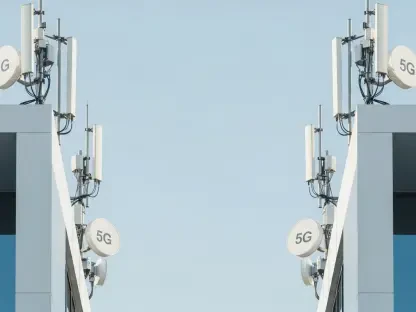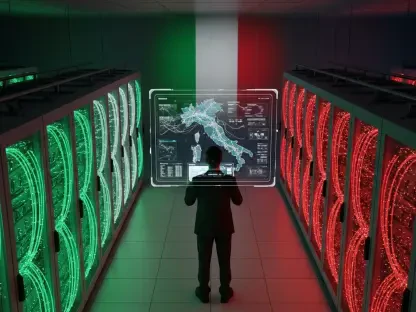

In the complex chessboard of global geopolitics where digital infrastructure is the new king, the United States is making a strategic move by placing a Swedish knight, Ericsson, at the forefront of its efforts to counter Chinese influence in Venezuela. This shift is personified by Nathan Simington, a former top U.S. regulator who now spearheads policy for Ericsson Federal Technologies. His new role illuminates a critical evolution in American foreign policy: leveraging trusted international partners to secure its interests in a world where the technological battle lines are sharply drawn. The initiative focuses on displacing entrenched Chinese technology in a nation pivotal to regional stability, transforming telecommunications from a mere utility into a potent instrument of international diplomacy and national security.
When Your Biggest Telecom Ally Is Not American
The transition of Nathan Simington from his influential position as a Republican FCC Commissioner to a director at Ericsson Federal Technologies marks a significant moment in the intersection of public service and private enterprise. This move is not a typical career change but a strategic placement that signals a new phase in the global tech rivalry. Simington now leads the charge for a Swedish company tasked with securing American interests abroad, a clear indicator that the U.S. government views the telecommunications battlefield as one that requires unconventional alliances. His role involves navigating the delicate space where corporate strategy meets national security objectives.
Ericsson Federal Technologies is a testament to this evolving landscape. The business unit was specifically created to serve as a direct partner to the U.S. government, focusing on the application of Radio Access Network (RAN) equipment in highly sensitive areas. These include national defense installations, secure government communications networks, and the reinforcement of domestic manufacturing supply chains. This specialized focus transforms Ericsson from a simple commercial vendor into a strategic asset for American policymakers, capable of deploying secure, reliable technology in environments where trust is paramount.
The American Void and the Need for Friends and Allies
The necessity for such a partnership stems from a significant void within America’s own industrial base. The decline and eventual sale of domestic telecommunications giants like Lucent left the United States without a homegrown international leader in RAN manufacturing. This absence created a strategic vulnerability, allowing companies from other nations, including adversarial ones, to dominate the global market for critical network infrastructure. Consequently, the U.S. found itself reliant on foreign technology to build its own next-generation networks.
To address this gap, recent U.S. telecommunications and national security policy has increasingly embraced a model of public-private partnerships with allied nations. Recognizing that it cannot go it alone, Washington has adopted a pragmatic approach that favors collaboration with “friends and allies.” This strategy allows the U.S. to leverage the technological prowess of trusted partners to fulfill its advanced telecom needs without compromising on security. The focus has shifted from purely domestic solutions to building a coalition of secure technology providers.
Within this framework, Ericsson is not framed as a foreign entity but as a vital partner from an allied nation. The Swedish firm represents a secure and reliable alternative to equipment from Chinese companies like Huawei and ZTE, which are viewed as beholden to an adversarial state. This positioning enables the U.S. to pursue its foreign policy goals, such as modernizing infrastructure in developing nations, while simultaneously mitigating the security risks associated with Chinese technology.
VenezuelThe Digital Battleground
Venezuela serves as a prime example of this strategy in action. As a geopolitical hotspot with a history of complex relations with the United States, the nation has become a critical arena for technological influence. Recent U.S. diplomatic engagement has opened the door for a potential overhaul of the country’s infrastructure, setting the stage for a direct confrontation between Western and Chinese technological ecosystems. The stability of Venezuela is increasingly linked to the security and reliability of its digital backbone.
The primary challenge is the deep integration of Chinese technology within Venezuela’s existing national networks. Both Huawei and ZTE have established a strong presence, embedding their equipment into the core of the country’s communications systems. This reliance extends beyond simple mobile networks. In a notable case, ZTE collaborated directly with the Venezuelan government to develop the national ID card system, a program that handles vast amounts of sensitive citizen data. Furthermore, ZTE was instrumental in deploying state-run video surveillance networks, raising significant concerns about privacy and state control.
This deep-seated reliance on Chinese hardware presents a clear opportunity for a strategic intervention. Much of Venezuela’s telecom infrastructure is described as “woefully outdated,” having only adopted 4G technology as recently as 2017. This technological lag creates a compelling case for a complete network modernization. For the U.S. and its partners, this is not just about replacing old equipment; it is about displacing a potential security threat and introducing a secure, modern network that can support economic recovery and stabilization.
The View from the Inside: A Conversation with Nathan Simington
In articulating the threat, Nathan Simington points to the core security risk inherent in Chinese technology: the state’s policy of “civil-military fusion.” He explains that under Chinese law, companies are compelled to cooperate with state intelligence and military agencies upon request. This legal framework effectively eliminates any meaningful distinction between private enterprise and the state, creating a substantial risk that network equipment could be engineered to “phone home,” secretly transmitting sensitive communications and data back to Beijing. This vulnerability is not only a threat to U.S. interests in the region but is also framed as being fundamentally “antagonistic to the fundamental interests of the Venezuelan people.”
When questioned about the potential for diplomatic friction between the U.S. and its Scandinavian allies—citing past tensions like the American proposal to purchase Greenland from Denmark—Simington downplays such episodes as “family disagreements.” He characterizes them as transient “stories in the news” that do not undermine the foundational strength of the transatlantic security alliance. He emphasizes the deep economic and security ties that bind the U.S. and Europe, pointing to Ericsson’s widespread presence in American markets and the recent expansion of NATO as evidence of an enduring partnership. However, it is noted that allies like Denmark, a founding NATO member, may view such diplomatic pressures more seriously, highlighting the delicate balance required in these international relationships.
Ultimately, Simington justifies the U.S. strategy of partnering with international firms like Ericsson as a matter of necessity and pragmatism. Given the absence of a globally competitive American RAN manufacturer, collaborating with trusted firms from allied nations is the most viable path to securing America’s advanced telecommunications needs. This approach allows the U.S. to project its influence and foster stable, secure digital ecosystems in strategically important regions without being forced to choose between insecure technology and no technology at all.
Ericsson’s Playbook for Venezuela
Although direct U.S. government action in Venezuela is still in its early stages, Ericsson is not waiting for a formal directive. Simington revealed that his team at Ericsson Federal Technologies is already engaged in proactive planning, developing a comprehensive strategic blueprint for a potential network overhaul. This internal preparation ensures that if and when the U.S. government decides to move forward, Ericsson will be ready to execute a well-defined plan swiftly and efficiently. This forward-thinking approach underscores the company’s commitment to its role as a strategic partner.
The initial phase of this playbook prioritizes the replacement of compromised Chinese technology in the most critical areas of the country. The strategy involves identifying key targets for the first wave of modernization, including major population centers where the majority of citizens live and work, as well as vital industrial hubs that are essential for the nation’s economic stability. By focusing on these high-impact areas first, the plan aims to deliver immediate improvements in security and connectivity where they are needed most.
The final and most crucial phase would be the physical execution of the overhaul. This would involve methodically replacing Huawei and ZTE equipment with a secure, modern network built on Ericsson’s technology. This effort is envisioned as more than a simple infrastructure project; it is a tool of U.S. foreign policy. The successful implementation of a new, secure network would serve as a powerful symbol of stabilization, promote economic development, and firmly counter China’s technological influence in a region of strategic importance.
The strategic alignment between U.S. foreign policy and a trusted allied technology provider in Venezuela has set a new precedent. This model of public-private, international cooperation demonstrated a viable path forward for countering adversarial influence in the global digital domain. The successful modernization of a nation’s infrastructure became a powerful testament to the idea that technological advancement and national security could, and should, go hand in hand. The effort in Venezuela served as a blueprint for future engagements, proving that strategic alliances were the most effective tool in building a more secure and interconnected world.