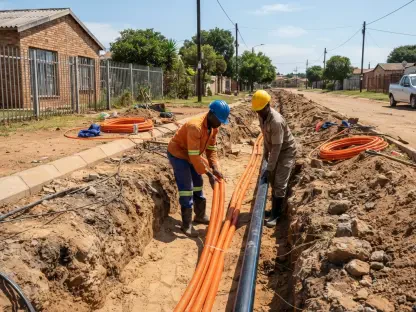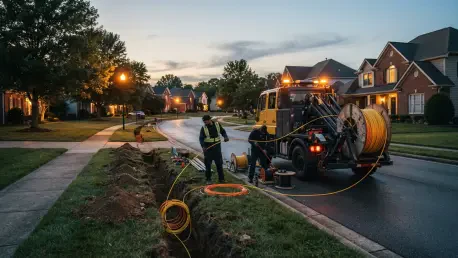

Comcast is leveraging public-private partnerships in Hardee County to extend essential fiber services to 2,000 locations previously classified as digital deserts. This move represents a broader shift across the American telecommunications landscape, where the focus has moved decisively away from legacy copper systems toward a future-proof fiber-to-the-home architecture. In late 2026, the industry is witnessing an unprecedented surge in capital expenditures as service providers race to install multi-gigabit pipelines that can handle the exponential growth of data consumption. These investments are no longer just about incremental speed increases; they are about fundamentally rebuilding the nation’s digital foundation to support a highly connected society. From dense urban centers to the most remote rural outposts, the commitment to fiber expansion is reshaping economic opportunities and social interactions. As high-speed access becomes a universal expectation, the distinction between “broadband” and “fiber” is becoming the defining characteristic of the modern digital divide.
Regional Investment Hotspots and Market Dynamics
Florida and South CarolinThe Southeastern Fiber Surge
The state of Florida has become a primary focal point for high-stakes infrastructure development, with Tillman Fiber leading a massive $70 million initiative to overhaul connectivity along the Treasure Coast. This strategic project, which targets regions like Port St. Lucie, Fort Pierce, and Vero Beach, is bolstered by a collaborative effort with T-Mobile Fiber to ensure that end-users receive high-performance symmetrical services. Simultaneously, companies like Wire 3 have finalized significant localized projects, including an $11.5 million deployment in Titusville that brings 10 Gbps capabilities to residential and business subscribers alike. These investments demonstrate a clear belief that Florida’s growing population requires infrastructure that exceeds current demands, preparing the region for the heavy bandwidth requirements of the next decade. By aggressively deploying fiber in these growth corridors, providers are ensuring that the local economy remains a top destination for tech-driven industries and remote professionals who require unwavering reliability.
In South Carolina, the expansion is equally aggressive, particularly within the “Upstate” region where Wire 3 is executing a $147 million long-term regional strategy. A central piece of this plan is a $19 million project in Easley, designed to connect roughly 18,000 premises to a multi-gigabit network. This regional focus extends to hubs like Clemson and Travelers Rest, where the arrival of fiber is seen as a catalyst for business recruitment and modernized educational resources. The strategy here is to move beyond the limitations of older cable technologies and provide a platform that can support simultaneous high-definition streams, professional-grade teleconferencing, and massive cloud-based data transfers. By integrating these smaller cities into a larger regional fiber ecosystem, providers are leveling the playing field for local businesses that were previously hindered by inconsistent or slow connectivity. The transition in the Southeast suggests that fiber is no longer a luxury but a fundamental utility required for community survival and prosperity.
The Northeast and Western Frontiers: Bridging the Coastal Gaps
The Northeastern United States is seeing its own transformation, with GoNetspeed spearheading multi-million dollar projects across Massachusetts and Maine. In Haverhill, Massachusetts, a $23 million commitment is set to transform the local landscape, with construction phases beginning to ramp up to provide residents with speeds as high as 6 Gbps. Similarly, in Maine, towns like Kittery and York are receiving multi-million dollar injections to replace aging infrastructure with high-capacity fiber optics. These projects are largely driven by the high density of remote workers in the region who have outgrown the capabilities of standard gigabit connections. As households continue to add smart devices and adopt high-fidelity virtual reality or advanced gaming platforms, the demand for higher bandwidth floors has risen. The regional providers are responding by over-building existing networks to ensure they do not have to return for physical plant upgrades for many years, effectively securing their market position against satellite and cellular competitors.
On the West Coast and in rural Appalachian pockets, the narrative of fiber expansion is one of total revitalization and equity. In Bonanza, Oregon, a town of only a few hundred residents, the activation of the first fiber customer marked a historic shift from digital isolation to global connectivity. Such projects highlight the role of fiber as a “great equalizer,” bringing the same level of service found in Silicon Valley to rural communities that were once overlooked. Meanwhile, in Virginia, Shentel has successfully upgraded systems in Buchanan to offer business speeds reaching 100 Gbps, a level of performance that allows rural industrial sites to compete with global tech hubs. These developments in El Centro, California, and other rural districts indicate that the industry has recognized the untapped potential in historically underserved areas. By focusing on these regions, providers are not only expanding their subscriber base but also fulfilling a critical societal need for accessible, high-quality internet that supports healthcare, education, and local government efficiency.
Strategic Shifts in the Provider Landscape
Digital User Experience: The New Competitive Frontier
As the technical specifications of internet services begin to equalize across different providers, the focus of competition is shifting toward the digital customer experience. Companies like Mediacom Communications have recognized this trend by elevating leadership roles specifically focused on digital care and end-to-end user journeys. The goal is to move away from legacy support models that relied on phone queues and physical technician visits, replacing them with intuitive, app-based management tools that mirror the high-tech nature of the fiber service itself. This evolution acknowledges that a 10 Gbps connection is only as good as the customer’s ability to manage it. By investing in seamless onboarding, automated troubleshooting, and transparent billing interfaces, providers are attempting to build long-term brand loyalty. This strategy is particularly effective in markets where multiple fiber providers are competing for the same household, making the quality of the interaction a more significant factor than raw speed.
The industry has also reached a firm consensus on the importance of symmetrical speeds, where upload and download rates are identical. In the past, internet services were heavily weighted toward downloading, but the modern digital environment requires robust uploading for cloud synchronization, high-quality video broadcasting, and collaborative professional software. Providers such as Optimum and Wire 3 have made symmetry a standard feature of their new builds, ranging from 2 Gbps to 10 Gbps. This shift is essential for supporting the growing number of residential users who are effectively running professional-grade offices from their homes. By establishing these high-performance standards now, the telecommunications industry is ensuring that the infrastructure currently being buried underground will remain relevant through the end of the decade. The focus on technical superiority, paired with a refined digital interface, marks the transition of ISPs from simple utility companies to sophisticated technology partners for the modern consumer.
Community Integration: Partnerships and Social Impact
A significant trend in the 2026 fiber rollout is the strategic pairing of network launches with local philanthropy and community engagement. Optimum and other major providers have frequently combined their technical expansions with donations to STEM education and local cultural festivals. This approach is designed to position the ISP as a community partner that is invested in the long-term success of the region, rather than a distant corporate entity. By funding technology labs in local schools, these companies are helping to cultivate a workforce that can actually utilize the high-speed infrastructure being deployed. This creates a virtuous cycle where the provider supports the community’s growth, which in turn increases the demand for high-tier internet services. This model of corporate social responsibility has become a staple of the fiber industry, helping to navigate local zoning hurdles and build public support for large-scale construction projects that might otherwise be seen as disruptive.
The overarching success of the current national expansion was largely dependent on the effective execution of public-private partnerships. By combining federal and state grants with private capital, providers were able to extend fiber into “unprofitable” rural areas that lacked the population density to justify a purely commercial investment. These collaborations proved that the digital divide could be closed when government objectives aligned with corporate expertise. Moving forward, the industry transitioned to a focus on maximizing the utilization of these new networks. Stakeholders suggested that the next phase of development should involve the creation of specialized services, such as dedicated low-latency lanes for telehealth or secure pipelines for municipal infrastructure management. As the physical construction phase for many of these regional projects concluded, the focus shifted to ensuring that the massive 10 Gbps capacity was leveraged to its full potential, fostering a more resilient and interconnected domestic economy. These proactive steps ensured that the fiber gold rush of the mid-2020s resulted in a permanent and equitable upgrade to the nation’s communication capabilities.