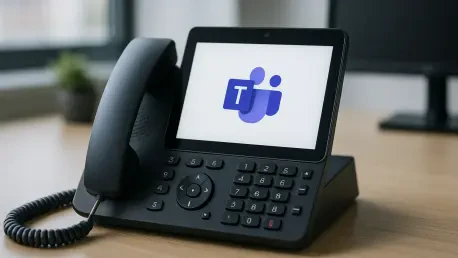

The digital workspace has become a sophisticated ecosystem of cloud-based tools, yet the fundamental act of making a phone call often remains trapped in a convoluted web of legacy hardware and disjointed software. Many organizations find themselves paying for advanced cloud licenses while still maintaining bulky physical servers that require constant manual updates. This friction creates a bottleneck where simple communication requires jumping between multiple windows, ultimately draining the collective focus of the workforce.
The alliance between UniVoIP and BridgePointe Technologies signals a departure from these fragmented systems toward a unified corporate environment. By integrating high-performance voice capabilities directly into the Microsoft Teams interface, this partnership eliminates the need for external telephony apps. This shift represents more than just a technical upgrade; it is a fundamental redesign of the employee experience that places voice communication exactly where the work is already happening.
The End of the Clunky PBX Era
Modern enterprises are moving away from the era of heavy on-premise Private Branch Exchange (PBX) systems that once dominated the telecommunications landscape. These legacy setups often demand significant physical space and specialized maintenance teams, creating high operational costs that do not scale with the needs of a remote or hybrid workforce. When organizations try to patch these old systems into modern cloud workflows, the result is usually a “frankenstein” architecture that lacks stability and clarity.
The transition facilitated by UniVoIP and BridgePointe addresses this paradox by moving communication entirely to a native cloud structure. This approach ensures that the phone system is no longer a separate island of technology but a fully integrated component of the broader IT strategy. By decommissioning outdated hardware, companies can instantly reclaim capital and reduce the complexity of their network infrastructure, allowing IT leaders to focus on innovation rather than troubleshooting wire connections.
Why Native Integration Is the New Corporate Standard
The primary weakness of traditional cloud telephony has been the reliance on third-party middleware to bridge the gap between the phone network and Microsoft Teams. These “bolt-on” solutions often introduce latency, security vulnerabilities, and extra licensing fees that can quietly inflate a company’s budget. Furthermore, every additional layer of software creates a potential point of failure that can disrupt business-critical communications at any moment.
By prioritizing a native architecture, UniVoIP ensures that the voice signal travels directly through the Microsoft ecosystem without being rerouted through unnecessary external platforms. This streamlined path results in higher audio quality and more reliable uptime, meeting the stringent demands of global enterprises. Choosing native integration reflects a commitment to architectural simplicity, where organizations maximize their existing Microsoft 365 investments while avoiding the trap of technical debt.
Strategic Synergies: The Shift to Consultant-Led Models
This collaboration blends UniVoIP’s specialized technical infrastructure with BridgePointe’s extensive network of over 400 strategists and engineers. Unlike a traditional transactional sale where a vendor simply hands over a license key, this partnership utilizes a consultative approach to guide businesses through the entire digital transformation. This ensures that every deployment is tailored to the specific regulatory and geographic requirements of the client.
- Eliminating Middleware Friction: The solution removes redundant software layers, leading to lower capital expenditure and a more resilient IT stack.
- Solving App Fatigue: Integration into the Teams interface means employees no longer face the cognitive load of switching between disjointed tools.
- Regulatory and Global Scalability: BridgePointe’s advisors help navigate international hurdles that often stall large-scale migrations.
Leadership Insights: The Future of Unified Communications
Industry leaders are increasingly vocal about the fact that enterprise reliability is no longer just about “dial tone” but about deep integration and user simplicity. UniVoIP CEO Dean Manzoori has noted that the future of the sector relies on perfecting native functionality rather than adding a surplus of niche features that users rarely touch. The consensus is that the most successful organizations will be those that provide a “white-glove” experience, ensuring that the transition to new systems is virtually invisible to the end-user.
Experts suggest that as the market matures, the competitive advantage will shift toward companies that can offer comprehensive engineering oversight during the migration phase. This high level of support minimizes the operational disruptions that typically plague major infrastructure overhauls. By focusing on reliability and ease of use, the partnership sets a new benchmark for how technology providers should support the evolving needs of the modern workforce.
A Framework for a Seamless Teams Voice Migration
Achieving a modernized voice environment requires a structured methodology that goes beyond simple software installation. Organizations must first perform a comprehensive audit of their current IT stack to identify which legacy components can be safely retired. This initial evaluation provides the roadmap for a clean migration, ensuring that no redundant costs are carried over into the new cloud-based environment.
Once the foundation is set, the focus shifts to the user-centric consolidation of tools. By removing standalone telephony apps and training staff on the enhanced native capabilities of Teams, businesses can drive immediate adoption and productivity gains. The final stage involves utilizing BridgePointe’s engineering expertise to manage the technical cutover, ensuring that advanced call controls and analytics are active from the start. This transition paved the way for a more agile communication strategy that supported long-term growth and technical resilience.