
Global telecommunications is currently experiencing a profound transformation as satellite technology moves from being a simple backup solution to becoming a fundamental cornerstone of the modern world’s digital infrastructure. While massive Low Earth Orbit constellations frequently capture public attention, a more sophisticated and resilient architecture is quietly taking center stage. This emerging multi-orbit strategy integrates various satellite layers to redefine network reliability. The industry is rapidly pivoting toward a tiered, collaborative orbital ecosystem designed to meet the relentless demands of a hyper-connected society, ensuring that high-speed access is no longer limited by terrestrial boundaries.
The Evolution of the Satellite Market and Multi-Orbit Adoption
Market Expansion and the Shift Toward Sophisticated Demand
Data from the Mobile World Congress indicates that the rapid deployment of Low Earth Orbit satellites has significantly expanded the total addressable market. This growth was largely driven by a massive educational phase where enterprise and consumer segments realized the true viability of space-based broadband. Instead of viewing satellite internet as a secondary option for remote areas, stakeholders now recognize it as a high-performance alternative to traditional fiber or microwave links in many scenarios.
Recent adoption statistics reveal a noticeable shift in customer behavior as users move beyond simple connectivity requirements. Today’s clients demand stringent Service Level Agreements, guaranteed throughput, and 99.9% uptime. The maturation of the sector is facilitating a transition from regarding satellite as a novelty to viewing it as essential infrastructure. Consequently, the global satellite backhaul market is experiencing double-digit growth as mobile operators integrate these assets into their primary network cores.
Real-World Applications of Multi-Orbit Architectures
In the maritime industry, a highly effective hybrid model has emerged as the standard for modern cruise operators. These companies utilize a tiered approach where Medium Earth Orbit satellites provide the high-throughput, guaranteed bandwidth required for premium passenger Wi-Fi. Simultaneously, Low Earth Orbit services are employed to handle crew communications and non-critical data transfers. This distribution of traffic ensures that performance-sensitive applications remain stable even when thousands of users are online at once.
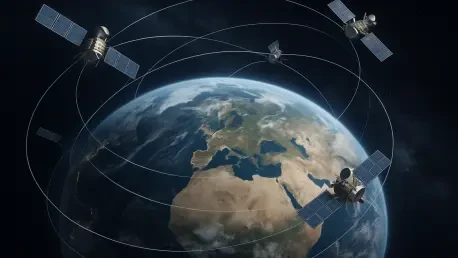
Enterprise mission-critical services are also benefiting from the consolidation of orbital assets. Companies like SES, following the strategic acquisition of Intelsat, are leveraging Geostationary assets for broad coverage while utilizing Medium Earth Orbit assets for low-latency, high-capacity enterprise links. This multi-layered capability allows them to provide reliability that single-orbit providers often struggle to guarantee. Moreover, the integration of these different altitudes creates a redundancy layer that is vital for government and financial sectors.
Direct-to-Device integration represents another frontier where multi-orbit strategies are proving their worth. Strategic partnerships, such as the collaboration between SES and Lynk Global, demonstrate how existing ground infrastructure can bridge satellite signals directly to standard mobile handsets. This approach bypasses the need for specialized hardware, making satellite connectivity accessible to anyone with a typical smartphone. By utilizing established ground stations, these providers can scale their services faster while reducing the initial capital investment required for new terminal equipment.
Industry Perspectives: Strategic Positioning and Collaborative Growth
Industry leaders argue that while certain high-profile constellations have expanded the market, the future belongs to operators who can orchestrate multiple orbits. Gerry Collins of SES has noted that the ability to provide specialized service levels through a combination of altitudes is what differentiates professional-grade providers from mass-market players. The goal is no longer just about the number of satellites in the sky, but how those satellites are managed to deliver consistent, high-quality experiences for complex business needs.
There is a growing consensus among Mobile Network Operators that a “Sell Through” philosophy is essential for the long-term health of the wireless industry. In this model, satellite companies act as partners rather than direct-to-consumer rivals. This collaborative stance helps alleviate the concerns of terrestrial carriers who fear being bypassed by vertically integrated space giants. By working together, telcos and satellite operators can provide a unified service that combines the strengths of both terrestrial and non-terrestrial networks.
Experts often highlight the threat posed by vertical integration in space, suggesting that multi-orbit providers offer a safer alternative for telecommunications companies. This perspective is particularly relevant for operators wary of being disrupted by satellite-only giants that control both the launch vehicles and the service delivery. A multi-orbit, partner-focused strategy provides a balanced ecosystem where mobile operators can maintain their customer relationships while still offering global, space-based coverage to their subscribers.
The Future Outlook: Challenges and the Path to Seamless Integration
The trajectory of satellite technology points toward a seamless global web where devices automatically switch between different orbits based on cost, latency, and bandwidth requirements. This intelligent switching will occur in the background, ensuring the user always has the best possible connection without manual intervention. However, achieving this level of integration requires overcoming significant regulatory hurdles regarding spectrum allocation and international cooperation.
Potential challenges also include the physical risks associated with orbital debris and the high capital expenditure required to maintain diverse satellite fleets. The industry must navigate these complexities while managing the environmental impact of frequent launches. Furthermore, the complexity of managing hybrid networks could lead to a wider gap between top-tier global providers and smaller regional players who lack the resources to maintain a presence in multiple orbital planes.
As Direct-to-Device technology matures, the concept of a “dead zone” will likely become a thing of the past. This shift will have a profound impact on emergency services, remote industrial internet-of-things applications, and global logistics. The ability to maintain a signal in the middle of the ocean or at the peak of a mountain will transform how industries operate, making remote monitoring and real-time data collection a standard practice across the globe.
Conclusion: Summary and the Road Ahead
Multi-orbit connectivity stood as the definitive next phase of the telecommunications revolution, successfully merging the low latency of Low Earth Orbit with the high throughput of Medium Earth Orbit and the broad coverage of Geostationary assets. This transition from isolated systems to an orchestrated, multi-layered environment ensured that mission-critical reliability finally met the rising consumer demand for ubiquitous access. Organizations that prioritized these hybrid models gained a significant edge in network resilience and service flexibility.
The industry moved beyond the era of simple competition to a period of deep integration between space and terrestrial assets. It became clear that the path forward required building collaborative frameworks that embedded satellite power directly into the existing mobile fabric. Moving forward, the focus shifted toward developing advanced software-defined networking tools that could manage these complex orbital handovers with total transparency. Stakeholders began investing more heavily in standardized protocols to ensure that any device, regardless of its location, could tap into the most efficient orbital layer available.
This maturation process eventually eliminated the technological silos that once separated satellite operators from traditional telecommunications firms. The broader implications for global society included enhanced disaster response capabilities and the total connectivity of previously isolated economic zones. As the global web became truly seamless, the focus for the coming years turned toward optimizing spectrum efficiency and ensuring the sustainable use of orbital space. This strategic evolution guaranteed that the world remained connected, irrespective of geographic limitations or infrastructure gaps.