
The digital lifeblood of the modern household flows through a single, surprisingly fragile artery, making the risk of a complete system collapse more than just a minor inconvenience—it is a crisis. With critical aspects of daily life, including work, education, and healthcare, now deeply dependent on constant internet access, any outage can bring a household to a standstill. This analysis examines the critical vulnerability of single-source internet and explores the rise of the hybrid home gateway. This architectural shift is designed to deliver the resilient, always-on connectivity our world now demands. The technology, its real-world applications, and its evolution toward a failsafe future are the focus of this exploration.
The Shift from High Speed to High Availability
The Growing Cost of a Disconnected Home
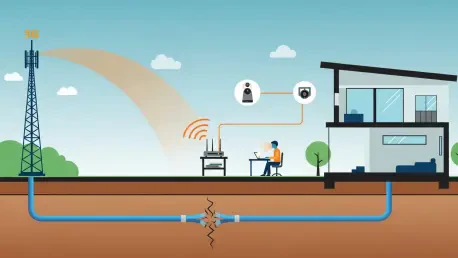
The assumption of reliable home internet is being challenged by increasingly frequent network failures. Statistics reveal a troubling uptick in disruptions, from accidental fiber cuts during construction to widespread cellular network outages caused by system overloads or software errors. Each incident serves as a stark reminder that no single form of connectivity is infallible, creating a tangible risk for millions who depend on it. This physical fragility of our digital infrastructure is a growing concern for service providers and consumers alike.
This vulnerability is magnified by profound shifts in how society operates. The widespread adoption of remote work, the integration of telehealth into routine medical care, and the normalization of online education have transformed home internet from a utility for entertainment into mission-critical infrastructure. A connection loss is no longer about a delayed movie stream; it is about a lost workday, a missed doctor’s appointment, or a disrupted final exam. The economic and social costs of these outages are escalating, driving a fundamental reevaluation of what constitutes acceptable service.
Consequently, user expectations have evolved dramatically. While raw speed was once the primary benchmark for a quality internet connection, the focus has pivoted to unwavering availability. Consumers now demand constant uptime with the same non-negotiable insistence once reserved for enterprise-level service agreements. This shift reflects a maturing market where reliability is the new premium, and the desire for speed has been superseded by the absolute need for resilience.
The Hybrid Gateway as an Integrated Solution
The hybrid home gateway emerges as an engineered response to this demand for constant uptime. It represents a significant architectural leap beyond rudimentary backup solutions, such as plugging a 4G or 5G USB dongle into a router during an outage. In contrast, a true hybrid gateway is a single, cohesive device designed from the ground up to manage multiple internet sources—like fiber and 5G cellular—simultaneously and intelligently. This integration is key to its effectiveness, allowing for a proactive rather than a reactive approach to connectivity management.
At its core, the hybrid gateway’s primary function is to maintain a seamless and stable user experience, even in the face of network instability. It continuously monitors the performance of all connected sources, analyzing metrics like latency, jitter, and packet loss. Using this data, it can intelligently route traffic, shifting data-heavy tasks to the most robust connection while reserving others for less critical functions. This dynamic load balancing prevents the jarring interruptions characteristic of older failover systems.
This intelligent management translates into tangible real-world benefits. Consider a professional on a critical video conference call from their home office. If the primary fiber connection experiences a sudden spike in latency that would normally cause the video to freeze or drop, the hybrid gateway can detect the degradation in milliseconds. It then seamlessly shifts the video call’s data stream to the secondary 5G connection without any user intervention or noticeable interruption, preserving the continuity of the conversation and demonstrating the power of an integrated, resilient network architecture.
Industry Insights Architecting for Inevitable Failure
Industry leaders view the hybrid gateway not as an incremental product enhancement but as a fundamental change in network design philosophy. Experts like James Chen of MediaTek emphasize that this trend is a direct response to a simple market reality: every last-mile technology is inherently susceptible to failure. Whether it is fiber, cable, or fixed wireless access, each has its own set of vulnerabilities, from physical damage to atmospheric interference.
The driving force behind this architectural pivot is the industry-wide acknowledgment that preventing all failures is impossible. Instead, the focus has shifted toward building networks that can gracefully manage and recover from them. This “resilience by design” approach moves away from creating a supposedly unbreakable single link and toward developing a multi-layered system where the failure of one component does not lead to a total system collapse. It is a proactive strategy that accepts failure as a certainty and engineers a solution around it.
This philosophy fundamentally redefines what a home network is for. It is no longer just a conduit for data but an intelligent platform responsible for ensuring digital continuity. By building infrastructure with the explicit assumption that connections will degrade or be lost, the hybrid gateway ensures that the user’s experience remains protected. This resilience becomes the core feature, enabling the network to deliver on the promise of always-on connectivity that modern life demands.
The Future Trajectory of Resilient Connectivity
Integrating Non Terrestrial Networks for Ultimate Resilience
The evolution of the hybrid gateway is already looking beyond terrestrial connections. The next frontier in achieving ultimate resilience involves integrating non-terrestrial networks (NTN), primarily low-Earth orbit (LEO) satellite services, as a third layer of connectivity. This creates a multi-tiered system where a home could be served by fiber, 5G, and satellite, offering an unprecedented level of redundancy.
Satellite connectivity offers a unique and powerful advantage as a failover solution: its near-total independence from local ground infrastructure. Unlike fiber and cellular networks, which rely on local power grids and physical lines that can be compromised during natural disasters, satellite links are impervious to such localized events. This makes NTN an ideal backstop for maintaining connectivity during widespread outages caused by hurricanes, wildfires, or other major disruptions.
While challenges such as initial cost and inherent latency must be managed, the benefits of incorporating an NTN layer are profound. By providing a connection that bypasses vulnerable terrestrial systems, it creates a truly failsafe backstop for any home. This three-layered approach—fiber for speed, 5G for local resilience, and satellite for catastrophic failure—represents the pinnacle of resilient home connectivity.
Democratizing Enterprise Grade Reliability
The trend toward hybrid connectivity signals the democratization of enterprise-grade reliability for the average consumer. What was once a premium service reserved for businesses with critical operational needs is now becoming a standard expectation for the home. This shift ensures that the tools for digital participation are not just fast but also consistently available to everyone.
This widespread adoption of resilient networks is a key enabler for the continued decentralization of major societal functions. It provides the stable foundation required for remote work, distance learning, and telehealth to flourish, ensuring that access to opportunity is not dictated by the reliability of a single internet connection. It fosters a more equitable digital landscape where individuals and communities can thrive regardless of their location.
The benefits of this trend extend across a diverse range of user groups. For remote workers, it means uninterrupted access to corporate networks and collaborative tools. For students, it guarantees consistent participation in online classes and digital learning platforms. For home-based businesses, it eliminates the risk of costly downtime, and for families, it ensures that connected health and security devices remain operational at all times.
The New Standard for Home Connectivity
The analysis made it clear that reliance on a single-source internet connection had become an unacceptable risk in the modern era. In response, the hybrid home gateway emerged as the essential solution, providing an architectural foundation for the constant uptime that daily life required. This technological shift was not driven by a niche demand but by a universal need for resilience, reflecting the central role connectivity played in work, education, and health.
The movement toward “resilience by design” ultimately became the defining characteristic of next-generation home networks. This philosophy ensured that the digital world remained reliably on, establishing a new standard for connectivity that could withstand the inevitable failures of the physical infrastructure it was built upon.