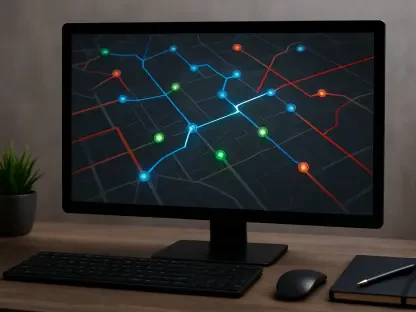

To counter the escalating sophistication of digital threats and enhance its operational agility, the United States Space Force is initiating a sweeping modernization of its base computer networks, a critical move to secure the digital backbone of its global operations. This substantial undertaking is a key component of the wider $12.5 billion Base Infrastructure Modernization (BIM) program, an ambitious Air Force-led initiative aimed at revitalizing the aging and vulnerable digital infrastructure across both military branches. The effort is designed to replace outdated systems with a resilient, high-capacity network capable of supporting the data-intensive missions that define modern space-based defense. At its core, the project addresses the urgent need to move beyond legacy architectures, which were not designed to withstand the persistent and advanced cyberattacks of the present day, and to build a new foundation fortified for the challenges of a contested digital environment.
A New Era of Digital Defense
The Strategic Imperative for Modernization
The Pentagon’s strategic pivot toward more defensible and modern networks reflects a clear acknowledgment that legacy systems present an unacceptable risk in the current global security landscape. These older infrastructures, often built around a perimeter-based defense model, are increasingly vulnerable to infiltration by sophisticated state and non-state actors. For the Space Force, whose missions are inextricably linked to the seamless flow of vast quantities of data from satellites and ground-based sensors, the integrity and performance of its networks are paramount to mission readiness. A compromised or degraded network could have immediate and severe consequences for satellite command and control, missile warning systems, and GPS navigation, impacting both military operations and civilian life. This modernization is therefore not merely an upgrade but a fundamental necessity, ensuring the service can operate effectively and securely in an environment where the digital domain is a primary battlefield and data is a strategic asset.
Implementing Zero Trust and Cloud Integration
At the heart of this technological transformation is the implementation of a “zero trust” security architecture, a paradigm shift from traditional network security. Unlike older models that implicitly trust users and devices within the network perimeter, zero trust operates on the principle of “never trust, always verify,” requiring continuous authentication for any user or device attempting to access resources. This granular approach drastically reduces the attack surface and limits the potential for lateral movement by an intruder who manages to breach the initial defenses. In parallel, the overhaul provides robust support for cloud-based applications, enabling the Space Force to leverage the scalability, processing power, and analytical tools of modern cloud platforms. This integration is crucial for managing the immense data streams generated by space assets and for deploying advanced capabilities like artificial intelligence and machine learning to maintain a decisive operational advantage.
The Contractual and Operational Framework
CACI International’s Role and Project Scope
To execute this critical modernization, defense contractor CACI International was awarded a five-year task order with a potential value of $212 million. The contract outlines a comprehensive plan to upgrade both the classified and unclassified network infrastructure across all 14 U.S. Space Force bases. This includes a wide geographic footprint, spanning from domestic installations across the United States to the vital Pituffik Space Base in Greenland. The primary objective of the task order is to deliver resilient, high-throughput connectivity that can reliably support the demanding requirements of twenty-first-century military operations. This involves not only deploying new hardware and software but also re-architecting the networks to be inherently more secure and adaptable. The successful execution of this project is expected to create a standardized, high-performance digital environment across the entire service, ensuring that Guardians have the tools they need to protect and defend U.S. interests in space.
A Shift to Enterprise IT as a Service
This initiative is being managed under the broader Base Infrastructure Modernization program, which utilizes a flexible 10-year indefinite delivery/indefinite quantity (IDIQ) contract model. This structure provides the military with a pool of prequalified vendors, allowing it to adapt quickly to evolving technological requirements and operational needs without being locked into a single solution. A key innovation of the BIM program is its adoption of an “enterprise IT as a service” model. This approach moves away from the traditional cycle of purchasing and periodically refreshing government-owned equipment. Instead, the contractor, CACI, is responsible for the continuous sustainment and updating of the infrastructure. This service-based model transfers the responsibility of keeping the technology current to the industry partner, ensuring the network remains at the cutting edge and reducing the long-term burden on the military to manage rapid technological obsolescence.
A Fortified Digital Frontier
The comprehensive network overhaul represented a foundational step in future-proofing the nation’s space-based defense capabilities. By moving beyond outdated, vulnerable systems and embracing a modern architecture built on zero-trust principles and cloud integration, the Space Force established a resilient and agile digital backbone. This modernization was not simply a technical upgrade; it was a strategic realignment that equipped the service to operate securely in a highly contested digital environment. The successful implementation of this project provided the secure, high-speed data flow essential for advanced analytics, artificial intelligence, and real-time command and control, which fundamentally enhanced the operational effectiveness and security posture of all space missions.