
In an unexpected fusion of art, technology, and social goodwill, a community-driven initiative in Rochester, New York, is breathing new life into the skeletal remains of the city’s public telephone network. The “Good Phone Project,” an innovative effort conceived and led by Rochester Institute of Technology professor Eric Kunsman, retrofits defunct payphone stands with free-to-use Voice over IP (VoIP) telephones and high-speed Wi-Fi access. This remarkable undertaking transforms relics of a bygone era into modern lifelines, directly addressing the widening communication gap in urban neighborhoods by providing essential services to those who need them most. What started as an artistic documentation of a dying technology has evolved into a practical and impactful mission, proving that even in our hyper-connected world, the most basic forms of communication can still be a revolutionary act of community support.
From Artistic Vision to Community Activism
The project’s origins are deeply rooted in Kunsman’s artistic passion, which took form in his 2017 photography series titled “Felicific Calculus.” The name itself poignantly captured the core theme of his work, referencing the utilitarian calculation once used by the telecommunications company Frontier to justify operating payphones at a financial loss because of the immense net good they provided. Initially, Kunsman’s goal was to document Rochester’s remaining payphones, a project that soon expanded into a nationwide effort to archive these fading monuments to a past technological era. His work served as a visual record of a disappearing public utility. However, as he watched more and more of these phones being permanently removed by Frontier, he noticed that even in their final days, they were still being used by people who depended on them for essential calls, a service they paid 50 cents to access. This observation transformed his role from that of a passive documentarian to an active innovator.
The catalyst for this transformation was the complete removal of the last payphone in Rochester by 2024, an act that created a significant communication void for the city’s most vulnerable populations. Faced with the company’s unresponsiveness to the community’s needs, Kunsman recognized a new mission: to find a technological solution that could fill this gap. Leveraging his position at what he calls a “geek school,” he mobilized a dedicated team to develop what would become the Good Phone Project. Their goal was not just to replace a lost service but to enhance it, ensuring that the removal of outdated infrastructure did not further marginalize those who relied on it. The artistic documentation had served its purpose; it was now time for direct action, using modern technology to resurrect the spirit of universal access that the payphone once represented.
A Modern Lifeline in Action
The first operational “Good Phone” was installed in the fall of 2024 at the Father Tracy Advocacy Center on North Clinton Avenue, and its impact was both immediate and profound. The phone handled an astonishing 650 calls within its first month of operation, a testament to the pressing need it fulfilled, especially considering it was only active during business hours from 9 a.m. to 5 p.m., Monday through Friday. The entire project operates on a shoestring budget, driven by a small, dedicated team of five volunteers and supported by modest grant funding, including a notable $7,100 from the Genesee Valley Council on the Arts. Since that initial success, five more Good Phones have been installed across the city in strategic, high-need locations, including the Flower City Arts Center on Monroe Avenue and the Lyell Avenue branch library, each one serving as a beacon of free communication in its respective neighborhood.
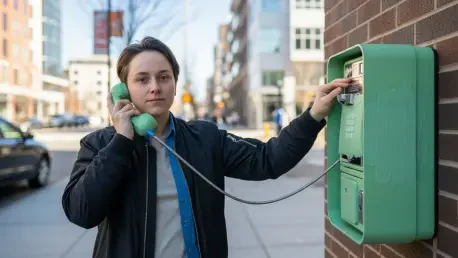
These reimagined payphones offer a robust suite of free services designed to meet critical needs. Users can make unlimited calls to any destination within the United States, Canada, Puerto Rico, Mexico, and the Dominican Republic. Perhaps the most transformative feature, however, is the ability for users to set up a personal voicemail box. This function is a game-changer for individuals without a permanent phone number, providing them with a stable point of contact necessary for critical life activities, such as applying for jobs, without having to list a temporary or shared number from a social service agency. The phones themselves are visually distinct; the old shells are painted a welcoming pistachio green, and their coin slots are plastered over, a clear signal that the service is entirely free. The technology powering them is simple yet effective, consisting of a small computer inside the housing that connects to the host building’s electricity and Wi-Fi network to facilitate the VoIP calls.
Community Embrace and Future Outlook
The initiative has been met with overwhelmingly positive responses from its community partners, who witness its value on a daily basis. Markus Essien, the photography program director at the Flower City Arts Center, described his initial reaction as emotional, moved by the sight of “someone doing good for good’s sake.” He noted how the project transformed what was essentially an “eyesore”—a useless piece of metal—into a “great asset” for the entire neighborhood. Similarly, Dennis Williams, the branch manager at the Lyell Avenue library, highlighted the practical benefits for his staff and patrons. Before the Good Phone’s installation, the library experienced a constant stream of requests from people needing to use staff phones, which frequently interfered with library operations. Williams stated that the Good Phone filled a “critical need” and is in “constant use,” alleviating the burden on library resources while providing a much-needed service to the community.
Eric Kunsman’s studio on Walnut Street became the de facto headquarters and museum for the project, housing hundreds of vintage payphone stands, boxes, and components he collected for future installations. While there was no shortage of hardware, the project’s primary constraints were funding and manpower. As the Good Phone Project was still in its infancy, it actively sought additional grants to expand its reach. The team’s strategy was never to replace every one of the 1,455 payphones Kunsman once documented, but rather to form strategic partnerships with community organizations willing to provide the necessary power and internet connectivity. Each installation was a collaborative venture, a testament to the project’s community-based ethos. Through this innovative fusion of art, technology, and social service, the Good Phone Project stood as a powerful example of how obsolete technology could be creatively repurposed to bridge the digital divide and strengthen community bonds.