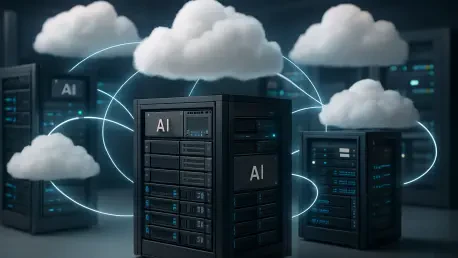

The sudden fracturing of the once-impenetrable alliance between Microsoft and OpenAI highlights a broader tectonic shift toward a multi-cloud paradigm that challenges the very foundation of exclusive vendor lock-in. Historically, AI development relied on centralized monoliths where a single provider dictated the pace of innovation and infrastructure constraints. However, the emergence of distributed cloud ecosystems marks a pivotal transition, as enterprises prioritize redundancy and specialized performance over the convenience of a single-vendor relationship. This evolution reflects a growing realization that the complexity of modern artificial intelligence demands a hybrid approach that transcends traditional boundaries.
Evolution and Fundamentals of Multi-Cloud AI
The transition toward multi-cloud environments is driven by the necessity for resilience and the strategic avoidance of single points of failure. In the early stages of the AI boom, startups often traded their autonomy for the massive compute power offered by giants like Microsoft or Google. This initial consolidation served a purpose during the training of large language models, but as these technologies moved into production, the limitations of a closed ecosystem became apparent.
Distributed infrastructure allows organizations to leverage the specific hardware strengths of different providers. By moving away from exclusive silos, developers can optimize for latency, cost, and availability across disparate geographic regions. This foundational shift is not merely a change in vendor preference but a fundamental restructuring of how compute resources are allocated in a global economy that prizes agility above all else.
Technical Components of Modern AI Platforms
Stateful Memory and Context Retention
A defining feature of the next generation of AI is the transition from stateless APIs to stateful memory layers. While traditional models processed every request as an isolated event, stateful architectures like the Frontier platform allow agents to maintain context and memory across multiple sessions. This persistent awareness is critical for enterprise applications where an AI must remember historical data, user preferences, and complex project parameters without requiring a massive data dump with every interaction.
Technically, this stateful layer functions as a synchronized memory bridge, significantly reducing the computational overhead typically associated with re-injecting context. It allows for a more fluid, human-like interaction that is essential for sophisticated workflow automation. By maintaining a continuous state, these systems bridge the gap between simple chatbots and autonomous digital employees capable of handling multi-day tasks.
Distributed Resource Provisioning and API Management
Orchestrating workloads across different providers requires a sophisticated routing layer that manages technical interoperability. Modern platforms must navigate the complexities of data transfer and API compatibility between environments like AWS and Azure. This orchestration involves intelligent load balancing, where a system automatically directs traffic based on real-time performance metrics, ensuring that the most efficient hardware handles specific tasks.
The performance advantages are substantial, particularly regarding throughput and latency optimization. By utilizing a multi-cloud API management strategy, enterprises can bypass the localized outages or resource constraints that often plague single-vendor setups. This distributed approach ensures that high-priority enterprise services remain operational even when one major provider experiences technical difficulties.
Emerging Trends in Cloud Strategy and Strategic Alliances
The landscape of strategic alliances is being reshaped by massive investment trends, most notably a $50 billion pivot toward infrastructure diversification. Industry giants are no longer content with being secondary partners; they are restructuring their entire service offerings to capture market share from established leaders. This shift is exemplified by OpenAI’s decision to integrate with Amazon Web Services, a move that directly challenges its historical exclusivity with Microsoft.
Such maneuvers suggest that the era of the exclusive cloud partner is coming to an end. Tech leaders are increasingly viewing cloud infrastructure as a utility that should be sourced from multiple providers to ensure competitive pricing and innovation. This fragmentation is fostering a more aggressive competitive environment where providers must constantly improve their specialized AI hardware to retain high-value clients.
Real-World Applications and Enterprise Deployment
Platforms like Frontier are finding immediate utility in sectors like finance and logistics, where persistent AI agents manage complex global supply chains. In these environments, the ability to maintain context over long durations allows for better risk assessment and more accurate forecasting. A logistics firm, for instance, can utilize a multi-cloud agent to monitor shipments across different regions, switching providers to maintain uptime in various legal jurisdictions.
Moreover, cloud diversification provides a safety net for global enterprises that require 24/7 availability. By spreading their AI infrastructure across multiple ecosystems, these companies can achieve a level of geographic reach that was previously impossible. This strategy ensures that localized regulatory changes or infrastructure failures do not disrupt critical operations, making it the preferred choice for large-scale corporate deployments.
Barriers to Multi-Cloud Adoption and Regulatory Hurdles
Despite the benefits, the path to a fully decentralized AI stack is hindered by complex contractual disputes and technical integration difficulties. Exclusivity agreements often create legal moats that are difficult to bridge without risking significant litigation. These barriers are compounded by the difficulty of maintaining consistent security protocols across different cloud environments, which can lead to vulnerabilities if not managed with extreme precision.
Regulatory scrutiny also plays a major role, as government bodies investigate anti-competitive behavior within the cloud sector. The focus on how tech giants use their dominance to lock in customers has forced a more cautious approach to new partnerships. Ongoing efforts to develop standardized orchestration layers aim to mitigate these issues, but the path toward universal transparency remains fraught with corporate and legal tension.
Strategic Outlook and the Future of AI Ecosystems
The future of AI infrastructure points toward a completely decoupled stack where the AI model operates independently of the underlying hardware. This decoupling will likely lead to a surge in infrastructure transparency, driven by potential IPOs and the demand for more accountable compute resources. As the technology matures, we can expect the rise of decentralized compute markets that further erode the dominance of traditional cloud providers.
This shift will likely democratize access to high-performance AI, allowing smaller startups to compete with established giants on a more level playing field. The long-term impact on the global economy will be profound, as localized, high-speed AI compute becomes a standard feature of modern business infrastructure, regardless of geographical or corporate constraints.
Summary and Final Assessment
The transition from consolidated alliances to a fragmented, competitive landscape marked a significant turning point for the industry. This review established that while the technical challenges of stateful memory and cross-cloud orchestration were formidable, the move toward diversification proved essential for long-term scalability. Organizations that adopted a multi-cloud strategy gained a distinct advantage in resilience and operational flexibility.
The strategic shift underscored the reality that no single provider could satisfy the insatiable demand for specialized AI resources. As the market matured, the focus transitioned from simply securing compute power to optimizing the efficiency and autonomy of the AI stack. Ultimately, the successful deployment of these distributed systems paved the way for a more open and robust technological future.