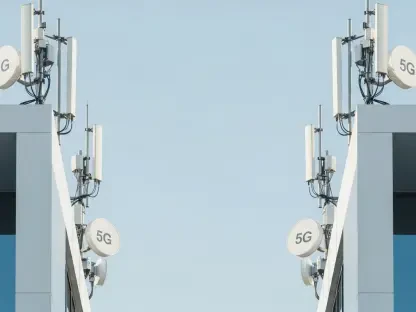

The integration of high-performance wireless connectivity has evolved from a luxury for tech-heavy industries into a non-negotiable requirement for any enterprise seeking to maintain operational agility. While Wi-Fi remains a staple for office environments, the demands of heavy industrial automation and sprawling logistics centers have historically outpaced its capabilities. Moso Networks has successfully identified this gap, transforming the traditionally intimidating realm of private 5G into a streamlined, accessible utility. This shift is critical as businesses move away from localized experiments toward the full-scale deployment of autonomous systems.
Breaking the Complexity Barrier in Enterprise Connectivity
The historical trajectory of cellular infrastructure was long defined by its exclusivity and high barrier to entry. Enterprises often viewed the prospect of a private network as a project requiring massive radio frequency engineering teams and fragmented hardware procurement. This “complexity tax” often stalled digital transformation initiatives before they could deliver tangible ROI. Today, however, the market reflects a move toward simplification, where 5G is no longer treated as a specialized engineering feat but as a foundational asset that integrates seamlessly into existing IT workflows.
The Evolution of Private Wireless Infrastructure
As industrial environments became more data-intensive, the limitations of traditional wired and Wi-Fi connections became apparent. Modern factories and smart warehouses require a level of mobility and low latency that older standards simply cannot provide. This necessity drove a shift in how infrastructure is conceptualized, moving from rigid, centralized models to flexible, scalable wireless solutions. Understanding this background is essential to recognizing why simplified 5G has become the new benchmark for enterprise connectivity, allowing organizations to scale their digital footprint with the speed of mōsō bamboo.
Architecture and Integration: The New Standard for Private 5G
Streamlining Hardware Through All-in-One Radio Solutions
A primary obstacle to 5G adoption was the sheer volume of specialized equipment needed to power a single site. By partnering with Qualcomm to leverage system-on-a-chip (SoC) technology, Moso Networks has condensed the entire 5G stack into all-in-one radios. These units mirror the physical footprint and installation ease of standard Wi-Fi access points. This approach allows enterprises to bypass the need for extensive on-site RF engineering, significantly reducing capital expenditure and the time required to bring a new network online.
The Role of Intelligent Management in Network Stability
Innovation in physical hardware must be matched by a sophisticated software layer to ensure long-term reliability. The Moso Intelligent Management Platform (IMP) serves as the central nervous system for these networks, providing an intuitive interface for monitoring health and security. This platform bridges the divide between complex cellular backend operations and the user-friendly dashboards required by modern IT departments. Centralizing this control ensures that security protocols remain rigorous and network uptime stays high, which is a requirement for mission-critical utilities and logistics.
Collaborative Ecosystems and the Plug-and-Play Model
The current market landscape favors collaborative models over isolated, proprietary systems. By working with specialized firms like Druid and various system integrators, Moso offers a pre-integrated, plug-and-play environment that eliminates multi-vendor friction. This ecosystem is particularly effective in sectors like education and manufacturing, where regional regulations and site-specific challenges often complicate deployment. These partnerships ensure that the technology is disruptive in its performance while remaining familiar in its day-to-day management.
The Future of Connectivity: Edge AI and Beyond
Looking ahead, the convergence of private 5G and Edge AI is set to define the next frontier of industrial productivity. The massive throughput and low latency inherent in these networks provide the substrate necessary for real-time data processing at the edge. In autonomous agriculture or advanced manufacturing, processing data at the source is the only way to ensure safety and efficiency. As shared spectrum becomes more widely available, the economic viability of these high-performance networks will likely cement 5G as the standard utility for any data-driven operation.
Implementing Private 5G: Strategies for Success
For organizations aiming to modernize, the transition to private 5G requires a strategic focus on high-impact use cases such as mobile robotics or real-time asset tracking. Utilizing all-in-one hardware can shorten deployment timelines, but long-term success depends on robust management software. Best practices suggest starting with focused pilot programs to validate throughput before moving to a full-scale rollout. By adopting a plug-and-play philosophy and engaging with experienced integrators, businesses can avoid the technical pitfalls traditionally associated with cellular technology.
Shifting the Narrative on Industrial Wireless
The transition toward manageable, strategic wireless assets was achieved by dismantling the technical hurdles that once defined private cellular networks. By prioritizing hardware simplification and centralized software management, the industry established a path for widespread adoption. The move toward resilient, interconnected systems proved that high-performance wireless could be as accessible as any other utility. This transformation ensured that modern enterprises remained agile, providing a clear blueprint for future industrial automation and real-time data integration.