
The insatiable computational appetite of advanced artificial intelligence models is fundamentally reshaping enterprise IT, creating a complex web of distributed workloads that strains the very foundations of traditional corporate networking. As organizations increasingly deploy AI systems across multiple cloud environments to leverage best-of-breed services, they face a critical bottleneck: the rigid, slow, and costly connections that were never designed for such a dynamic landscape. This has created an urgent need for a more agile networking paradigm, one that can seamlessly bridge disparate cloud platforms and empower the next wave of AI innovation.
The AI Boom Has a Networking Problem. Is a Programmable Fabric the Answer?
The explosion in generative AI and large language models has created a networking challenge of unprecedented scale. Training these models requires moving petabytes of data between on-premises data centers, edge locations, and various public cloud providers. The performance of these sophisticated AI applications is directly tied to the speed and latency of the underlying network, making traditional, static network architectures a significant impediment to progress. This friction results in slower model training, delayed inference, and ultimately, a compromised return on massive AI investments.
In response, the industry is shifting toward the concept of a programmable network fabric. Unlike legacy systems that require manual configuration and lengthy provisioning cycles, a programmable fabric is a software-defined layer that allows enterprises to orchestrate connectivity on demand. This model provides the agility needed to support AI projects, where resource requirements can fluctuate dramatically. Such a fabric enables network managers to spin up and tear down high-bandwidth connections in minutes, not months, aligning network performance directly with the fluid demands of AI development and deployment.
Why Multi-Cloud Is Becoming the Default for Enterprise AI
The adoption of a multi-cloud strategy for AI is less a deliberate choice and more an inevitable outcome of market specialization. Enterprises are naturally drawn to specific AI and machine learning services offered by different hyperscalers, such as Google Cloud’s Vertex AI, Amazon Web Services’ SageMaker, or Microsoft Azure’s AI platforms. This leads to an organic sprawl where data, models, and applications are distributed across multiple environments, creating a powerful but disconnected ecosystem.
This modern reality directly conflicts with the legacy model of enterprise connectivity, which has long been dominated by rigid and expensive Multiprotocol Label Switching (MPLS) networks. MPLS was designed for a different era of IT, one characterized by predictable traffic patterns between a few fixed locations. Its inflexibility and high operational costs make it profoundly ill-suited for the dynamic, high-bandwidth needs of multi-cloud AI, forcing businesses to seek more modern alternatives that offer both performance and cost-efficiency.
Recognizing this systemic friction, the major cloud providers themselves have begun to champion greater interoperability. In a significant shift from previous competitive stances, hyperscalers are collaborating on open APIs to streamline the provisioning of private, high-speed connections between their platforms. This industry-wide push acknowledges that the future of enterprise computing is inherently multi-cloud, and that seamless, secure connectivity is no longer a luxury but a foundational requirement.
Deconstructing Lumen’s Multi-Cloud Gateway
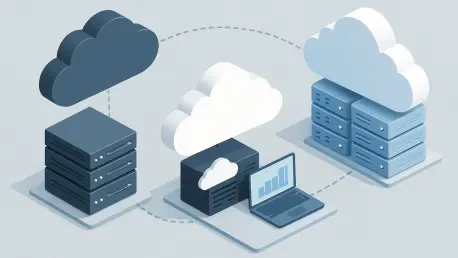
Lumen’s Multi-Cloud Gateway enters the market as a direct response to these challenges, positioning itself as more than just an enhanced VPN. The service is architected as a “programmable fabric,” a software-centric approach that abstracts the complexity of the underlying physical network. This design allows for the creation of a unified, private network that spans an organization’s on-premises infrastructure and its various cloud tenancies, all managed as a single, cohesive entity.
The core value proposition of the gateway is the transfer of control into the customer’s hands. Through a simple user interface, enterprises can directly manage their private routing policies, add new cloud connections, and adjust bandwidth on demand. This self-service model eliminates the need for traditional service tickets and lengthy waits for carrier intervention, enabling IT teams to adapt their network topology in real time to support new AI projects or shifts in workload distribution. This reimagining of Lumen’s existing Cloud Connect service modernizes the user experience for today’s enterprise demands.
Looking ahead, the platform is designed to be future-proof, with a clear roadmap for expanding its ecosystem. Lumen plans to extend connectivity beyond the major hyperscalers to include emerging neocloud platforms and specialized GPU-as-a-Service providers. This forward-looking strategy ensures that as the AI infrastructure landscape continues to evolve, enterprises will have a single, consistent networking fabric to connect to the diverse computational resources their models require.
A Strategic Pivot Backed by Massive Infrastructure Investment
The launch of the Multi-Cloud Gateway is a cornerstone of Lumen’s refined corporate strategy. Following the sale of its consumer and small business fiber assets, the company has sharpened its focus entirely on the enterprise and public sector markets. This strategic pivot allows Lumen to dedicate its resources toward addressing the complex connectivity needs of large organizations, with multi-cloud AI emerging as a primary area of focus and investment.
This new direction is supported by a significant and aggressive upgrade of its core network infrastructure. Lumen has been actively deploying 100 Gbps capacity across major U.S. markets to bolster connectivity between data centers and edge locations. Furthermore, the company is building out new 400G on-ramps in direct collaboration with hyperscale partners, with the goal of offering up to 400 Gbps of dedicated capacity at key cloud data centers. This massive investment in the network’s backbone provides the raw speed and capacity necessary to power the gateway service.
Critically, Lumen is aligning its technological roadmap with the broader industry movement toward open standards. By monitoring and preparing to integrate with the open APIs being developed by hyperscalers, the gateway is positioned to further streamline the provisioning process. This alignment ensures that customers can manage private traffic not only between their own locations and the cloud but also securely and efficiently between different public cloud providers, all through the same unified platform.
A Practical Framework for Leveraging a Multi-Cloud Gateway
For an enterprise to effectively capitalize on a programmable fabric, the first step involves a thorough audit of its AI workloads. IT leaders must identify which processes are most network-intensive, such as data ingestion, distributed model training, or real-time inference at the edge. Understanding these specific choke points allows for a more targeted and impactful application of on-demand connectivity, ensuring that bandwidth is allocated where it can provide the greatest performance benefit.
With a clear picture of network demands, the next phase is to design a flexible and resilient network topology. Unlike static architectures of the past, a modern multi-cloud network should be designed for change. This means creating a core design that can easily accommodate new cloud providers, additional data centers, or temporary, project-based connections without requiring a complete overhaul. The goal is to build a network that is as agile as the AI development lifecycle it supports.
Finally, the implementation phase should center on the principle of on-demand connectivity to optimize both cost and performance. Instead of paying for large, dedicated circuits that sit idle much of the time, organizations can use a gateway to dynamically scale bandwidth up or down based on real-time needs. This utility-based model allows businesses to provision a high-capacity link for a week-long model training run and then scale it back down, ensuring that they only pay for the resources they actively consume. This approach was a crucial step in transforming the network from a fixed capital expense into a flexible operational tool that directly enabled business agility.