
A fascinating paradox is unfolding within one of the U.K.’s most significant telecommunications giants, where declining financial reports are being published alongside news of unprecedented infrastructure growth. For the quarter ending December 31, BT Group presented a challenging fiscal picture, with key metrics like revenue and profit showing a noticeable downturn. This has led investors and market analysts to scrutinize the company’s direction, questioning whether its aggressive, capital-intensive push into next-generation networks is coming at too high a cost to its immediate financial health. The central debate revolves around a classic business dilemmis the company making a strategic sacrifice of short-term profitability to secure a dominant position in the future digital landscape, or are the current financial pressures a sign of deeper issues? This complex interplay between investment and return paints a detailed picture of a legacy company navigating a profound technological transition.
Navigating Financial Headwinds
A Comprehensive Financial Review
An in-depth analysis of BT Group’s fiscal third-quarter results reveals a clear narrative of financial contraction, even as its operational arms push forward. The company reported a 4% year-on-year decrease in revenue, bringing the total to £5 billion, while its profit before tax experienced a more significant drop of 11%, settling at £862 million. These figures were not the result of a single issue but rather a convergence of several market pressures. A primary contributor was the reduction in both service and equipment revenue, a trend reflecting intense competition and evolving consumer behavior. Furthermore, lower handset sales across both consumer and business segments pointed to longer device upgrade cycles and market saturation. The financial impact of strategic divestments also played a role, as the company shed certain assets to streamline its focus. Compounding these factors is the persistent and predictable decline of legacy voice services, a once-lucrative revenue stream that continues to erode as customers migrate to more modern communication platforms.
The Strategic Context of a Downturn
While the headline numbers suggest a period of struggle, they also reflect the deliberate and calculated consequences of a long-term strategic pivot. The reported financial downturn is not merely a passive response to market forces but an active component of BT’s overarching transformation plan. The company is systematically moving away from its legacy operations, which, while once profitable, now represent a drag on future growth. This includes the managed decline of traditional copper-based services and the divestment of non-core business units that do not align with its future-forward vision centered on fiber and 5G. This strategic shedding of older assets and revenue streams naturally creates a temporary dip in top-line figures. However, the internal view is that this is a necessary and calculated pruning, allowing the company to redirect capital, resources, and organizational focus toward building the foundational infrastructure that will generate sustainable, high-growth revenue for decades to come, positioning it to lead in an increasingly connected world.
Forging a Path to Future Growth
The Fiber-Optic Future
The most compelling evidence of BT’s long-term strategy lies in the remarkable progress of its Openreach division. The company’s Fiber-to-the-Premises (FTTP) rollout is proceeding at a blistering pace, with the division having passed over one million new premises for the eighth consecutive quarter. This sustained momentum has expanded its total FTTP footprint to an impressive 21.4 million premises, keeping it firmly on track to achieve its ambitious goal of reaching 25 million by the end of the year. Critically, this expansion is being met with strong market demand. Total connections to the FTTP network surged by 21% year-on-year to 8.2 million, pushing the overall take-up rate to over 38%. This growing adoption is not just a measure of success but a driver of financial health for the division. The increased demand, coupled with strategic price adjustments, has boosted Openreach’s broadband average revenue per user (ARPU) by 4% to £16.8, demonstrating a clear path to monetizing this massive infrastructure investment and building a resilient revenue base for the future.
Advancing the Mobile Frontier
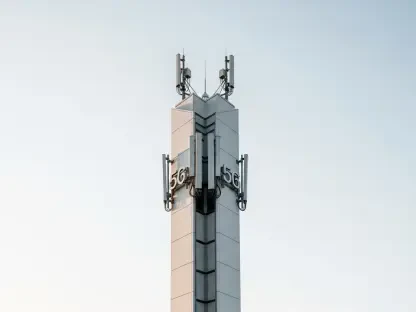
In parallel with its fiber ambitions, BT’s mobile arm, EE, is making significant strides in the 5G arena, ensuring the company’s dominance extends to the wireless realm. The operator’s 5G user base has continued its steady expansion, growing by 10% year-on-year to encompass 14.3 million subscribers. This consistent growth indicates strong consumer appetite for faster, more reliable mobile connectivity. More importantly, EE is not just expanding its standard 5G network but is also pioneering the deployment of 5G+ (standalone 5G). Coverage for this more advanced network has already reached 69% of the designated areas, marking a significant step toward its long-term objective of providing nationwide standalone 5G service by 2030. Standalone 5G represents a monumental technological leap, uncoupling the network from underlying 4G infrastructure to unlock ultra-low latency and massive connectivity, which will be crucial for next-generation applications like autonomous vehicles, advanced IoT, and immersive augmented reality, thereby creating new enterprise revenue streams.
A Calculated Gamble for Dominance
Ultimately, the company’s strategy appeared to be a calculated gamble that prioritized long-term infrastructure dominance over immediate, short-term financial gains. By channeling immense capital into its FTTP and 5G networks, BT positioned itself not just as a service provider but as the foundational architect of the nation’s digital future. The decline in legacy revenue streams and the costs associated with this massive build-out were anticipated consequences of a deliberate and ambitious transformation. This approach was designed to create a significant competitive moat, making it exceedingly difficult for rivals to replicate the scale and quality of its next-generation networks. The strong uptake in both fiber and 5G services suggested that this investment was already beginning to create a sticky and growing customer base, which was expected to yield sustainable and higher-margin revenues in the years ahead, potentially justifying the temporary financial turbulence.