
With public safety agencies increasingly turning to next-generation technology, the adoption of standalone 5G networks is creating a paradigm shift in critical communications. From reducing infrastructure costs to enabling immersive training, the potential is immense. We sat down with Vladislav Zaimov, a seasoned specialist in enterprise telecommunications and network risk management, to explore the practical implications of this shift. Our conversation delves into the crucial decision between public network slicing and private 5G deployments, examines real-world examples of dramatic cost savings and innovative applications, and looks ahead at the competitive, high-stakes future of this market.
We’re seeing two main approaches emerge: network slicing from major carriers and dedicated private 5G networks. For a public safety agency, what are the key operational and financial trade-offs between these models, and how should they decide which path is right for their specific needs?
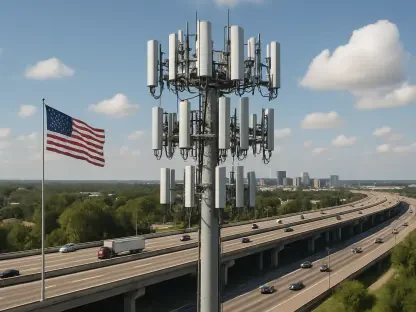
That’s the central question agencies are grappling with right now. On one hand, you have public mobile operators pitching network slicing over their new standalone 5G cores. Think of it as a dedicated, prioritized lane on a public highway. It offers an alternative to building a completely separate network, leveraging the massive infrastructure of carriers like T-Mobile and Verizon. On the other hand, you have independent, private 5G networks. These are being deployed to address very specific, often localized needs. The decision really hinges on the mission. If an agency requires nationwide priority and preemption, a slice from a major carrier is a compelling option. But if the need is for an incredibly high-performance, low-latency application in a defined area—like a city-wide surveillance system or a training facility—a private network provides unparalleled control and customization.
The city of Istres, France, reportedly cut video surveillance installation costs by 80% using private 5G. Could you walk us through the technical steps that enable such dramatic savings, and what are the key performance metrics agencies should track to validate this investment?
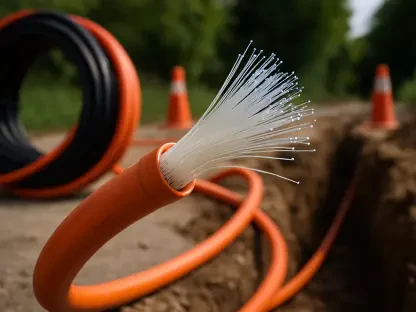
The Istres example is a game-changer because it perfectly illustrates the financial power of wireless. That staggering 80% reduction comes from eliminating the immense overhead of laying fiber optic cable to every single camera. Imagine the civil works involved—trenching, permits, and physical connections. Private 5G bypasses all of that. You set up the core network and then your high-definition cameras connect wirelessly, streaming massive amounts of data reliably. This means you can deploy a surveillance grid faster and in locations where laying cable would be prohibitively expensive or physically impossible. To validate it, you’d track metrics like network uptime, end-to-end latency for real-time video feeds, and of course, the total cost of ownership compared to a fiber-based projection. That 80% figure isn’t just a headline; it’s a direct result of avoiding physical infrastructure costs.
Beyond surveillance, we’re seeing innovative uses like VR training for police in Mexico City and transportable “bubble” networks for firefighters in Spain. What specific capabilities of standalone 5G make these applications possible, and what other cutting-edge public safety uses do you foresee emerging?
These applications are born from the unique capabilities of a pure, standalone 5G network. The VR training in Mexico City is a prime example. To create a truly immersive and effective training system, you need to stream enormous amounts of visual data to wireless headsets with almost zero delay. Any lag would break the illusion and could even cause motion sickness. Standalone 5G’s ultra-low latency makes that seamless, real-time experience possible. Similarly, the tactical “bubble” solutions in Spain rely on transportable 5G cell sites. This allows first responders, like the Emergency Military Unit fighting forest fires, to create a high-performance communications hub anywhere, instantly. It’s a self-contained network in a box, giving them reliable connectivity in the most challenging and remote environments.
With spending on public safety broadband set to exceed $6.3 billion by 2028, we’re seeing increased competition as carriers launch first responder slices. How does this competitive environment benefit agencies, and what key criteria should they use to evaluate and choose a long-term technology partner?
This competition is incredibly beneficial for public safety agencies. For years, the options were limited. Now, with major carriers like T-Mobile and Verizon launching nationwide slices to compete directly with established networks like AT&T’s FirstNet, agencies have more choice, better pricing, and more innovation. This market is not small; we’re looking at a sector that will grow at a compound rate of about 8% to hit over $6.3 billion by 2028. When choosing a partner, an agency must look beyond the initial sales pitch. They need to evaluate the resilience and coverage of the core network, the guaranteed service levels for their specific slice, the roadmap for future upgrades, and crucially, the provider’s demonstrated commitment and experience in the public safety sector. It’s not just a commercial contract; it’s a long-term partnership for mission-critical operations.
What is your forecast for public safety communications over the next five years?
Over the next five years, I expect to see a rapid acceleration from concept to widespread, practical delivery. The market is already projected to grow from around $5 billion in 2025 to over $6.3 billion by 2028, and that growth is fueled by tangible results. We’ll see private networks become standard for smart city infrastructure, particularly for things like traffic management and public safety video. Simultaneously, network slicing will mature, offering more sophisticated and customizable services for nationwide agencies. The key will be interoperability—ensuring these different private networks and public slices can communicate seamlessly during a large-scale, multi-agency incident. The technology is here; the next five years will be about scaling it, refining it, and integrating it deeply into the daily operations of every first responder.