
With the enterprise world rapidly embracing private networks for their unparalleled control and security, a critical conversation is emerging about what gets left behind—namely, the everyday cellular service we all depend on. To explore this connectivity gap, we’re speaking with Vladislav Zaimov, a specialist in enterprise telecommunications and network risk management. He has spent his career at the intersection of private and public wireless, and today he will share his insights on why these two worlds must converge, detailing the operational risks of a divided network and explaining how a hybrid architecture creates a truly complete mobility solution.
The article mentions that private CBRS networks, while great for mission-critical data, create a voice connectivity gap. Can you share a real-world example of an operational risk this caused in a facility, and then walk me through how a hybrid DAS specifically resolved that issue?
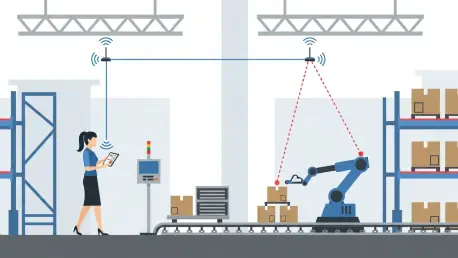
I remember a case at a large manufacturing facility, a sprawling campus with thick concrete walls that were a nightmare for RF signals. They had invested heavily in a private 5G network to run their automated guided vehicles and production line sensors, and it worked beautifully for that. The problem was, for the human workforce, it created a communication black hole. One afternoon, a forklift operator had a minor accident in a remote corner of the warehouse. He was fine, but shaken, and when he pulled out his phone to call his supervisor, he had zero bars. The private network was humming along, but his phone couldn’t make a simple voice call. That small incident highlighted a massive safety vulnerability. By implementing a hybrid DAS, we installed a single antenna on the roof to capture all the public carrier signals and then distributed that coverage throughout the entire facility using a fiber backbone. The next time a similar incident occurred, the employee could instantly call for help, proving that you can’t sacrifice basic human communication for machine automation; you absolutely need both.
You highlight that enterprises in manufacturing and healthcare are adopting private networks but still need public carrier access for things like 911 calls. Could you elaborate on the unique safety challenges this presents in one of those industries and detail the key metrics you’d use to measure success after a hybrid DAS installation?
In a hospital, this issue is magnified to a critical level. Hospitals are increasingly using private networks for securely transmitting patient data between medical devices, which is a fantastic application. But imagine a visitor witnessing a medical emergency in a waiting area or a contractor getting injured in a new wing under construction. Their first instinct is to call 911 on their personal cell phone. If there’s no public carrier signal, a life-threatening delay is introduced. When we install a hybrid DAS in a healthcare environment, success isn’t just about technology; it’s about safety and experience. The first metric we track is a sharp reduction in connectivity-related trouble tickets from staff and patients—a quantifiable drop in complaints. We also look at qualitative feedback, like improved staff morale because they’re not frustrated by dropped calls anymore. The ultimate measure of success, however, is seamlessness. It’s when a surgeon can receive a critical consult call on their personal device while walking through a basement corridor, or when a family member can confidently call for help without even thinking about whether their phone will work.
The text describes a hybrid DAS architecture using high-power BDAs to capture and distribute macro cellular signals. Can you break down the technical steps for implementing this system alongside an existing private network and share some typical cost-saving percentages compared to a traditional DAS?
Bringing a hybrid DAS online is a very systematic process. First, our engineers conduct a thorough site survey to pinpoint the ideal location on the building’s exterior to capture the cleanest, strongest signals from all the major public carriers. We then install what’s called a “donor antenna” there, which feeds those signals into a high-power bidirectional amplifier, or BDA. That BDA is the heart of the system; it boosts the signal and converts it to run over a fiber optic cable. From there, we run that fiber throughout the building to small, discreet antennas that rebroadcast the cellular signal everywhere it’s needed. Because it uses a single set of shared equipment to handle all carriers, it’s dramatically more cost-effective than a traditional DAS, which requires negotiating with each carrier to install their own expensive radio equipment. While every project is different, it’s not uncommon to see cost savings of 50-70% compared to the old carrier-funded model, and it gets done in a fraction of the time.
The content argues that a private network strategy for 2025 is “incomplete” without hybrid DAS. For an infrastructure planner in logistics or transportation, what specific user complaints or performance data should they look for to justify the investment, and what would a successful unified system look like from their perspective?
For a planner in a massive logistics warehouse, the justification is written all over their operational pain points. They need to listen for complaints like, “My scanner connects to the private network flawlessly, but I can’t call my manager to report a damaged pallet.” They should look at data on dropped calls or failed text messages, especially in critical hand-off zones like loading docks where third-party drivers need to coordinate with internal staff. These aren’t just annoyances; they are direct hits to productivity and can even become safety issues. A successful unified system, from that planner’s perspective, is one that feels completely invisible. Success looks like a supervisor walking the entire length of the facility, from the front office to the deepest warehouse aisle, while on a stable video call with a client, never losing connection. It’s when a delivery driver’s phone just works the moment they step inside, and an employee’s push-to-talk device has the same reliability as the multi-million dollar robotics system running on the private network.
You state that a hybrid DAS creates a single RF distribution layer for both private CBRS and public carrier services without interference. Could you explain the technical principles that prevent signal interference in this unified system and share an anecdote about an enterprise’s reaction to achieving seamless multi-carrier connectivity?
The reason it works so elegantly without interference comes down to physics. Public cellular services and private CBRS networks operate in completely different, non-overlapping radio frequency bands, like separate lanes on a highway. The hybrid DAS is engineered to only ‘listen’ for and amplify the specific frequencies used by carriers like AT&T, Verizon, and T-Mobile. The private CBRS network, operating in its own protected 3.5 GHz band, is essentially invisible to the DAS equipment. This separation means we can run both systems over the same physical fiber and antenna infrastructure without them ever clashing. I’ll never forget the reaction of a CTO at an energy company with a huge, metal-clad facility. For years, he was plagued by executive complaints about dead zones. After we deployed a hybrid DAS, he stood in the very center of the plant, a notorious dead spot, and had a flawless FaceTime call with his family. The look on his face wasn’t just satisfaction; it was pure relief. He said, “Finally. It just works. Everywhere.” That’s the moment they realize they’ve solved not just a tech problem, but a persistent human frustration.
What is your forecast for the adoption of this unified private-public network model?
I believe we’re at a tipping point. Within the next two to three years, deploying a private network without an integrated public cellular solution like hybrid DAS will be viewed as a fundamental design flaw. It will move from being a “value-add” to a standard requirement in RFPs for industrial and enterprise connectivity. The market is maturing past the initial hype of private networks as a standalone solution and is now grappling with the practical realities of a truly mobile workforce. The conversation is shifting from “either/or” to “both/and.” Soon, planning for unified, ubiquitous coverage will be as foundational to a new facility’s design as planning for its electrical grid or HVAC system. It will simply be the expected standard for a modern, productive, and safe enterprise environment.