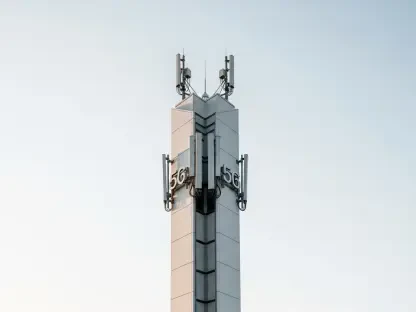

While the telecommunications industry has spent years championing the blistering download speeds of 5G, a far more subtle yet equally critical component of the user experience—the ability to send data from a device back to the network—is now becoming the central arena for innovation and competitive advantage. The seamless video calls, responsive online gaming, and instant cloud uploads promised by the 5G era depend heavily on this often-overlooked metric. T-Mobile is now positioning this uplink performance as its next strategic frontier, aiming to solve a common frustration point for millions of users and, in doing so, redefine what a next-generation network can truly deliver.
This strategic focus is not merely a reaction to market demands but a calculated move to build upon an established lead. By concentrating on enhancing how users connect to the world, the company is signaling a shift from a race for raw speed to a more nuanced pursuit of balanced, real-world performance. This pivot aims to solidify its leadership by addressing the practical needs of an increasingly connected and content-creating society, setting a new benchmark for network quality that competitors will be hard-pressed to match.
The Race Is Far From Over Why Your Phones Upload Speed Is T Mobiles Next Battlefield
For most smartphone users, the disparity between download and upload speeds is a familiar annoyance. A movie can be downloaded in minutes, yet uploading a high-resolution video to social media can feel like a lengthy chore. This imbalance affects everything from the clarity of a video conference to the latency in a competitive online game, creating a digital bottleneck that undermines the potential of modern devices. It is this pervasive yet underexplored issue that has become the focal point of T-Mobile’s evolving 5G strategy.
The company is reframing the conversation around 5G performance, moving beyond the simple metric of download speed to a more holistic view of network capability. By prioritizing the enhancement of uplink, T-Mobile is not just improving a technical specification; it is directly targeting a core aspect of the daily digital experience. This strategic shift is designed to create a distinct competitive advantage, turning a common point of user friction into a clear differentiator in a crowded marketplace.
Building on a Foundation The Strategic Advantage of a Standalone Network
T-Mobile’s current ambitions are built on a strategic decision made years ago. In 2020, the carrier launched the world’s first nationwide 5G Standalone (SA) network, an infrastructure that operates purely on a 5G core without relying on underlying 4G LTE technology. This foundational architecture provided a crucial head start, enabling the company to develop and deploy advanced 5G capabilities while its rivals were still operating on non-standalone networks.
This early investment is now yielding significant competitive dividends. While competitors like AT&T and Verizon are only beginning their 5G SA rollouts in 2025, T-Mobile has spent years refining its network and introducing SA-dependent features such as Voice over New Radio (VoNR) for clearer calls and foundational network slicing. This established infrastructure serves as the launchpad for its next wave of innovation, giving it a multi-year lead in delivering true next-generation services.
The 5G Advanced Playbook T Mobiles Roadmap to 2026 and Beyond
Looking ahead, T-Mobile has unveiled a concrete plan to evolve its network with the introduction of “at least half a dozen” new 5G-Advanced features slated for 2026. This next phase represents a significant leap beyond current 5G standards, moving toward a more intelligent, responsive, and capable network. At the heart of this evolution is a relentless focus on improving uplink performance through sophisticated new technologies.
One of the key innovations is three-way uplink carrier aggregation, which combines multiple channels to create a larger, faster pipeline for sending data. More significantly, the company is deploying a globally exclusive feature known as “Uplink Tx Switching.” This technology, designed to support upcoming devices like the iPhone 17, allows a phone to intelligently and instantaneously switch between different mid-band uplink frequencies to find the most efficient path. For consumers, this translates directly into tangible improvements: smoother, lag-free gaming, faster live streaming, and the ability to share large files from their devices in a fraction of the time.
Voices from the Inside The Vision Behind the Technology
The strategic emphasis on uplink performance is a deliberate choice, as articulated by company leadership. Chief Network Officer Ankur Kapoor has described uplink as one of the industry’s most “under-talked topics,” highlighting its critical role in unlocking the full potential of connected devices. This vision extends beyond smartphones to a growing ecosystem of Internet of Things (IoT) gadgets. For instance, enhanced uplink could dramatically improve the reliability of 5G-enabled smartwatches, providing parents with a more consistent and accurate way to track a child’s location.
This sentiment is echoed by CTO John Saw, who pointed to the broad impact on Reduced Capability (RedCap) devices—a class of more efficient, lower-cost IoT sensors and wearables. He emphasized that a robust uplink is essential for a wide array of applications, from industrial monitors tracking equipment on a factory floor to asset trackers ensuring the safe transit of goods and smart home systems that rely on constant communication. These real-world applications demonstrate that the push for better uplink is about building a more reliable and interconnected future.
From Infrastructure to On Demand T Mobiles Strategy for a Customizable Future
The initial rollout of advanced uplink technologies is just the beginning. The company’s roadmap includes expanding features like 3-way Tx switching to a broader range of devices, ensuring that more customers can benefit from the enhanced performance. However, the most transformative step in this strategy involves making the network itself a customizable, on-demand service through dynamic network slicing.
This forward-thinking concept will empower customers to provision their own dedicated, end-to-end network slice directly, using something as simple as a credit card. Imagine a mobile gamer activating a low-latency slice for a tournament or a business securing a high-bandwidth slice for a critical live stream event. This model represented a fundamental shift from providing a one-size-fits-all connection to offering a platform of personalized network services, paving the way for a new era of network commercialization and user control.