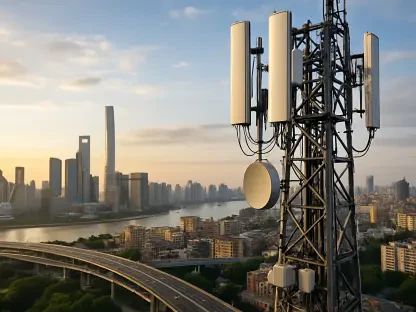

Picture a bustling airport terminal where every passenger, from hurried business travelers to families on vacation, expects instant access to high-speed internet for navigation, communication, or entertainment. This isn’t a distant dream but a pressing reality driving a revolution in indoor cellular connectivity. The ability to stay connected indoors—whether in sprawling campuses, dense urban offices, or critical healthcare facilities—has become as essential as electricity or water. This article dives into frequently asked questions about how indoor cellular networks are evolving, exploring their growing importance, technological advancements, and transformative impact on industries. Readers can expect a comprehensive look at the trends, challenges, and innovations paving the way for seamless indoor connectivity, offering clarity on what this means for enterprises, operators, and everyday users.
Key Questions About Indoor Cellular Connectivity
This section tackles the most pressing questions surrounding indoor cellular networks. Each topic unpacks a specific aspect of this rapidly changing field, providing context, insights, and evidence to shed light on its significance.
What Is Driving the Growing Importance of Indoor Connectivity?
The surge in demand for robust indoor cellular networks stems from a dramatic shift in perception over recent years. No longer an afterthought compared to outdoor coverage, indoor connectivity is now seen as mission-critical by enterprises and operators alike. The explosion of digital tools, cloud-based systems, and high-bandwidth applications has created an urgent need for performance that rivals outdoor networks in terms of reliability, speed, and user experience. Venues like train stations, stadiums, and corporate hubs cannot afford dropped calls or sluggish data speeds when so much depends on constant access.
Moreover, this demand is fueled by the sheer volume of activity occurring indoors. With a significant portion of mobile traffic originating inside buildings, the expectation for seamless transitions between indoor and outdoor environments has never been higher. Enterprises are prioritizing connectivity to support everything from daily operations to customer satisfaction, recognizing that a strong indoor network is no longer optional but fundamental to staying competitive.
How Is Digital Transformation Influencing Indoor Networks?
Digital transformation across industries is acting as a powerful catalyst for upgrading indoor cellular systems. As businesses race to adopt cloud computing and virtualization, the pressure is on to build networks capable of handling massive data loads and supporting cutting-edge applications. The integration of artificial intelligence into operations, for instance, demands networks with the scalability to manage real-time analytics and automation without hiccups.
In addition, the speed of this transformation leaves little room for outdated infrastructure. Enterprises are looking for solutions that can keep pace with rapid technological shifts, often expecting implementation timelines far shorter than in previous decades. This urgency underscores the need for innovative indoor systems that can adapt to emerging technologies while delivering consistent performance, setting a new standard for what connectivity should achieve.
Why Are Legacy Systems Being Replaced by Digital Solutions?
A pivotal trend in the industry is the move away from traditional analog Distributed Antenna Systems (DAS) to modern digital alternatives. Legacy systems, burdened by extensive cabling and high energy demands, struggle to meet the requirements of advanced technologies like mid-band 5G and high-density environments. Their lack of flexibility makes them a poor fit for today’s dynamic needs, often resulting in costly and inefficient setups.
Digital DAS platforms, by contrast, bring a host of advantages that align with current demands. These systems offer end-to-end connectivity compatible with Open Radio Access Network (O-RAN) standards, incorporating virtualization and automation for greater efficiency. They serve as a direct extension of the broader network, enabling predictive analytics to anticipate and address issues before they arise. This shift represents not just a technological upgrade but a strategic pivot toward more adaptable and future-ready infrastructure.
How Do Sustainability and Cost Concerns Impact Indoor Connectivity?
Sustainability and cost efficiency stand out as major considerations in the evolution of indoor cellular networks. Rising electricity prices and limited real estate availability have exposed the shortcomings of older architectures, which consume excessive power and require significant physical space. Operators and enterprises face mounting pressure to deploy solutions faster while keeping operational expenses in check.
Digital solutions tackle these challenges head-on by slashing energy consumption by over half in many cases and reducing space requirements by up to 90%. Deployment timelines are also shortened, allowing for quicker rollouts without sacrificing quality. This focus on greener, more cost-effective systems aligns with broader industry goals to minimize environmental footprints while maintaining top-tier performance, proving that innovation can balance both practicality and responsibility.
What Role Does Network Convergence Play in Indoor Systems?
The convergence of various network types—public, private, Wi-Fi, IoT, and wired or wireless systems—has emerged as a cornerstone of modern indoor connectivity. Creating a unified environment where these networks interact seamlessly is vital for supporting diverse applications, from employee communications to smart building technologies. Without integration, enterprises risk fragmented systems that hinder efficiency and user experience.
A digital infrastructure serves as the backbone for this convergence, enabling smooth interplay between different layers of connectivity. Such systems ensure that whether a user is on a private 5G network or a public Wi-Fi connection, the transition feels effortless. This holistic approach not only simplifies management for operators but also enhances the versatility of indoor spaces, making them ready for a wide array of operational needs.
Which Industries Are Leading the Adoption of Indoor Cellular Networks?
Certain industries are at the forefront of embracing indoor cellular connectivity due to their intensive data requirements. Healthcare, manufacturing, and logistics, for example, rely heavily on robust networks to drive efficiency, support AI-driven processes, and ensure scalability. In hospitals, seamless connectivity can mean the difference between timely patient care and critical delays, while factories use it to synchronize automated systems.
These sectors, often underserved in the past, now recognize indoor networks as indispensable to their operations. The concept of connectivity as a “fourth utility”—alongside gas, power, and water—gains traction here, highlighting its role as a foundational element of modern infrastructure. As these industries continue to grow, their adoption of advanced indoor solutions signals a broader shift toward viewing connectivity as essential rather than supplementary.
Summary of Key Insights
Indoor cellular connectivity emerges as a defining force in today’s technological landscape, bridging the gap between user expectations and infrastructure capabilities. This exploration has highlighted its critical importance, driven by digital transformation and the need for performance on par with outdoor networks. The transition to digital DAS solutions addresses the limitations of legacy systems, while sustainability and cost pressures push for greener, more efficient setups. Network convergence ensures a cohesive connectivity experience, and industries like healthcare and manufacturing underscore the urgency of robust indoor systems. These insights reveal a clear trajectory: indoor connectivity is not just evolving but becoming a core utility for modern operations.
Furthermore, the takeaways point to a fundamental change in how connectivity is prioritized. Enterprises and operators are no longer willing to settle for subpar indoor performance, instead seeking solutions that offer scalability, adaptability, and environmental responsibility. For those looking to delve deeper, resources on digital DAS technologies and O-RAN standards provide valuable next steps to understand the technical underpinnings of this shift.
Final Thoughts
Reflecting on the discussions that unfolded, it became evident that indoor cellular connectivity had transformed into a linchpin of digital progress. The journey from being a secondary concern to a mission-critical asset illustrated a remarkable evolution in industry mindsets. Looking back, the insights shared painted a vivid picture of innovation overcoming outdated barriers, setting a new benchmark for what connectivity could achieve.
Moving forward, stakeholders were encouraged to assess how these advancements applied to their specific contexts—be it enhancing workplace efficiency or ensuring customer satisfaction in public venues. Exploring tailored digital solutions or partnering with technology providers could offer actionable paths to harness the full potential of indoor networks. The future promised even greater integration and impact, and taking steps now to adapt ensured readiness for the connected world that lay ahead.