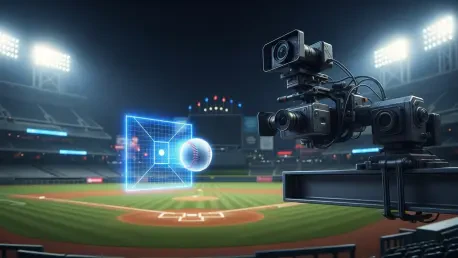

The rhythmic crack of a bat and the roar of the crowd have long defined the American pastime, but today, a silent digital revolution is ensuring that the most contentious calls are decided by physics rather than mere human intuition. In the high-pressure environment of Major League Baseball, a simple tap of the helmet by a frustrated batter now triggers a sophisticated digital sequence that can redefine an entire inning. Within seconds, a 100-mph fastball’s trajectory is analyzed, verified, and broadcast to thousands of fans, effectively ending the era of prolonged arguments over the strike zone. This shift from subjective human judgment to objective millimeter-precision is not just a rule change; it is a high-stakes integration of connectivity and sportsmanship.
The Instantaneous Verdict: When Data Overrules the Human Eye
The transition to an automated system marks a departure from a century of baseball tradition where the home-plate umpire’s word was final. Now, when a player initiates a challenge, the Automated Ball-Strike (ABS) system takes over, utilizing a data-driven approach to confirm the ball’s location as it crossed the plate. This instantaneous feedback loop provides a level of clarity that was previously impossible, allowing the game to proceed without the lengthy delays typically associated with traditional video replays.
By removing the ambiguity of “framing” pitches or varying umpire zones, the league has established a standardized field of play. Fans in the stands and viewers at home see the same high-definition visualization simultaneously, creating a shared reality that reinforces the integrity of the sport. This technological oversight ensures that the outcome of a game hinges on the skill of the athletes rather than a visual error from a human official standing behind the catcher.
Beyond the Plate: Why High-Speed Accuracy Is Reshaping Baseball
The integrity of the strike zone has long been the most debated element of professional baseball, often influencing the outcome of championships. As the speed of play increases and the margin for error shrinks, Major League Baseball has turned to technology to resolve these long-standing disputes. This transition addresses a growing demand from fans and players for transparency, ensuring that critical moments are decided by the laws of physics rather than a missed angle or a brief lapse in concentration.
Moreover, this shift reflects a broader cultural change within sports where data is no longer just a scouting tool but a live component of the event. Players now enter the batter’s box with the confidence that the zone is fixed and fair. For pitchers, the challenge system serves as a definitive yardstick for their precision. This evolution effectively modernizes the sport’s core mechanics, bringing baseball into alignment with other high-tech officiating standards seen in professional tennis and soccer.
The Infrastructure of a Strike: How Private 5G Powers the ABS System
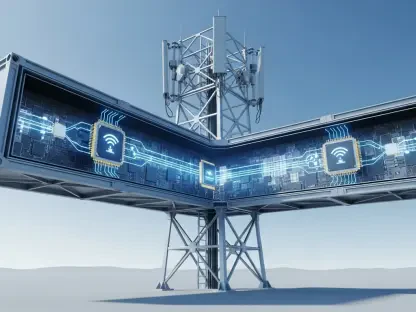
The ABS Challenge System relies on a specialized hybrid network architecture that operates independently from the public internet. Twelve high-speed Hawk-Eye cameras positioned strategically around the diamond capture the ball’s flight path with extreme granularity, tracking every inch of movement. By utilizing Citizens Broadband Radio Service (CBRS) and 2.5 GHz mid-band spectrum, the system achieves the ultra-low latency necessary for live decision-making, ensuring the data moves faster than the blink of an eye.
Operating on a private network prevents interference from thousands of fan mobile devices or internal stadium operations like point-of-sale systems. This isolation is critical for maintaining the reliability of the signal during sold-out games where local cellular towers are often congested. Pitch data is processed and relayed to the stadium scoreboard and broadcast trucks in a matter of seconds, maintaining the game’s momentum and providing a seamless experience for the live audience.
The Expert Perspective: Balancing Human Tradition with Technical Reliability
Technical directors and league analysts emphasize that the 5G deployment is designed to supplement, not replace, the traditional role of the umpire. Over an 18-month rollout, the installation process was streamlined to just days per stadium, proving that large-scale technical overhauls can be non-disruptive to the rigorous MLB schedule. The umpire remains the conductor of the game, but they now have a digital safety net that ensures the most consequential calls are corrected when necessary.
Industry experts note that the 5G backbone used for pitch tracking also facilitates biometric entry and remote media production, creating a “hybrid” venue trend. This multi-purpose infrastructure allows teams to maximize their investment, using the same high-speed lanes for both officiating and fan services. The system’s transition from Minor League testing to all 29 U.S. MLB stadiums confirmed its reliability under the pressures of a full professional season, proving that the technology was ready for the brightest lights in sports.
Navigating the Modern Ballpark: How Teams and Players Leverage 5G Data
Understanding the mechanics of the challenge system allows players and coaching staffs to integrate digital accuracy into their on-field strategy. Teams must now decide when to “burn” a challenge based on the visual cues provided by 5G-enabled replays, adding a new layer of tactical depth to the manager’s role. A successful challenge can save a walk or secure a strikeout, making the timing of these requests as vital as a pinch-hit or a pitching change.
Stadiums utilize the 5G infrastructure to push high-definition pitch data to fan apps, creating a more immersive and informed spectator experience. Coaches use the low-latency stream to provide immediate feedback to pitchers on their strike-zone efficiency, allowing for adjustments between innings rather than after the game. As the league looked toward the future, the focus shifted to how this connectivity could further personalize the fan experience, perhaps through augmented reality overlays that allow spectators to see the strike zone through their own mobile devices. The implementation of this network laid the groundwork for a more interactive and indisputable era of professional athletics.