
When a historic winter storm blankets the nation in ice and snow, the digital threads connecting society become the most critical infrastructure of all, transforming from a modern convenience into an essential lifeline. The recent devastation wrought by Winter Storm Fern, which carved a path of disruption from the plains of Texas to the coast of Maine, put this reality into sharp focus. In the face of widespread power outages and treacherous conditions, the nation’s leading mobile operators deployed a sophisticated array of strategies to keep their networks online. This roundup examines the distinct, high-stakes battle plans that Verizon, T-Mobile, and AT&T executed to ensure that lifeline never broke, offering a glimpse into the unseen war fought against the elements.
The Unseen Battle Holding the Line When the Power Goes Out
Winter Storm Fern was not a localized event but a cross-country behemoth, unleashing freezing temperatures and crippling ice accumulation over a vast territory. This widespread impact created a cascade of failures, with the commercial power grid being one of the first and most significant casualties. For millions of Americans, the loss of electricity meant the loss of heat, light, and a sense of security, making their mobile devices the primary tool for receiving emergency alerts, contacting loved ones, and coordinating assistance.
In this environment, uninterrupted communication shifts from a simple convenience to a non-negotiable necessity. It becomes the invisible infrastructure that supports first responders, allows stranded individuals to call for help, and enables communities to share vital information. The difference between a working cell signal and a dead zone can be the difference between a timely rescue and a prolonged crisis.
Consequently, telecom giants activated diverse and meticulously planned strategies to counter the storm’s effects. This was not a reactive scramble but the culmination of year-round preparation, involving everything from hardening physical infrastructure and deploying mobile assets to leveraging artificial intelligence and satellite technology. Each carrier’s approach revealed a unique philosophy on how to best maintain connectivity against overwhelming odds.
Three Carriers Three Battle Plans for Connectivity
Forging a Fortress Verizons Hardened Infrastructure Approach
Verizon’s strategy centered on physical reinforcement, treating its network as a fortress to be defended against the storm’s siege. Long before the first snowflake fell, the company focused on pre-storm fortification, ensuring its thousands of cell sites were prepared for the worst. This involved rigorous testing of backup power systems, including vast arrays of batteries and permanent generators designed to take over seamlessly the moment commercial power failed.
The logistical muscle behind this operation was formidable. Verizon pre-arranged massive fuel deliveries to keep those generators running indefinitely, creating a resilient power supply independent of the local grid. Furthermore, it maintained a standing army of nearly 3,000 mobile assets, including Cells on Light Trucks (COLTs) and Cells on Wheels (COWs), which were strategically staged and ready for immediate deployment to areas where permanent infrastructure might falter or become overwhelmed.
This hardware-first approach requires an immense and continuous investment in physical assets and logistical planning. While it provides a tangible and robust defense against predictable failures like power loss, it also carries the inherent risk that a storm of sufficient power could physically damage the very infrastructure designed to withstand it, creating localized but severe service gaps.
The Smart Network How T-Mobiles AI and Satellites Outsmarted the Storm
In contrast to a purely physical defense, T-Mobile leaned heavily on the agility of a software-defined response. The core of its strategy was a self-optimizing network (SON) that employed artificial intelligence to autonomously manage the flow of communications. This system could detect network congestion or tower outages in real time, automatically rerouting traffic to neighboring sites and even adjusting the physical tilt of antennas to optimize signal coverage without direct human intervention.
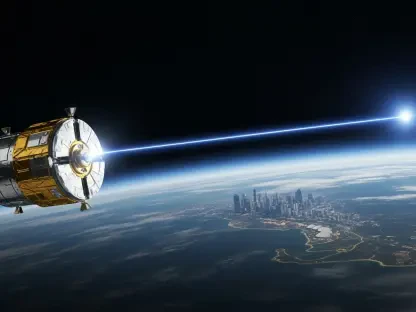
This automated agility was complemented by a game-changing fallback: a direct-to-device satellite service developed in partnership with Starlink. This technology represents the ultimate safety net, allowing users to send and receive messages even in remote areas where every single terrestrial tower has gone dark. It ensures a baseline of connectivity, transforming a potential communication blackout into a manageable, if limited, service environment.
However, the elegance of a software-driven strategy is not without its own vulnerabilities. Such a response is inherently dependent on complex automated systems, which could face unforeseen glitches under extreme stress. Moreover, relying on a third-party partner for a critical fallback like satellite connectivity introduces an external dependency that must be managed carefully to ensure reliability during a widespread emergency.
A Lifeline for the Lifesavers The Critical Mission of FirstNet
AT&T’s response highlighted a unique and critical dimension of network resilience: its public safety mandate through the FirstNet network. Here, the mission transcended simply keeping the general public connected; it was about guaranteeing a dedicated, prioritized communications channel for first responders. This was spearheaded by the FirstNet response operations group, a specialized unit ready to act at a moment’s notice.
This group, uniquely led and staffed by former first responders, understands the specific communication challenges faced during large-scale emergencies. They stood by with a dedicated fleet of more than 150 deployable assets, separate from the main consumer network fleet, ready to be dispatched to establish command-and-control communications for police, fire, and emergency medical services in the hardest-hit areas.
This specialized focus challenges the assumption that all network efforts are equal. While commercial networks aim for broad availability, FirstNet’s success is measured by its ability to provide an unbreakable, priority link for those on the front lines. This public-private partnership underscores a specialized responsibility, revealing that in a disaster, not all data packets are created equal.
Beyond Individual Tactics Unpacking the Industrys Proactive Defense Doctrine
Despite their different methodologies, all three carriers operated from a shared core philosophy: effective disaster response is built on a foundation of year-round preparation. The efforts seen during Winter Storm Fern were not improvised but were the execution of long-standing plans involving constant investment, training, and technological upgrades. This proactive defense doctrine is now the industry standard.
The distinct approaches—Verizon’s physical reinforcement, T-Mobile’s network automation, and AT&T’s specialized response teams—should be viewed as complementary components of a larger, industry-wide strategy. One hardens the target, another makes it smarter and more adaptable, and the third ensures the most critical users have a dedicated channel. Together, they create a multi-layered defense against network failure.
Looking ahead, these different approaches will likely converge into a more holistic framework for national network resilience. Future networks may combine physically hardened sites managed by AI-driven optimization engines, with satellite backhauls and integrated priority services for public safety. This fusion of hardware, software, and specialized service promises a more robust and adaptive digital lifeline for all.
Lessons from the Frontline Blueprints for Future Network Resilience
The successful navigation of Winter Storm Fern provided a clear summary of what constitutes an effective, multi-faceted network resilience strategy. It demonstrated that relying on a single approach is insufficient; the most robust defense combines hardened physical infrastructure, intelligent software automation, and dedicated human-led response teams. This layered approach ensures that if one system fails, others can compensate.
From these experiences, several actionable industry best practices emerge. Carriers must continue to diversify their investments, balancing spending between reinforcing physical assets and developing advanced software solutions like AI-powered network management. Simultaneously, strengthening public-private emergency partnerships, modeled after the success of FirstNet, is crucial to ensure that first responders are never without a communications lifeline.
For consumers and emergency planners, the storm offered practical lessons. Individuals should have a communication plan that includes knowing how to conserve their device’s battery, signing up for carrier and local emergency alerts, and understanding the capabilities of new technologies like satellite messaging. Planners, in turn, must work closely with carriers to identify critical infrastructure and pre-plan the deployment of mobile assets to best serve their communities during a crisis.
The New Normal Why a Resilient Network Is Non-Negotiable in an Era of Extreme Weather
The collective response to Winter Storm Fern reinforced an overarching conclusion: proactive and continuous investment in network resilience is no longer an option but a fundamental requirement for modern society. As severe weather events become more frequent and unpredictable, the ability of our communication networks to withstand and adapt to these shocks is paramount.
The growing importance of these advanced strategies cannot be overstated. The lessons learned and the technologies proven during this storm will become the standard operating procedure for the next. The industry is locked in a constant cycle of preparation, response, and innovation, driven by the understanding that the next superstorm is a matter of when, not if.
Ultimately, the events of the storm solidified the status of our digital lifeline as being as critical to national security and public safety as the power grid itself. Maintaining this lifeline demands a new level of innovation, collaboration between public and private sectors, and an unwavering commitment to ensuring that when everything else goes dark, our ability to connect with one another remains.