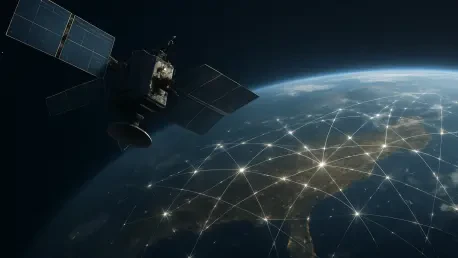

The high-stakes world of wireless telecommunications is witnessing a transformative shift as legacy airwaves once used for walkie-talkie chirps prepare for a leap into deep space. Grain Management has stepped into the spotlight with a definitive $2.9 billion agreement to acquire the 800 MHz spectrum, a move that comes after Dish Network failed to secure the necessary capital for the purchase. This acquisition is not merely a transfer of assets; it represents a calculated gamble on the burgeoning direct-to-device (D2D) market, where smartphones connect directly to satellites without the need for traditional terrestrial towers.
By securing these frequencies from T-Mobile, Grain Management is positioning itself at the center of a technological convergence. The 800 MHz band is uniquely suited for this purpose because its low-frequency nature allows signals to travel vast distances and penetrate dense structures with ease. As the industry moves toward a future where “dead zones” are a thing of the past, this spectrum acts as the essential bridge between existing mobile hardware and the orbital infrastructure currently being deployed by global satellite giants.
A $2.9 Billion Bet: The Future of Direct-to-Device Connectivity
The decision to commit billions to the 800 MHz band signals a belief that supplemental coverage from space is the next major utility. Grain Management is moving beyond the traditional role of a spectrum holder, aiming to facilitate a global network that ensures connectivity in the most remote corners of the world. This strategy effectively pivots away from the terrestrial-only model that has dominated the last few decades, focusing instead on a hybrid approach that integrates satellite constellations into the everyday mobile experience.
Furthermore, this deal provides a necessary exit for T-Mobile while simultaneously solving a regulatory puzzle for the FCC. By taking over these airwaves, Grain Management ensures that a valuable public resource does not sit idle. The investment firm is betting that the demand for ubiquitous coverage—driven by both high-end consumer expectations and critical industrial needs—will drive the valuation of these assets far beyond their initial purchase price as the D2D ecosystem matures.
From Specialized Radio to Space: The Evolution of the 800 MHz Band
The 800 MHz band has a storied history, serving as the foundational layer for Nextel’s iconic push-to-talk services before being absorbed into the portfolios of Sprint and later T-Mobile. For years, these airwaves were the workhorse of specialized mobile radio systems, prized for their reliability and wide coverage areas. However, as 5G and satellite technologies advanced, the role of this spectrum began to shift from supporting local voice traffic to potentially hosting global data streams.
Understanding this evolution is critical to recognizing why Grain Management is now seeking to redefine its use. The band’s transition from a niche industrial tool to a cornerstone of space-based connectivity reflects the broader trends in the telecommunications industry. This legacy spectrum is being revitalized, proving that even older frequency blocks can find new life when paired with modern innovations like phased-array antennas and low-earth orbit satellites.
Modernizing the ESMR Framework: Supplemental Coverage From Space
To realize its ambitious vision, Grain Management has petitioned the FCC to modernize the existing Enhanced Specialized Mobile Radio (ESMR) rules. The current regulatory framework was designed for a different era of communication, and Grain argues that specific waivers are necessary to allow satellite integration. By updating these rules, the firm aims to expand the utility of the band, allowing it to serve not just traditional radio users but also a sophisticated network of satellite operators and mobile carriers.
This regulatory push is about more than just technical specifications; it is about creating a flexible environment where spectrum can be shared across different platforms. Grain’s proposal emphasizes the need for a seamless transition that supports grid resilience for utility companies while opening the door for nationwide mobile operators. If successful, this framework will provide a legal and operational blueprint for how other legacy bands might be repurposed to support the growing demand for space-based cellular services.
Bridging the Gap: Technical Feasibility and Market Profitability
While the technical advantages of the 800 MHz band are clear, the path to financial sustainability remains a subject of intense debate among industry analysts. Joe Madden of Mobile Experts has pointed out a potential disconnect between the massive capital expenditures required for satellite constellations and the actual revenue generated by consumer D2D services. While the “gold rush” for space-based connectivity is in full swing, many questions remain regarding how many users are willing to pay a premium for emergency or remote messaging capabilities.
Consequently, the industry is looking toward mission-critical enterprise applications as the most viable route to profitability. Utility companies, emergency responders, and industrial giants require the high-reliability connections that the 800 MHz band can provide via satellite. These sectors offer stable, long-term contracts that provide a more secure financial foundation than the volatile consumer market. By focusing on these high-stakes users, Grain Management can ensure the long-term viability of its $2.9 billion investment.
Frameworks for Integration: Legacy Airwaves in Modern Portfolios
Grain Management is implementing a sophisticated strategy that balances the immediate communication needs of the utility sector with the long-term potential of the satellite market. This involves creating a versatile spectrum portfolio that can support everything from smart grid management to high-speed data for remote research stations. By prioritizing public interest alongside commercial utility, the firm is demonstrating how aging frequencies can be adapted to serve the evolving requirements of a hyper-connected global economy.
The successful integration of these legacy airwaves required a forward-thinking approach to spectrum management. Grain’s initiative sought to harmonize the technical requirements of satellite operators with the operational realities of terrestrial providers. This effort provided a roadmap for the industry, suggesting that the future of connectivity lay in the intelligent repurposing of existing assets. Stakeholders moved toward a model that valued flexibility and cross-platform compatibility, ultimately ensuring that the 800 MHz band became a vital link in the global communications chain.