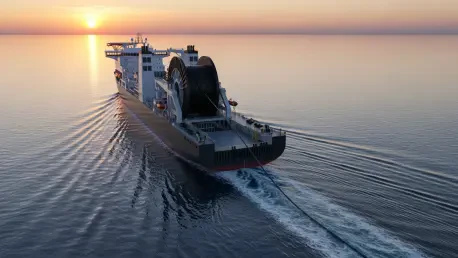

Deep beneath the Pacific Ocean’s surface, a new digital artery is being laid that promises to redefine Papua New Guinea’s future and reshape the geopolitical map of the entire region. This ambitious undertaking, a marriage of public funding and private-sector expertise, highlights a modern reality where fiber optic cables carry not only data but also the weight of international strategy and influence.
A Strategic Alliance Forging the Pacific’s Digital Future
A landmark $120 million partnership between the Australian government and global tech giant Google is set to deliver critical submarine cable infrastructure to Papua New Guinea. The project represents more than just a technological upgrade; it is a cornerstone of the newly minted “Pukpuk Treaty,” a comprehensive defense and security agreement between Australia and PNG. This integration firmly places digital connectivity at the heart of regional security, illustrating a powerful convergence of technology, defense, and international diplomacy.
This collaboration signals a new era of infrastructure development, where government objectives and corporate capabilities align to achieve shared strategic goals. By embedding this digital initiative within a broader security framework, both Australia and PNG acknowledge that a resilient, secure digital backbone is as vital to national sovereignty and economic stability as traditional defense assets.
The Geopolitical Context of Cable Activism
The project unfolds against a backdrop of intense strategic competition for influence throughout the Pacific. In recent years, digital infrastructure has become a key battleground in a rivalry primarily between the United States and its allies on one side, and China on the other. Control over the undersea cables that carry the world’s data is now a paramount geopolitical prize, and this initiative represents a concerted effort by Western partners to secure the region’s digital future.
This “cable activism” is a central plank in Australia’s broader regional connectivity strategy. The nation has committed over $299 million to bolstering digital links across the Pacific, a policy move underscored by its decision in a previous project to fund an alternative to a contract that had been awarded to Chinese tech firm Huawei. This history provides crucial context, framing the Google partnership as a deliberate step to build a trusted, Western-aligned digital ecosystem.
Project Breakdown and Objectives
A Three-Cable Strategy for National Coverage
The core of the initiative is a meticulously planned three-cable system designed to provide comprehensive national coverage and redundancy for PNG. The plan includes laying two distinct domestic cables to connect the country’s northern and southern regions, ensuring that key population and economic centers are linked. A third, crucial cable will extend to the autonomous territory of Bougainville, a region with unique connectivity needs and strategic importance.
Goals for a Digitally Empowered PNG
The project’s objectives extend far beyond simply increasing internet speeds. A primary goal is to fundamentally enhance the quality and reliability of digital connectivity across the nation. By creating a resilient multi-path network, PNG will move away from its reliance on single points of failure, safeguarding its digital infrastructure against disruptions. Furthermore, the project aims to expand digital access to previously underserved rural and remote areas, fostering greater digital inclusion and creating new economic opportunities for its citizens. Ultimately, this upgraded backbone is intended to make PNG a more attractive destination for investment from hyperscalers and global technology companies.
Google’s Unique Role as a Strategic Infrastructure Partner
This partnership marks a significant evolution in how critical public infrastructure is built, moving beyond a standard commercial transaction. Google is not merely a vendor but has emerged as a primary, trusted strategic partner for Western governments. The company’s unparalleled technical expertise in building and operating global-scale subsea cable networks provides a level of capability that is difficult for traditional telecommunication firms to match.
The arrangement underscores a powerful alignment between Google’s commercial interest in expanding its global network and Australia’s geopolitical interest in fostering a secure and stable Pacific. For Australia, leveraging Google’s resources ensures the project is completed to the highest technical standards while reinforcing its strategic aims. For Google, it solidifies its role as a foundational architect of the world’s digital infrastructure.
Solidifying a Digital Footprint Across the Pacific
The PNG cable project is not an isolated venture but a key piece of Google’s expanding and coherent strategy across the Pacific. The company has been methodically building a digital footprint that connects Pacific island nations to each other and to major global hubs. This consistent investment demonstrates a long-term commitment to the region’s digital development.
Google’s growing influence is evident in its leadership of other major regional initiatives. Projects like the Australia Connect cable, linking Australia to the U.S., and the South Pacific Connect fiber ring, which will connect Fiji and French Polynesia, illustrate the company’s central role. Through these interconnected projects, Google is effectively becoming the digital architect for much of the Pacific, shaping data flows and connectivity for decades to come.
Reflection and Broader Impacts
Reflection
The project’s greatest strength lies in its potential to catalyze transformative economic growth and digital inclusion for the people of Papua New Guinea. Enhanced connectivity can unlock opportunities in education, healthcare, and commerce that were previously unimaginable. However, the initiative is not without challenges. The logistical complexities of laying subsea cables in a geographically diverse region are significant, and the project’s execution will occur under the constant shadow of regional geopolitical tensions.
Broader Impact
This collaboration effectively cements a Western-aligned digital ecosystem in a strategically vital part of the world. By providing a credible, high-quality alternative, the project serves to counter China’s influence through its own Digital Silk Road initiative. Moreover, it sets a powerful precedent for future public-private partnerships in building secure and resilient infrastructure, offering a model that could be replicated in other regions where technology and geopolitics intersect.
Charting the Course for a Connected and Secure Pacific
The partnership between Australia, Google, and Papua New Guinea did more than just commission a new set of subsea cables; it forged a new model for strategic infrastructure development in the 21st century. It demonstrated how national security interests, technological leadership, and development goals could be woven together to produce tangible benefits for a nation while reinforcing a stable, rules-based regional order. This project has set a course for a Pacific that is not only more digitally connected but also more secure, defining the future of the region’s digital landscape.