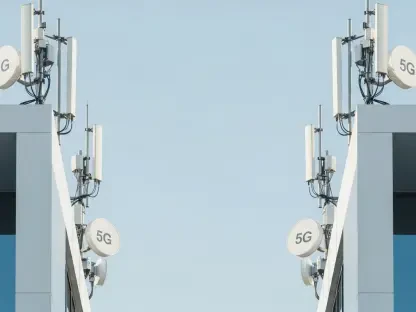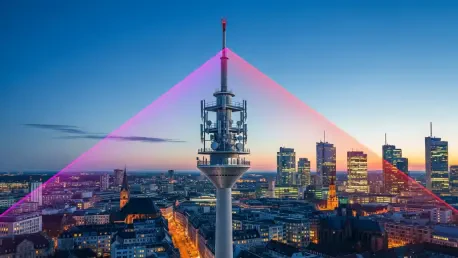

In the high-stakes arena of telecommunications, where promises of technological revolution often outpace profitable reality, Germany has emerged as the crucial battleground for monetizing 5G’s most sophisticated capability: network slicing. For years, the concept of partitioning a single physical network into multiple virtual networks tailored for specific needs was a futuristic talking point. Now, two of the industry’s titans, Deutsche Telekom and Vodafone, are translating theory into commerce. They are deploying two fundamentally different strategies in a real-world stress test that will not only determine their own financial success but also create the blueprint for how telecom operators across the globe will attempt to cash in on the true power of 5G.
Beyond the Hype: Is Germany Cashing in on 5G’s Biggest Promise?
The central conflict unfolding in the German market pits two distinct philosophies against each other. Deutsche Telekom is placing its bets on the consumer market, targeting the high-demand, latency-sensitive niche of online gaming. In contrast, Vodafone Germany is meticulously building an enterprise-driven model, offering standardized, customizable network slices to businesses with mission-critical operational needs. This divergence moves the conversation beyond theoretical benefits and into the practicalities of market adoption and revenue generation.
At stake is more than just market share in a single country; it is a live test of two pioneering business models in Europe’s most advanced 5G landscape. The success or failure of these initiatives will provide the global telecommunications industry with invaluable data on a critical question: Who is willing to pay a premium for guaranteed network performance, and how should that service be packaged and sold? The outcomes in Germany are poised to influence operator strategies for years to come.
Setting the Stage: Germany’s 5G SA Foundation Paves the Way for Innovation
This commercial experimentation is only possible because German operators have diligently built the necessary technical foundation. The key enabler is the widespread deployment of 5G standalone (SA) networks, often referred to as “true” 5G, which operates independently of previous-generation 4G LTE infrastructure. This architecture is the prerequisite for unlocking advanced capabilities like network slicing, which demand end-to-end control over network resources.
The scale of this deployment is a testament to the market’s maturity. Deutsche Telekom has established a formidable 5G SA network that now reaches a reported 99% of the population. Vodafone Germany is not far behind, with its own extensive network providing coverage to over 90% of the country. By moving decisively from infrastructure build-out to service innovation, both operators have transformed their powerful networks into commercial launchpads for the sophisticated, value-added services that 5G has long promised.
A Tale of Two Strategies: Consumer Gaming vs. Enterprise Solutions
Deutsche Telekom’s consumer-facing play is a targeted strike at the online gaming community with its “5G+ Gaming” proposition. This service is a virtual network slice specifically engineered to deliver the low latency and stable, high speeds essential for a seamless cloud gaming experience. The offering has evolved significantly, expanding from its initial support for the Sora Stream platform to include NVIDIA’s widely popular GeForce Now service. Technically, the slice is fortified with L4S technology, an advanced protocol for managing network congestion to maintain performance even during peak traffic. The entire service is integrated into the operator’s digital ecosystem, managed exclusively through the MeinMagenta customer app.
Conversely, Vodafone is charting an enterprise-first course with its “Campus Flex” service, a structured blueprint for B2B monetization. The service made waves by introducing Europe’s first standardized pricing model for private enterprise slices, removing ambiguity for business customers. It offers a premium tier at a €2,000 monthly flat rate for a fully customized virtual campus network, ideal for complex applications like autonomous vehicle operation. For less intensive needs, an entry-level tier is available for €10 per user per month, catering to applications like wireless payment terminals or push-to-talk communications. This strategy positions Vodafone’s offering as a cost-effective and agile alternative for companies that require more than public mobile broadband but are not ready to invest in a full private 5G network.
Analyst’s Take: A Cautious but Critical Step Toward Monetization
Industry experts view the German market as a pivotal testing ground. Analysts from Ookla frame Deutsche Telekom’s move as leveraging an “effectively unchallenged” position in the consumer gaming slice market. The strategy is seen less as an immediate revenue driver and more as a “retention and differentiation lever,” designed to capture incremental average revenue per user (ARPU) over the long term while adding value to its premium plans. This approach mirrors how some U.S. operators bundle specific network capabilities with their most expensive plans to reduce churn.
On the other side, Vodafone’s transparent pricing for Campus Flex is seen as setting an “early benchmark for B2B slice monetization.” It provides a clear value proposition for enterprises and establishes a tangible starting point for commercial discussions. This active commercialization stands in contrast to the broader European trend, where many operators still offer 5G SA capabilities as a free, value-added enhancement rather than a separately monetized service. The German market’s boldness also highlights a disparity with Asian markets, where mass-market consumer slicing offers are already a commercial reality.
The German Playbook: Charting Two Distinct Paths to 5G Commercialization
Deutsche Telekom’s strategy serves as a live referendum on consumer appetite for premium network performance. Its “5G+ Gaming” slice is designed to answer a fundamental question for the European market: Will a significant segment of consumers, starting with gamers, eventually be willing to pay a premium for a guaranteed quality of service? The answer will determine whether operators can successfully create and monetize tiered connectivity experiences for the mass market.
Simultaneously, Vodafone’s model acts as a litmus test for enterprise demand for Network-as-a-Service (NaaS). By offering a solution that bridges the wide gap between standard mobile broadband and a dedicated private network, Vodafone is gauging whether a viable and scalable market exists for flexible, on-demand enterprise-grade connectivity. The adoption rate of its Campus Flex service will signal the extent to which businesses value agility and cost-efficiency over the complete control offered by a private build-out.
The divergent paths taken by these two German giants are about more than domestic competition. They represent two distinct, well-defined playbooks for 5G commercialization. The lessons learned from their consumer-centric and enterprise-focused experiments will be studied closely by operators worldwide. The results that emerged from the German market have profoundly influenced global strategies, shaping how the telecommunications industry approaches the complex challenge of monetizing the full, transformative potential of 5G technology. This bold German experiment, therefore, was not just a regional race but a global bellwether for the future of mobile connectivity.