
The digital backbone supporting global economies has become so intricate that a single keyboard stroke during a routine update can trigger a catastrophic, multi-million-dollar outage. This precarious balance between essential innovation and operational fragility is driving a fundamental shift in how organizations manage the complex web of their digital infrastructure, moving away from reactive fixes toward predictive, intelligent oversight. Forward Networks has entered this arena with a significant announcement, integrating advanced artificial intelligence into its digital twin platform to address this very challenge.
When Network Complexity Becomes a Liability
Modern IT infrastructures present a difficult paradox: they are simultaneously the most critical assets for business operations and, due to their ever-increasing complexity, the most fragile. The integration of multi-cloud environments, legacy systems, and countless interconnected devices has created a landscape where full visibility is nearly impossible to achieve. This complexity means that even minor changes can have unforeseen and cascading consequences, turning routine maintenance into a high-stakes endeavor.
For the network operators on the front lines, the core challenge is balancing the need for agility and automation with the imperative to maintain stability. The pressure to deploy new services and applications quickly is immense, yet the risk of causing a service disruption looms over every decision. This tension has traditionally forced a choice between rapid innovation and conservative, risk-averse management, often stifling progress to prevent potential disasters.
The Rise of the Digital Twin
In response to this challenge, the industry is increasingly turning to digital twin technology. A network digital twin is a comprehensive, mathematically accurate software replica of an organization’s entire network, encompassing everything from on-premises hardware to sprawling cloud deployments. This virtual model behaves identically to its physical counterpart, allowing engineers to understand its current state and predict its future behavior with remarkable precision.
The adoption of this technology by leading global companies signals a broader strategic shift from reactive troubleshooting to proactive and predictive network management. By creating a safe, offline environment, digital twins allow teams to address critical concerns surrounding security, performance, and operational efficiency without ever touching the live production network. This capability transforms how organizations approach network verification, security posture assessment, and change validation.
Introducing Forward AI The Brains Behind the Digital Network
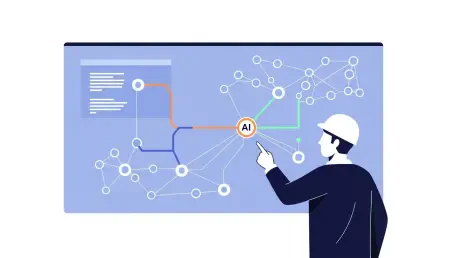
Forward Networks has officially integrated advanced artificial intelligence into its “Forward Enterprise” platform, launching a new capability named “Forward AI.” This innovation leverages the platform’s precise digital model of the network to create an interactive, intelligent environment. IT teams and even AI agents can now query the network’s behavior using natural language, asking complex questions about connectivity, security policies, and potential vulnerabilities.
The primary benefit of this integration is the creation of a sophisticated “sandbox” where innovation can flourish without risk. Engineers can simulate the impact of potential changes, test new security protocols, or automate complex workflows within the digital twin. This process validates outcomes and identifies potential issues before any code is deployed to the live infrastructure, effectively de-risking network evolution and empowering teams to operate with greater confidence and speed.
From CEO Vision to Real World Deployment
The vision behind this technology is to eliminate the guesswork inherent in managing complex systems. According to David Erickson, CEO of Forward Networks, the goal is to “ensure networks behave exactly as designed” and to establish AI as “a trusted, indispensable tool for operating critical infrastructure.” This sentiment underscores a commitment to moving beyond simple monitoring toward a state where network intent and actual behavior are perpetually aligned and verifiable.
This vision is already being realized in some of the world’s most demanding environments. The technology has found a foothold among major telecommunications giants, with companies like Verizon, Vodafone, and Boost Mobile using the platform to manage their vast and mission-critical networks. Their adoption provides powerful validation, demonstrating the technology’s effectiveness in high-stakes, large-scale deployments where reliability is non-negotiable.
The Broader Trend of AI Powered Network Simulation
Forward Networks’ launch is not an isolated event but rather a key development in a growing industry-wide movement toward AI-powered network simulation. Other technology vendors are also exploring this space, recognizing the transformative potential of combining digital twins with artificial intelligence. For instance, Viavi has been leveraging AI-driven digital twins to provide predictive capabilities for service providers, helping them anticipate and mitigate issues before they affect end-users.
The shared objective among these innovators is clear: to use sophisticated virtual models to proactively fortify networks. By simulating a wide range of network behaviors and potential disruptions in a controlled lab setting, organizations can identify weaknesses and predict anomalies. This proactive approach represented a significant leap forward, as it allowed for the transition from a reactive “break-fix” model of network management to one that was predictive, intelligent, and fundamentally more resilient.