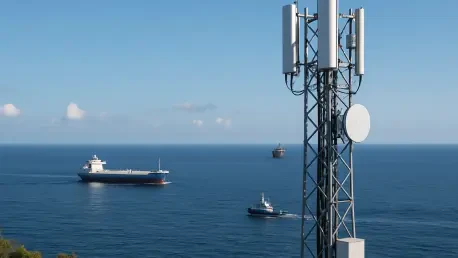

In the vast and often unpredictable expanse of the open sea, maintaining secure, high-speed, and reliable communication is not just a tactical advantage but a critical necessity for modern naval operations. Recognizing this, Ericsson has successfully conducted a groundbreaking maritime 5G Standalone (SA) network trial in a significant collaboration with defense contractor Leonardo and the Italian Navy. This initiative, which unfolded in the Gulf of Taranto as part of the Navy’s OPEX 2-25 experimentation, marks a pivotal moment for both the telecommunications and defense industries. The trial showcases a strategic expansion for Ericsson into mission-critical enterprise markets, a deliberate move designed to counteract a noticeable plateau in the traditional radio access network (RAN) market. By demonstrating the robust capabilities of 5G SA technology in one of the world’s most challenging operational environments, this test provides a compelling look into the future of military connectivity, where data flows as freely and securely between vessels as it does in a terrestrial smart city.
A Strategic Shift into Defense Applications
The technical execution of the trial provided a powerful demonstration of 5G’s potential in a naval context, far surpassing the capabilities of conventional wireless technologies. The core of the demonstration relied on Ericsson’s advanced Ultra Compact Core and Massive MIMO platforms, which were instrumental in establishing a private, secure, and real-time communication bubble between two naval vessels. The architecture involved installing sophisticated 5G SA equipment on a lead ship, which then acted as a mobile network hub, while a second vessel was outfitted with customer premises equipment (CPE) to receive the signal. This setup facilitated the seamless exchange of heavily encrypted data, a crucial requirement for mission security. The data transmitted was not trivial; it included full situational awareness feeds directly from the Combat Management System and high-definition video streams from a dozen unmanned systems operating in the area. This achievement aligns perfectly with recent corporate directives from Ericsson, whose CEO, Börje Ekholm, confirmed a plan to substantially increase investment in the defense sector starting this year, aiming to leverage the company’s inherent technological advantages for these specialized applications.
This successful military application provided a stark contrast to the broader commercial market, where the path to monetizing 5G Standalone networks has been challenging for many telecom operators. Despite an increase in deployments globally, a recent report from Omdia highlighted the difficulties carriers face in translating their significant network investments into new revenue streams. However, the Italian Navy trial underscored the immense potential of 5G SA technology in specialized, high-stakes environments that exist far beyond consumer applications. The experiment proved the viability and resilience of 5G SA in a demanding maritime setting, where its core architecture, optimized for edge computing, delivered unparalleled performance. Features like network slicing, a key differentiator of 5G SA, allowed for the creation of dedicated, isolated network channels for specific critical use cases. This capability ensured that robust, steadfast connectivity was maintained for mission-critical data flows, a feat that conventional 5G networks, which rely on older 4G core infrastructure, simply cannot support with the same level of security and reliability.