
The dawn of the new trading year has cast a spotlight on a fascinating divergence within the data center sector, revealing a market that is increasingly discerning about how it invests in the artificial intelligence revolution. On the first day of trading, a clear line was drawn in the sand: companies supplying the essential hardware for AI infrastructure experienced a significant surge, while the real estate investment trusts (REITs) that own and operate the physical data center properties saw much more restrained market activity. This split underscores a pivotal shift in investor sentiment, moving from a broad-brush approach to a more nuanced strategy that favors the direct beneficiaries of the AI build-out. Investors are now keenly focused on companies that generate immediate earnings from the insatiable demand for computational power, rather than those whose growth is tied to longer-term real estate trends. The market’s behavior suggests a maturing understanding that not all players in the data center ecosystem are poised to capture the same explosive growth, forcing a re-evaluation of where the true value lies in the age of generative AI.
Surge in Supplier Fortunes
The market’s enthusiasm was most palpable for the companies providing the critical power and cooling equipment necessary to run energy-intensive AI workloads. Vertiv Holdings (VRT) emerged as a prime example of this trend, with its stock jumping an impressive 8.4% in a single session. This surge was catalyzed by a positive reassessment from Barclays analyst Julian Mitchell, who upgraded the stock to “Overweight” and significantly raised its price target to $200. Mitchell’s analysis pointed to the stock’s recent pullback as an “attractive entry point” for investors, projecting that Vertiv’s guidance for 2026 will likely exceed consensus forecasts. This optimistic outlook, combined with the typical portfolio rebalancing that occurs at the beginning of a new year, created a perfect storm of investor interest. The underlying thesis is straightforward: as AI models become more complex, the servers running them demand substantially more electricity and generate immense heat, making advanced power management and cooling solutions not just beneficial but absolutely essential. This dynamic places companies like Vertiv at the very heart of the AI infrastructure boom.
The rally was not confined to a single company but rippled across the niche sector of infrastructure suppliers, further cementing the market’s confidence in the “picks and shovels” play of the AI gold rush. Power-management giant Eaton (ETN) saw its shares climb 2.8%, reflecting its crucial role in ensuring the stable and efficient delivery of electricity to power-hungry data centers. Meanwhile, the more speculative Applied Digital (APLD) experienced a remarkable 14.6% soar, indicating that investors are also willing to bet on emerging players that promise innovative solutions for high-density computing environments. This collective upswing highlights a targeted investment strategy focused on the tangible components of the AI build-out. The market is rewarding the innovators and manufacturers whose products directly address the physical challenges posed by advanced computing, from managing unprecedented electricity consumption to dissipating the intense heat generated by next-generation processors. This focus on the foundational layer of AI infrastructure signals a belief that these suppliers will enjoy sustained demand as the technology continues its rapid expansion.
The Landlords’ Measured Pace
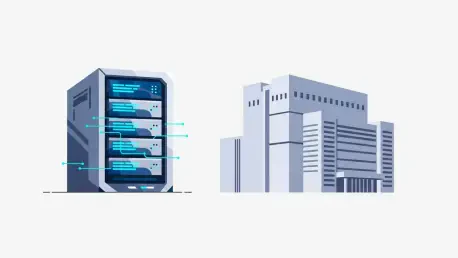
In stark contrast to the fervor surrounding equipment suppliers, the data center landlords, primarily structured as real estate investment trusts, navigated the day with far more stability than spectacle. Major players in the space, such as Digital Realty (DLR) and Iron Mountain (IRM), posted only modest gains, while industry leader Equinix (EQIX) actually saw a slight decline in its stock value. This subdued performance is not necessarily an indictment of their business models but rather a reflection of how they are valued by the market. Unlike technology hardware companies whose fortunes are directly tied to product sales and innovation cycles, these REITs trade more like traditional, interest-rate-sensitive real estate assets. Their revenue streams are based on long-term leases, and their valuations are heavily influenced by broader macroeconomic factors, including interest rates, property values, and the overall health of the economy. Consequently, they are less susceptible to the dramatic swings of high-growth tech trends but also less likely to experience the same explosive upside driven by a specific technological wave like AI.
Looking forward, the growth trajectory for these data center REITs is contingent on a different set of catalysts that investors are monitoring closely. A primary area of focus is the expansion plans of their major tenants, particularly the hyperscale cloud providers who are the biggest consumers of data center space. Securing new leases and retaining existing clients are fundamental to their success. Furthermore, the sheer availability of power has become a critical bottleneck and a key competitive differentiator. REITs that can secure access to robust power grids and offer reliable energy connections are positioned to attract the most lucrative high-density computing contracts. Pricing power is another crucial element, as the ability to charge a premium for space equipped to handle the immense power and cooling demands of AI hardware will directly impact profitability. The market is also keenly awaiting upcoming financial reports, with Applied Digital’s quarterly results on January 7 expected to provide an early signal for the sector. These factors, combined, will determine which of the data center landlords can successfully adapt and thrive in this new era.
Navigating a Bifurcated Market
The opening of the trading year crystallized the market’s bifurcated view of the data center industry. On one side, investors showed clear conviction in the immediate and tangible growth prospects of equipment suppliers, whose fortunes were directly linked to the physical demands of the AI build-out. Upcoming earnings reports from companies like Vertiv were scrutinized for evidence of accelerating order growth and expanding profit margins, which would validate the thesis that they are the primary beneficiaries of this technological shift. On the other side, the performance of data center REITs was seen through a different lens, one shaped by the broader economic landscape. The release of key macroeconomic data, including the U.S. employment report on January 9 and the Consumer Price Index on January 13, was considered highly influential for this group. These indicators were expected to impact interest rate policies, which in turn would directly affect the valuation and financing costs for these capital-intensive real estate entities. The divergent paths of these two segments provided a clear roadmap for investors, illustrating a market that had become sophisticated in distinguishing between the high-growth tech momentum of the AI revolution and the more measured, macro-sensitive realities of the infrastructure that houses it.