
A compelling but dangerously misleading narrative has taken root in American communities, suggesting that the voracious energy appetite of new artificial intelligence data centers is the primary reason your household electricity bill is climbing steadily higher. This simplistic story, casting Big Tech as a villain and ordinary families as its victims, has gained institutional traction, prompting political investigations and fueling local opposition that has stalled or blocked new projects nationwide. This framing, however, serves as a convenient political scapegoat, effectively distracting from the decades of complex regulatory failures and systemic underinvestment in our energy infrastructure that represent the true cause of rising power costs. The reality is far more nuanced and reveals that these data centers, rather than being the problem, may hold a key to a more affordable and efficient energy future for everyone.
Decoding Grid Economics: Demand Versus Scarcity
The foundational argument against data centers rests on a critical misunderstanding of how the electricity industry functions, a mistake akin to blaming a logistics company for the price of fuel. The vast majority of a consumer’s monthly electricity bill does not pay for the electrons themselves but rather for the immense fixed costs of the capital-intensive infrastructure required to generate and deliver power, including plants, transmission lines, and local distribution networks. Once this expensive system is built, the marginal cost of serving an additional customer is relatively low. Consequently, the greatest strain on affordability is not high usage, but chronic underuse of these assets. When more electricity flows consistently through the same set of wires and transformers, those immense fixed costs are spread across a greater number of kilowatt-hours, which in turn drives down the per-unit cost for all users connected to the grid. Historically, steady and significant demand has been a catalyst for lower, not higher, electricity prices.
Empirical evidence validates this counterintuitive economic principle, revealing a clear trend that directly refutes the popular narrative. Research from Lawrence Berkeley National Laboratory, analyzing state-level data, discovered that states experiencing higher growth in electricity demand generally saw smaller increases in their retail electricity prices, with some even witnessing a decline. A separate 2025 analysis concluded that large industrial customers, such as data centers, often pay rates that exceed the minimum cost required to serve them, generating surplus revenue. Utilities can then use these funds for grid-wide upgrades and modernization efforts without needing to raise residential rates. In fact, a projection from Pacific Gas and Electric in California suggested that incremental growth from data centers could lead to a reduction in average household bills by as much as two percent. This is because data centers provide a large, continuous, and highly predictable load, allowing utilities to plan and build new capacity with far greater efficiency compared to the unpredictable, spiky demand from residential users.
More Than Just Consumers: How Data Centers Invest in the Grid
Beyond their role as ideal, high-volume customers, large-scale data centers often act as direct investors in the public electrical grid, a contribution that is frequently overlooked in public discourse. It is a common industry practice for these hyperscalers to directly finance the expensive infrastructure required to support their operations. This means they often cover the full cost of building new substations, upgrading transformers, and expanding high-voltage transmission lines. These privately funded assets do not remain private; they become a permanent part of the public grid, enhancing its capacity and reliability for all surrounding homes and businesses for decades to come. This direct investment strengthens the network and provides a tangible benefit that spreads across the entire community. The result is a more robust and modern grid, paid for by a new industrial user rather than through increases in residential electricity rates.
This model is already delivering concrete benefits in communities across the country. In northern Virginia, a major hub for data centers, these facilities cover approximately nine percent of all transmission costs, a significant contribution that helps keep residential transmission rates below the national average. Similarly, in Mississippi, revenue generated from new data-center loads has been earmarked to fund essential grid modernization projects without placing any additional financial burden on household bills. These examples illustrate a crucial point: electricity prices rise when supply is unable to respond to demand. By paying for their own grid interconnections and providing a steady revenue stream for utilities, data centers are actively contributing to the supply-side solution, proving themselves to be valuable partners in building the energy infrastructure of the future rather than parasitic drains on the system.
The Real Culprit: A Politically Constrained Energy Supply
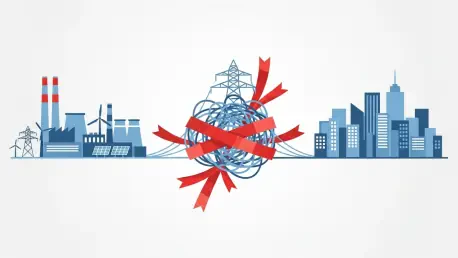
If rising demand from new technologies is not the cause of higher electricity prices, then the true answer lies not in innovation, but in politics. For decades, American policymakers have systematically constrained the supply side of the energy equation, creating an environment of artificial scarcity. The process for permitting a new power plant is notoriously slow and fraught with legal hurdles, often taking years or even decades to navigate. In a similar vein, critical new transmission lines frequently spend more time embroiled in legal challenges and regulatory reviews than they do under construction. This bureaucratic inertia has been compounded by a political and cultural bias against reliable baseload power generation, particularly nuclear energy, which has been treated as a moral failing rather than an essential component of a stable and carbon-free grid. As a result of these policy choices, existing generating capacity is being retired far faster than new capacity can be brought online to replace it.
This self-imposed supply crisis is the real engine driving higher electricity bills, a problem exacerbated by several other long-term factors. The nation’s grid is aging and in desperate need of modernization, while utilities face increasing costs associated with wildfire liability, storm hardening, and volatile fuel prices. Furthermore, the implementation of renewable energy mandates has often proceeded without the concurrent build-out of sufficient transmission capacity needed to transport that power from where it is generated to where it is needed most. These are “policy costs, not market ones.” In this context, scapegoating data centers serves as a convenient political diversion. It allows policymakers to point a finger at a new and poorly understood industry, thereby avoiding accountability for the direct and predictable consequences of their own decisions to choke off the nation’s energy supply for a generation.
An Imperative to Build for an Abundant Future
Ultimately, the path forward required a fundamental shift in perspective away from obstruction and toward aggressive construction. Instead of local governments enacting vetoes and moratoriums under the mistaken belief they were protecting residents, the real solution involved building more of everything: more power generation, more transmission lines, and more overall grid capacity. The goal should have been to create a state of energy abundance, where new demand was welcomed not as a threat to be feared but as an opportunity for economic growth and greater system-wide efficiency. This was not merely an economic issue; it was a societal imperative. Electricity was the lifeblood of a modern economy, and rationing it by failing to build had profound human consequences. It meant limiting the very computing power essential for modern medicine, such as advanced cancer care and MRI diagnostics, and restricting the assistive technologies that provided independence to individuals with severe disabilities. Progress in nearly every field depended on more, not less, energy. The failure to build the necessary infrastructure would have meant that other nations would seize the competitive advantage in a world increasingly powered by data and intelligence.