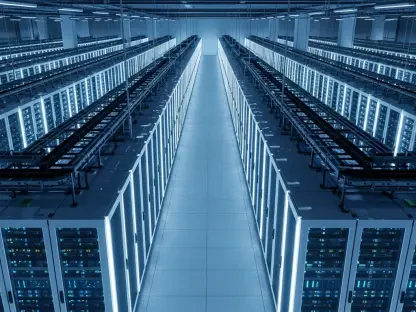

A quiet yet monumental economic restructuring is unfolding across the United States, driven by the relentless proliferation of data centers that form the very foundation of artificial intelligence, cloud computing, and countless digital services. This explosive growth has created a profound and rapidly widening gap between the immense demand for a skilled technical workforce and the current capacity of the educational system to supply it. As the nation’s reliance on this digital infrastructure deepens, the escalating shortage of qualified personnel poses a direct threat to economic competitiveness and technological innovation. The solution to this critical challenge, however, may reside within the adaptable and community-focused framework of the nation’s community colleges, which are uniquely positioned to build the talent pipeline required to sustain this vital industry. These institutions stand at a pivotal crossroads, with the opportunity to forge new pathways to prosperity for students while securing the operational bedrock of the digital age.
The Unseen Engine of the Modern Economy
Data centers have become the unseen backbone of the contemporary economy, serving as the core infrastructure that underpins a vast and growing array of modern activities essential to both public and private life. Their influence extends far beyond the tech sector, touching nearly every facet of society, from facilitating complex clinical diagnostics in hospitals and processing secure financial transactions to enabling cutting-edge university research and managing intricate transportation logistics. Municipal services, entertainment platforms, and retail operations all depend on the seamless, uninterrupted performance of these facilities. This deep integration establishes their stability not merely as a business concern but as a matter of national strategic interest. Consequently, ensuring a steady supply of skilled workers to build, operate, and maintain this critical infrastructure has become paramount to sustaining the nation’s institutional capacity and its competitive edge on the global stage.
The rapid expansion of this foundational industry has, however, precipitated a consequential workforce crisis that threatens to derail its momentum. Technology giants such as Amazon, Google, and Microsoft currently operate over 520 data centers and have an additional 400 in various stages of development, a pace of growth that has far outstripped the supply of qualified personnel. This is not a temporary imbalance but a persistent, structural shortfall creating an insufficient and lagging talent pipeline. The tangible impacts are already being felt across the industry, with data from the Uptime Institute revealing that staffing shortages have directly affected over half of all data center construction projects, leading to significant delays and backlogs that can approach a full year. This chasm between demand and supply represents a direct threat to the scalability of the nation’s digital economy, potentially constraining innovation and limiting the operational capacity of vital institutions that depend on reliable digital infrastructure.
A Unique Solution in Higher Education
Amid this growing challenge, community colleges have emerged as the ideal institutions to address the workforce gap, largely due to a direct and powerful alignment between their core strengths and the specific skills demanded by the data center industry. These complex facilities require technicians proficient in a unique blend of disciplines that are the traditional domain of career and technical education programs. The essential competencies include managing sophisticated power distribution networks, maintaining advanced cooling and thermal management systems, servicing and replacing server hardware, supporting secure information technology operations, and responding effectively to system failures. These skills are drawn from a cross-section of established community college programs, including information technology (IT), heating, ventilation, and air conditioning (HVAC), electrical and electromechanical technology, and cybersecurity, positioning these colleges as natural incubators for the next generation of data center professionals.
Simply having the right programs, however, is not enough to solve the problem; a fundamental shift in educational models is required. Data center operations are inherently cross-functional, demanding an integrated skill set that transcends the traditional academic silos that have long defined higher education. The work exists at the critical intersection of information technology and the skilled trades—two fields that have historically been treated as distinct and separate pathways. Therefore, creating new, isolated programs will not suffice. The most effective solution demands a deliberate move toward a multidisciplinary approach that fosters coordinated curricula across departments, encourages sustained collaboration among faculty from different disciplines, and pioneers innovative partnership models that forge a much closer and more responsive connection between educational training and direct, high-demand employment opportunities in the data center economy.
The Imperative of Strategic Collaboration
This formidable challenge cannot be solved by industry or academia acting in isolation; it requires the development of a deeply symbiotic relationship between employers and educational institutions. While leading technology companies have initiated their own internal training programs, such as Google’s Skilled Trades and Readiness program and Microsoft’s Data Center Technician program, these efforts alone cannot build the necessary talent pipeline at the scale and pace required to meet the industry’s explosive growth. The sheer magnitude of the demand, illustrated by examples like Amazon’s planned $15 billion investment in northern Indiana which is expected to create over 1,100 direct high-skilled jobs, can only be met through coordinated, job-ready training programs delivered by dedicated educational partners. Community colleges, with their regional focus and expertise in workforce development, are perfectly suited to become these essential partners in building a sustainable talent ecosystem.
The successful implementation of these strategic partnerships between community colleges and the data center industry unlocked a compelling set of benefits that resonated across the economy. For students, these collaborations provided clear and accessible pathways into high-wage, high-growth technology careers, with many entry-level technician roles offering salaries between $60,000 and $80,000 and requiring only an associate degree or a specialized credential. This, in turn, strengthened regional economies by directly aligning training programs with the immediate and future needs of local employers, fostering a virtuous cycle of opportunity, innovation, and economic resilience. Ultimately, these alliances helped to shape and secure the highly skilled workforce that became the bedrock of the nation’s digital infrastructure, ensuring its capacity for continued growth and global leadership for the foreseeable future.
Building the Workforce for a Digital Future
The proactive engagement of community colleges proved to be more than a solution to a labor market issue; it was a strategic imperative that secured the nation’s technological future. The recognition that the entire digital economy faced a growth ceiling without a sufficient supply of qualified workers to build, operate, and maintain these critical facilities spurred decisive action. Sustained public support, enabling policies, and a broad adoption of more flexible credentialing approaches, such as stackable credentials and accelerated training models, became the norm. This institutional agility allowed the educational system to adapt to the rapid pace of change within the data center economy. In the end, the question for community colleges was not whether to engage but how quickly and effectively they could adapt to play their central, indispensable role. Their success in this endeavor met a critical labor demand and also enhanced national technological capacity, economic resilience, and access to opportunity in the digital age.