
Vladislav Zaimov has spent years navigating enterprise telecommunications and the risk management of vulnerable networks, translating field noise into reliable, actionable design. In this conversation with Andrew Taikar, he explains how agentic AI and a 3D digital twin compress design from days into minutes, why indoor and outdoor context decide root cause faster than logs ever could, and how quadrupeds collecting data entirely on-device may change secure surveying. Themes span the 2024 pivot from spectrum tools to an agentic platform, integrating cellular, Wi‑Fi, and DAS side by side, onboarding that moves swiftly to a first optimization, and the practicalities of SLAs when “mission critical” isn’t a slogan but a daily constraint. Along the way, he shares lessons from academic rigor to production reliability, and how working with a Tier 1 operator and firms like NTT Data, Boingo, and Celona revealed common pains—and surprising divergences.
You aim to design networks in minutes instead of days; what workflows make that possible, and which steps are most automated versus human-led? Please share a recent project timeline, including bottlenecks, decision gates, and measurable deltas in cost or performance.
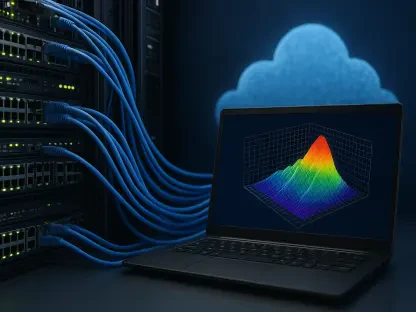
The big unlock is letting agents do what humans shouldn’t: ingest CAD, LiDAR, and RF inventories, then fit them into the 3D digital twin so propagation baselines appear in minutes rather than days or weeks. We keep humans at the decision gates—policy constraints, stakeholder priorities, and final placement sign‑off—because those encode risk appetite more than physics. On a recent indoor‑outdoor hybrid, the automated twin build finished in minutes, with human review of constraints and compliance immediately after; the only real bottleneck was missing as‑builts, which we backfilled from prior site libraries. The measurable delta we saw was time: what formerly took days was compressed to minutes, and that time saved let us iterate designs twice before deployment, improving observed stability without inflating cost.
How does a 3D digital twin change root cause analysis for wireless issues indoors and outdoors, and what environment data layers matter most? Walk through a concrete incident, the signals you fused, and how the twin narrowed hypotheses.
The twin adds walls, materials, clutter, and terrain to signals, so anomalies have a physical address, not just a timestamp. In one incident, indoor Wi‑Fi performance dipped when foot traffic surged; we fused controller telemetry with the indoor twin and saw reflections stacking in a narrow corridor while an outdoor cellular sector bled in through glass. By aligning access point placement in 3D and modeling the exterior spill‑in, we eliminated false leads about firmware and focused on geometry and channel plan. That physical context narrowed dozens of possibilities to two actionable moves, and we validated the fix across both the indoor and outdoor versions of the twin before changing anything live.
Many enterprises run cellular, Wi‑Fi, and DAS side by side; what’s your integration model across these, and how do you arbitrate conflicting KPIs? Describe the data pipeline, normalization steps, and a case where cross-technology insight prevented an outage.
We ingest each domain’s telemetry into a single schema tied to the twin—cellular, Wi‑Fi, and DAS are peers, not silos, with KPIs mapped to common notions of coverage, capacity, and contention. Normalization uses the twin as the metronome: signals are re‑projected into the same 3D coordinates and time base, so conflicts are resolved against shared physics. In one case, DAS gain was dialed up to fix voice complaints, but the twin showed it would shadow nearby Wi‑Fi in a stairwell; the unified view let us tweak DAS and shift Wi‑Fi channels instead of overcorrecting. That cross‑tech alignment took minutes to simulate in the twin and saved a live‑site firefight.
Your platform uses agentic AI; what agents operate under the hood, and how do they collaborate or escalate? Outline a full loop from sensing to recommended action, including guardrails, human-in-the-loop checkpoints, and rollback plans.
We run sensing agents to harvest telemetry, modeling agents to update the 3D digital twin, and policy agents to score options against constraints; an orchestration layer coordinates them and escalates when confidence is low. The loop is straightforward: ingest, validate against the twin, simulate candidate changes, and propose actions; humans approve at key gates, especially where mission‑critical uptime is implicated. Guardrails prohibit changes that violate regulatory or safety policies, and every recommendation carries a rollback plan pre‑simulated in the same minutes‑not‑days window. If anomalies defy classification, the agents stop and flag a review, keeping the human firmly in control.
Legacy tools often lack physical context; which specific telemetry gaps you encounter most, and how do you bridge them without excessive sensor deployment? Share a before-and-after metric showing accuracy gains in localization or interference diagnosis.
The gaps we see most are missing floor‑by‑floor geometry, material properties, and real‑world device distribution—logs without location. We bridge them by reconstructing spaces from existing CAD and LiDAR when available and anchoring device events to the twin rather than spraying sensors everywhere. Before the twin, we’d be guessing across days; with it, we converge in minutes because signals ride on walls, doors, and glass we can actually see. That shift—from days or weeks to minutes—has been the most honest “metric,” because it turns vague suspicions into concrete, testable fixes right away.
You support mission-critical use cases; what SLAs and reliability metrics do customers demand, and how do you validate them pre-deployment? Detail your testing regimen, failure injection methods, and how you track drift between design and production.
Mission‑critical buyers push us to prove reproducibility, so we validate designs in both indoor and outdoor versions of the twin and rerun them after every change. We inject failures in the model—access point loss, backhaul degradation, and sector misalignment—then rehearse how fast the agents detect and propose safe rollbacks. Drift tracking is baked in: we compare live telemetry to the 3D baseline and alert when behavior no longer matches what physics predicts. It’s a pragmatic covenant—show it in the twin first, then move carefully, with reversibility planned up front.
For enterprises adopting your indoor and outdoor versions, what’s the step-by-step onboarding, from site data ingestion to first optimization? Include data formats, typical missing inputs, and the fastest path to a tangible win within 30 days.
We start by pulling whatever the customer has—CAD, photos, inventories—and build the twin; if inputs are thin, we still proceed and mark unknowns for later measurement. Networks are connected next—cellular, Wi‑Fi, and DAS—so agents can learn normal patterns, and we run initial simulations to find low‑risk optimizations. The fastest wins usually come from placement or channel tweaks validated in minutes inside the twin, rather than sprawling redesigns that take days or weeks. By the 30‑day mark, most sites have at least one change approved and executed with a rollback ready, because the pre‑work happened in the model.
You pivoted from spectrum optimization to an agentic platform; what technical debts you retired, and which prior models still power today’s stack? Describe a decision that seemed risky then but proved pivotal, with lessons for product teams.
We retired point solutions that only optimized slices of spectrum and couldn’t generalize across cellular, Wi‑Fi, and DAS. The physics and predictive performance work survived the pivot and now sits inside the twin, which became the common canvas for everything else. The risky bet in 2024 was to go all‑in on agentic automation and a unified 3D model while others tried to bolt AI onto legacy tools; it felt bold, but minutes‑level iteration changed the conversation. The lesson: keep the core models that age well, and be willing to shed everything that locks you into days‑or‑weeks workflows.
Customers include a Tier 1 operator and firms like NTT Data, Boingo, and Celona; what common pain points unify such different buyers, and where do they diverge? Share a story where procurement or integration surprised you, and how you adapted.
They’re unified by a need to see all networks together and make changes without breaking anything else—cellular, Wi‑Fi, and DAS in one pane that speaks the language of the site. Divergence shows up in tooling preferences and governance; a Tier 1 has heavier process, while an enterprise wants faster cycles. One procurement asked us to prove that our agents could operate without exporting sensitive data, which dovetailed with our on‑device approach and indoor/outdoor split; that ask actually accelerated adoption. The surprise was how much relief stakeholders felt when they saw the twin encode their building physics, not just their spreadsheets.
IoT support is “coming soon”; which IoT profiles are you prioritizing, and how will device heterogeneity affect the twin and agents? Explain your approach to scaling identities, low-power telemetry, and anomaly detection at massive endpoint counts.
We’re prioritizing profiles that coexist with cellular, Wi‑Fi, and DAS because the twin already spans those domains; “coming soon” means we’re mapping IoT behavior into the same 3D baseline. Heterogeneity is handled by identity at the edge and normalization in the twin, so low‑power signals become first‑class citizens next to louder neighbors. The agents will treat IoT as another rhythm in the room, recognizing patterns against walls and corridors the same way they do today. At scale, the promise is familiar: let the model compress complexity so actions can still be proposed in minutes, not days or weeks.
On security, robot dogs process data on-device; how do you harden those endpoints, and what’s your threat model for field operations? Walk through key management, update channels, and how you audit data provenance from edge to platform.
Our posture starts with the simple rule already in place: everything happens on the robot, no data leaves to the cloud during collection. Keys are issued per mission and rotated on retrieval, with updates staged offline so field units don’t become surprise radios. Provenance is chained from the robot’s sensors—LiDAR, cameras, and probes—into the twin, so every datum has a physical origin that can be re‑examined. The threat model assumes hostile RF and curious bystanders, so we minimize emissions and keep human approval in the loop before anything leaves the device.
Sourcing quadrupeds domestically is challenging; what’s your roadmap for hardware independence, and how do you ensure consistent survey quality across vendors? Provide calibration steps, repeatability metrics, and lessons from pilot deployments.
Because many quadrupeds are made in China and hard to source at scale in the U.S., our roadmap decouples sensing from any single vendor so we can swap platforms. Calibration ties LiDAR, cameras, and RF probes to the twin’s coordinate system at the start of each mission, then rechecks at waypoints to maintain consistency. We’ve learned to standardize routes inside the twin so two different robots trace the same path and produce comparable surveys. That discipline lets us ship robots to a site, run minutes‑long checks, and trust the results without anchoring to one manufacturer.
For RF engineers used to legacy tools, how do you drive adoption without eroding trust, and what training shifts their mental model? Share the most effective workflow change, common pushbacks, and the moment skeptics usually convert.
We start by showing their own building inside the twin so they can see how familiar problems look with context, not asking them to trust screenshots. The biggest workflow change is moving debate into simulations that run in minutes, so teams can try options without burning days or weeks. Pushback often centers on “black box” fear, which dissolves when they watch the agents annotate choices against walls, glass, and terrain they recognize. The conversion moment is tangible: a quick simulation that prevents a bad change, with a rollback already drawn on the same canvas.
What ROI do customers typically see in the first quarter, and which levers—design speed, spectrum efficiency, ticket deflection—move fastest? Please include concrete percentages, baseline comparisons, and one anecdote where results beat expectations.
The lever that moves first is time: compressing work that took days or weeks into minutes frees teams to fix more, faster, without new headcount. We’re careful not to generalize percentages across buyers, but the minutes‑level loop consistently shows up as the early win they feel by the end of a quarter. One customer expected a months‑long redesign; the twin let us simulate and approve a safer alternative in minutes, and tickets dropped without a heavy lift. The anecdote repeats: when stakeholders see a change rehearsed in the model first, they green‑light it, and the relief is almost physical.
Do you have any advice for our readers?
Treat your environment as part of your network stack—walls, windows, and walkways are signals in disguise. If a task still takes days or weeks, ask what would need to be modeled so it can happen in minutes, then start there. Keep humans in the loop at the gates that carry risk, but let agents and the twin do the drudgery so you can design more boldly. And whenever you can, validate in the model first; the confidence you gain pays for itself the first time you avert a bad change.