
The recent sale of the monumental Cable Center building on the University of Denver’s campus is more than just a real estate deal; it serves as a powerful symbol of a fundamental power shift underway in the American telecommunications landscape. What once stood as a “crown jewel” representing an industry at its zenith is now a testament to the formidable challenges mounted by a new generation of internet providers. This transaction marks the end of an era, setting the stage for a new competitive dynamic in how Americans connect to the digital world.
The Shifting Landscape of Internet Connectivity
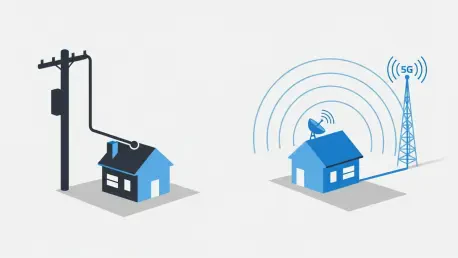
For decades, the cable industry reigned supreme, its dominance built upon a vast, physical network of coaxial and fiber-optic lines burrowed beneath cities and suburbs. This established infrastructure made cable synonymous with reliable, high-speed internet, creating a deep-rooted incumbency that seemed nearly unshakable. Consumers had few, if any, comparable alternatives, cementing cable’s position as the default choice for premium broadband access.
However, the technological ground has shifted dramatically with the rise of wireless broadband. This new front in the connectivity wars is being fought by two distinct challengers: Fixed Wireless Access (FWA), which leverages 5G cellular networks, and advanced satellite services from providers like Starlink. These technologies are untethered from the costly physical constraints of their cable counterparts, allowing them to deploy rapidly and challenge the status quo with aggressive pricing and newfound convenience.
Head-to-Head: A Feature-by-Feature Breakdown
Performance and Reliability: Speed vs. Consistency
At its best, cable internet provides a benchmark for performance that wireless services are still striving to match consistently. A direct physical connection to the network backbone means cable users typically enjoy stable, low-latency connections with speeds that reliably meet or exceed advertised rates. This makes it an ideal solution for activities where every millisecond counts, such as competitive online gaming, high-frequency trading, or seamless 4K video conferencing.
In contrast, the performance of wireless broadband can be more variable, subject to factors outside the user’s home. FWA performance, for instance, may dip during periods of heavy network congestion in a neighborhood, while satellite internet’s signal can be degraded by severe weather like heavy rain or snow. Despite these potential inconsistencies, ongoing technological advancements, including the expansion of mid-band 5G spectrum for FWA and the growth of low-Earth orbit (LEO) satellite constellations, are rapidly closing this performance gap, making wireless a truly viable high-speed alternative for a growing number of households.
Market Penetration and Subscriber Trends
The numbers paint a stark picture of cable’s current struggle. Industry titans like Comcast and Charter Communications have been reporting staggering subscriber losses, with each company shedding over 100,000 broadband customers in a single quarter late last year. This exodus highlights a growing consumer dissatisfaction with pricing and service, a trend that market analysts predict will be difficult for cable incumbents to reverse in the near term.
While cable companies are losing ground, wireless providers are experiencing a surge in adoption. FWA has successfully siphoned off a significant number of subscribers by offering straightforward, competitively priced plans without the long-term contracts or hidden fees often associated with cable. This terrestrial wireless offensive is now being complemented by an emerging threat from above, as satellite services are poised to capture market share in rural and underserved areas that have long been cable’s final frontier for growth.
Infrastructure, Innovation, and Future Growth
The core difference between these two industries comes down to their foundational infrastructure. The cable industry is built on a capital-intensive network of physical lines that are expensive to maintain, upgrade, and extend into new communities. This legacy model, while robust, can stifle agility and make rapid expansion economically unfeasible.
Wireless and satellite providers, on the other hand, operate on a more flexible and scalable paradigm. They can expand their coverage areas and increase network capacity without the massive expense of laying new cable, giving them a significant advantage in adaptability. Furthermore, the innovation trajectory appears to favor the wireless sector, with potential spectrum-sharing deals like the one between EchoStar and SpaceX promising to enhance service for millions. This push is bolstered by strong regulatory tailwinds, as federal agencies view wireless and satellite as essential tools for fostering a more competitive national broadband marketplace.
Challenges and Strategic Hurdles
Despite their momentum, wireless services are not without their own set of limitations. Potential customers must still consider factors like data caps, which can limit heavy usage, and the service’s inherent susceptibility to interference. FWA signals can be obstructed by buildings, hills, and even foliage, while satellite connections remain vulnerable to atmospheric conditions. These potential drawbacks mean that for some users, particularly those with an absolute need for uninterrupted connectivity, a wired connection remains the superior choice.
For the cable industry, the hurdles are systemic and deeply entrenched. Beyond facing intense price competition that erodes profit margins, cable companies must grapple with the immense cost of upgrading their aging infrastructure to keep pace with fiber and advanced wireless technologies. Their greatest challenge, however, may be one of perception, as they fight to reverse the narrative of decline and convince customers to stay in a market now overflowing with compelling alternatives.
Conclusion: The Dawn of a New Broadband Era
The broadband marketplace has unequivocally entered a new and fiercely competitive chapter. The cable industry, long the undisputed leader, now finds itself on the defensive, warding off a formidable two-front challenge from agile terrestrial wireless providers and innovative satellite operators. This paradigm shift signals the end of regional monopolies and the beginning of an era defined by consumer choice.
This intensified competition is ultimately a victory for households and businesses across the country. As providers vie for market share, consumers stand to benefit from more aggressive pricing, improved service quality, and a continuous stream of technological advancements. The pressure to innovate has never been greater, pushing the entire industry toward delivering faster, more reliable, and more accessible internet for everyone.
Ultimately, the ideal service now hinges on an individual’s specific needs and geographic location. Urban and suburban residents frustrated with their cable provider may find FWA offers a perfect blend of performance and value. Meanwhile, for those in rural America who have long been left behind in the digital divide, next-generation satellite broadband presents a long-awaited and transformative connectivity solution.