
The silence that descended upon thousands of households was not just an absence of sound, but a sudden and jarring disconnection from the digital world that underpins modern life. Following the destructive path of Winter Storm Fern, telecommunications giant AT&T has confirmed that extensive power failures were the direct cause of a significant network outage that left customers across five states without service. The event serves as a critical reminder of the intricate dependencies that govern our connected society, where the stability of one utility directly dictates the functionality of another.
When the Power Grid Fails Does Your Phone Line Follow
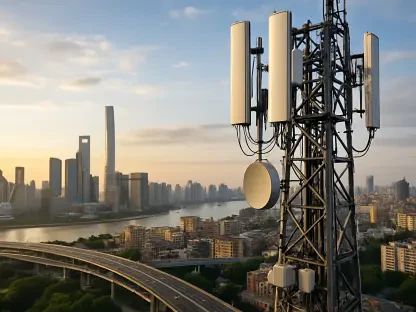
The link between electrical infrastructure and telecommunication networks is direct and absolute. Cellular towers, the backbone of mobile communication, require a constant supply of electricity to function. While many are equipped with backup systems, such as batteries or diesel generators, these resources are finite. During a prolonged event like the one triggered by Winter Storm Fern, these reserves can be depleted before utility crews can safely access and refuel them, creating a cascade of failures that silences entire regions.
This interdependency highlights a fundamental vulnerability in our digital infrastructure. As storms become more intense and widespread, the resilience of the power grid becomes the primary determining factor in maintaining communication. The loss of a signal is often not a failure of the network provider’s primary equipment but rather a secondary effect of the broader electrical blackout, a distinction that is crucial for understanding how to prevent future disruptions.
More Than an Inconvenience The Real World Impact of a Network Blackout
A network outage extends far beyond personal frustration, posing significant risks to public safety and community welfare. The inability to dial emergency services, receive weather alerts, or contact loved ones can have severe consequences, particularly for vulnerable populations. In the wake of Winter Storm Fern, AT&T’s FirstNet response group was actively deployed to support public safety agencies, underscoring the critical need for dedicated communication channels for first responders when commercial networks falter.
The economic and social disruptions are also substantial. With remote work and digital commerce now deeply embedded in daily life, a loss of connectivity paralyzes business operations and isolates communities. The recent outage, which impacted customers across Alabama, Kentucky, Louisiana, Mississippi, and Tennessee, demonstrated how quickly modern productivity can grind to a halt when the digital lifeline is severed.
Anatomy of the Outage From Winter Storm Fern to No Service
Winter Storm Fern carved a destructive path of snow and ice from Texas to Maine, leaving a wake of disruption that included over 800,000 customers without power and tragically resulted in 13 fatalities. It was within this catastrophic weather event that AT&T’s network began to experience significant strain. The company confirmed that ongoing power issues and hazardous road conditions were the primary culprits behind the service disruptions that left thousands of its users disconnected.
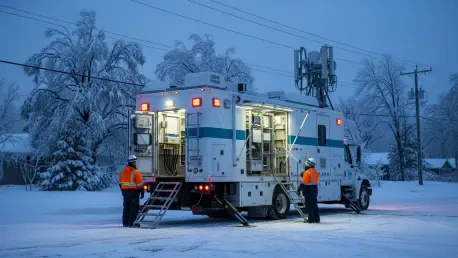
In response to the escalating crisis, AT&T activated its Network Disaster Recovery (NDR) program. This specialized initiative involves deploying mobile cell sites, generators, and expert personnel to the hardest-hit areas. The goal of the NDR is to bypass damaged local infrastructure and restore a baseline of connectivity, prioritizing support for emergency services and communities that have been completely cut off from communication networks.
Expert Insight The Critical Weakness in Our Digital Lifeline
According to industry analyst Daryl Schoolar, the recent events have cast a harsh light on the most significant vulnerability in modern telecommunications: the reliance on a stable power source. Schoolar notes that while network technology itself is remarkably robust, it is ultimately rendered useless without electricity. The most effective preventative measure against weather-related outages is not more advanced cellular technology, but rather enhanced and redundant backup power at every single network site.
This perspective shifts the focus from the telecommunications companies alone to the broader ecosystem of infrastructure they depend upon. Investing in hardened, long-duration backup power solutions, such as larger battery arrays and more accessible generator refueling protocols, is paramount. Without such measures, service interruptions will remain an inevitable consequence of severe weather events, regardless of how sophisticated the network’s core technology becomes.
The Blueprint for a Storm Proof Network Lessons in Resilience
The fallout from Winter Storm Fern provided a stark lesson in the necessity of proactive infrastructure hardening. For network operators, the path toward greater resilience involves a multi-layered strategy that goes beyond standard backup protocols. This includes diversifying power sources, fortifying physical structures against extreme weather, and establishing more agile deployment plans for disaster recovery teams and equipment. Such efforts aim to create a network that can not only withstand a storm but also recover with greater speed.
Ultimately, the incident underscored the interconnected nature of our essential services and the need for a collaborative approach to disaster preparedness. Strengthening the digital lifeline required a unified effort involving utility providers, government agencies, and telecommunication companies working in concert. The blueprint for a storm-proof network was not merely a technical document but a strategic commitment to building resilience into the very fabric of our national infrastructure.