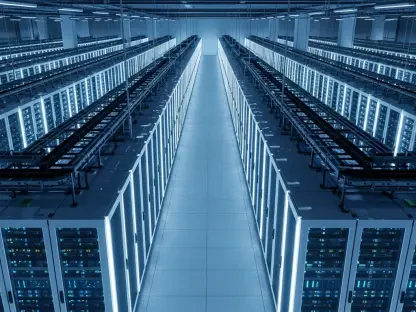

The explosive growth of artificial intelligence has ignited a seemingly unquenchable thirst for computational power, placing the data center sector at the epicenter of a modern-day gold rush. This unprecedented demand has sent shockwaves through the entire supply chain, from semiconductor giants to real estate investment trusts, creating immense value for investors. Yet, as 2025 draws to a close, a formidable new reality is setting in. The very physical infrastructure that underpins this digital expansion—the electrical grid—is beginning to show signs of strain, creating a critical bottleneck that threatens to slow the pace of innovation. This emerging power crunch, combined with the shifting tides of macroeconomic policy, is forcing investors to re-evaluate a sector where securing reliable energy is rapidly becoming as vital as designing the next generation of advanced microchips. The simple, growth-at-all-costs narrative is giving way to a far more nuanced and complex investment thesis.
The Duality of AI Demand and Real-World Constraints
Setting the Stage Year End Market Calm
The financial markets are drifting through the final, holiday-shortened trading week of the year in a state of watchful tranquility. Following a post-Christmas session marked by subdued price movements and significantly anemic trading volume—approximately 10.22 billion shares compared to a recent 20-day average near 15.98 billion—major indices like the Dow, S&P 500, and Nasdaq are holding steady. This low-liquidity environment is a critical factor for the days ahead, as it possesses the potential to magnify the market’s reaction to any unexpected economic data or geopolitical news. While the S&P 500 remains tantalizingly close to the psychological 7,000 milestone, the dominant mood is one of quiet positioning and strategic breath-catching before the new year’s trading commences. This period of calm is not being interpreted as a lack of conviction, but rather as a moment of consolidation after a period of sustained gains, setting a tense but stable backdrop for the week’s key economic releases.
This constructive pause, as some market strategists have termed it, follows an impressive eight-consecutive-month winning streak for the S&P 500, a rally that has been broad and powerful. The current quietude is seen by many as a healthy digestion of these gains, allowing the market to establish a new support level before potentially resuming its upward trajectory. The seasonal tendency for a “Santa Claus rally” in the final trading days of the year adds another layer of optimism, though the thin trading volumes make any definitive trend difficult to discern. Investors are using this lull to assess their portfolios, weighing the powerful tailwinds of technological innovation against the macroeconomic uncertainties that lie ahead. The prevailing sentiment is that while the underlying fundamentals for key sectors like technology remain robust, the path forward in 2026 will be shaped just as much by central bank policy and real-world infrastructure constraints as by corporate earnings.
The Unstoppable Force AI’s Relentless Expansion
Nvidia continues to function as the undisputed bellwether for the entire artificial intelligence supply chain, and its recent corporate maneuvers are reinforcing the narrative of relentless growth and intensifying competition. The company’s recent agreement to license chip technology from the innovative startup Groq, and to hire its CEO, is a clear indicator of the accelerating pace of specialization within the AI hardware landscape. This move is widely interpreted not just as an acquisition of technology but as a strategic absorption of key talent, underscoring the fierce war for human capital in the race to develop more efficient and powerful AI processors. Such developments signal to investors that the foundational buildout of AI infrastructure is far from complete; instead, it is entering a new phase of optimization and diversification, where even the market leader is actively seeking external innovation to maintain its edge and address new market niches.
Beyond its internal strategic moves, Nvidia’s engagement with the global market continues to be a critical driver of sector-wide sentiment. A recent report indicating the company’s intention to begin shipping its powerful ##00 AI chips to the Chinese market by the middle of February 2026 is being meticulously analyzed by investors. The Chinese market represents a substantial source of global demand for high-performance computing, and any developments related to chip exports can significantly influence hardware sales volumes and the overall revenue mix for leading semiconductor firms. This news reinforces the central theme that the global AI buildout is the primary engine of growth for the entire tech sector, but it also highlights the delicate geopolitical balancing act companies must perform. For investors, these events are a dual-edged sword: they confirm the massive, sustained demand for AI hardware while simultaneously raising the critical question of whether the sector’s meteoric expansion can continue without valuations becoming overheated or supply chains being disrupted by regulatory shifts.
The Emerging Bottleneck Power Becomes the New Priority
Identifying the Gridlock
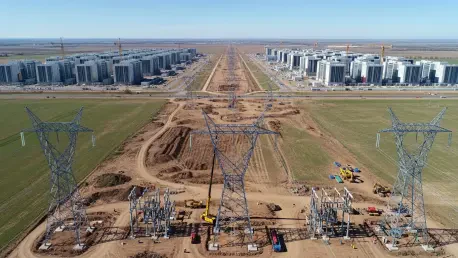
Perhaps the most formidable challenge tempering the otherwise unbridled optimism surrounding the AI boom is the growing strain on national electrical grids. A recent, detailed report has cast a stark light on the extreme delays data center developers are now facing when trying to secure grid connections for new facilities. In some overloaded regions, the wait times to get the necessary power infrastructure approved and built can stretch for as long as seven years. This is no longer a minor inconvenience but a fundamental bottleneck that threatens to derail project timelines and dramatically alter the financial viability of new developments. This gridlock is forcing a paradigm shift within the industry, where the traditional focus on acquiring land and securing fiber optic connectivity is being superseded by a more urgent and complex challenge: the quest for reliable and scalable power. This reality is reshaping the competitive landscape from the ground up.
This escalating power crunch has given rise to a new mantra within the industry: “power is the new land.” The ability to secure megawatts of electricity quickly, reliably, and at a cost-effective rate is rapidly becoming the single most important competitive differentiator for data center operators and developers. This fundamental constraint is reshaping strategic decision-making, influencing everything from site selection to facility design. Companies are now actively seeking locations not just for their real estate value or proximity to population centers, but for their access to robust power infrastructure and cooperative utility partners. For investors, this means that the traditional metrics for evaluating data center stocks are no longer sufficient. A thorough analysis must now include a deep dive into a company’s power procurement strategy, its exposure to grid-related delays, and its ability to innovate around this critical infrastructure bottleneck.
The Industry’s Pivot to On Site Generation
In a direct and pragmatic response to the crippling delays associated with grid connections, the data center industry is increasingly turning to on-site, “bridge power” solutions to maintain its aggressive expansion schedules. This strategic pivot involves the deployment of independent power generation systems directly at the data center site. Among the most common technologies being adopted are aeroderivative turbines, which are sophisticated power plants adapted from modern jet engines, prized for their rapid deployment capability and high-power output. Alongside these, traditional diesel generators are also being used as a reliable, albeit less environmentally friendly, stopgap. This trend marks a profound operational shift, transforming data centers from passive consumers of electricity into active participants in power generation, a move born out of sheer necessity to keep pace with the relentless demand from AI workloads.
This move toward energy self-sufficiency represents more than just a temporary workaround; it signals a fundamental evolution in the design and operation of digital infrastructure. By taking control of their own power supply, data center operators can decouple their construction timelines from the often bureaucratic and slow-moving processes of public utility upgrades. This allows them to bring new capacity online faster, capturing market share and responding more nimbly to the urgent demands of their largest AI and cloud computing clients. However, this independence comes at a cost, introducing a new layer of complexity related to fuel procurement, on-site maintenance, and emissions management. The industry is effectively building parallel power infrastructure, a development that has created a whole new ecosystem of suppliers and specialists and has permanently altered the risk profile and capital expenditure models for new data center projects.
A New Investment Landscape Risks and Opportunities
The industry’s urgent pivot toward on-site power generation has created a classic “picks-and-shovels” investment opportunity for those looking to capitalize on the AI boom without directly betting on chip designers or data center operators. This trend has dramatically improved the growth prospects for a wide range of industrial and energy technology companies. Firms that manufacture and supply the essential hardware for these independent power solutions—such as high-efficiency aeroderivative turbines, industrial-scale diesel engines, uninterruptible power supply (UPS) systems, and specialized energy-management software for high-density AI racks—are now in a prime position. For discerning investors, this sub-sector represents a compelling way to gain exposure to the sustained buildout of digital infrastructure by investing in the critical enabling technologies that are becoming non-negotiable for new developments.
Conversely, this growing reliance on self-generated power introduces a significant and complex new set of risks for data center developers, operators, and their investors. While on-site generation solves the immediate problem of grid delays, it can substantially increase both capital and operating expenditures due to fuel costs and maintenance requirements. Furthermore, it creates a labyrinth of new regulatory and environmental challenges. Securing permits for on-site power plants, especially those using fossil fuels like diesel, can be a time-consuming process fraught with the potential for community backlash and legal challenges related to air quality, noise pollution, and the strain on local resources. This development fundamentally complicates the investment calculus, requiring a more granular analysis that weighs the benefits of accelerated deployment against the long-term financial and reputational risks associated with becoming a de facto power utility.
Navigating the Macroeconomic Crosscurrents
The Federal Reserve Takes Center Stage
Beyond the pressing operational challenges of power and permitting, the next major catalyst for the data center sector and the broader market is macroeconomic in nature. The financial world is keenly awaiting the release of the minutes from the Federal Reserve’s most recent policy meeting. Having already enacted a series of 75 basis points in interest rate cuts during the latter half of 2025 to bring its benchmark rate into the 3.50%–3.75% range, the central bank’s next move is the subject of intense speculation. Investor attention has shifted from the question of if cuts will occur to the more nuanced questions of their future timing, pace, and ultimate destination. The language used in the forthcoming minutes will be dissected for any clues about the Fed’s outlook on inflation and economic growth, making this release the headline event of the week and a key potential driver of market volatility.
The pronouncements of the Federal Reserve carry immense weight because they directly influence the financial conditions that underpin corporate investment and investor sentiment. A more dovish tone in the meeting minutes, suggesting a faster pace of future rate cuts, could further fuel risk appetite, lower the cost of capital for businesses, and make growth-oriented technology stocks more attractive. Conversely, any hint of caution or a “higher for longer” stance on rates could trigger a rapid repricing of assets, particularly in capital-intensive sectors like data center development. This sensitivity is why the release is so critical; it has the power to either reinforce the market’s current bullish momentum or introduce a significant element of uncertainty, thereby shaping the investment landscape as the market transitions from 2025 into the new year. The Fed’s signals will ripple through the economy, impacting everything from corporate borrowing costs to consumer spending confidence.
Differentiated Sector Sensitivity
Within the broad data center ecosystem, not all stocks are created equal when it comes to their sensitivity to monetary policy. Data Center Real Estate Investment Trusts (REITs), such as industry giants Equinix and Digital Realty, are exceptionally vulnerable to shifts in interest rate expectations. Their business model is inherently capital-intensive, relying heavily on debt to finance the construction of new, multi-billion-dollar facilities. As a result, changes in borrowing costs have a direct and immediate impact on their profitability and their ability to fund future growth. Furthermore, as income-oriented investments, their dividend yields are often compared by investors to the yields on government bonds, meaning their valuation multiples can compress rapidly when interest rates are perceived to be heading higher, making them one of the most rate-sensitive segments of the tech infrastructure market.
In stark contrast to the REITs, companies that supply AI hardware and other critical data center infrastructure tend to trade more like growth-oriented technology cyclicals. Their stock performance is often less directly tied to the nuances of interest rates and more closely correlated with broad market risk appetite, overall liquidity conditions, and, most importantly, investor confidence in the continuation of the AI-related capital spending cycle. For these companies, a positive macroeconomic outlook that encourages enterprises to continue investing heavily in their AI capabilities is the primary driver of performance. This differentiation is crucial for investors, as it suggests that leadership within the data center theme could rotate between these sub-sectors. A falling-rate environment might favor the highly leveraged REITs, while a strong economic growth scenario could provide a stronger tailwind for the hardware and equipment suppliers.
An Investor’s Guide to the Week Ahead
As the market navigates the final trading days of 2025, investors focused on the data center space should closely monitor three key variables that are likely to dictate sector performance. The first of these “dials” is the trajectory of interest rates and the U.S. dollar, with the Federal Reserve’s meeting minutes representing the primary near-term risk. Any signal that shifts the market’s consensus on the future path of rate cuts could rapidly reprice rate-sensitive REITs and impact the affordability of capital expenditures across the industry. The second dial is AI capex confidence, for which news flow from Nvidia continues to serve as the most effective real-time proxy. Positive announcements on new products or strong demand signals can lift the entire ecosystem, while any hint of a slowdown could have the opposite effect. These two factors represent the core financial and demand-side drivers for the sector.
The third, and increasingly critical, dial to watch is power availability and the associated challenges of permitting. The accelerating trend of deploying on-site power generation is no longer a niche issue but a central theme that is creating a clear bifurcation in the market. This trend creates distinct opportunities for the suppliers of power equipment while simultaneously posing significant operational and financial risks for the data center developers who must now navigate this new complexity. By the close of 2025, the investment narrative had clearly evolved from a simple story of explosive growth to a more intricate tale of immense opportunity balanced by very tangible constraints. The forthcoming signals from the Federal Reserve appeared poised to be a decisive factor, potentially tilting leadership within the data center universe—whether toward AI hardware beta, infrastructure and power suppliers, or cash-flow-focused REITs—as the market prepared its transition into 2026.