
The digital architecture of a modern city is often invisible until the moment a critical video stream stutters or a high-stakes business call drops during a commute through a dense urban corridor. While the promise of ubiquitous high-speed data has been a cornerstone of the current decade, the physical reality of signal penetration remains a significant hurdle for global carriers. Airspan Networks has addressed this friction by introducing the AirUnity small cell portfolio, a versatile infrastructure solution designed to solve the persistent “last-mile” connectivity gaps that macro towers alone cannot bridge.
This launch arrives at a pivotal moment as the industry moves away from seeing network densification as a reactionary measure to temporary traffic spikes. Instead, mobile operators and private enterprises are shifting toward a philosophy of sustained, multi-year network evolution. By focusing on the practical constraints of urban planning and the increasing data appetites of the modern user, Airspan is positioning small cells as the primary engine for long-term capacity optimization rather than a secondary support system.
Bridging the Gap: High-Performance Connectivity in a Crowded World
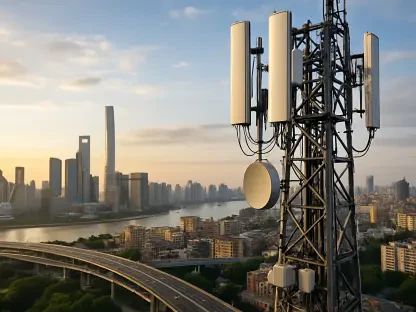
The frustration of navigating a “dead zone” in a crowded stadium or a commercial district highlights the inherent limitations of traditional cellular architecture. Macro towers provide the broad strokes of coverage, but they often struggle to penetrate deep into buildings or maintain high-throughput speeds in areas with massive device density. Airspan’s AirUnity portfolio is designed to fill these specific voids, ensuring that the transition between outdoor and indoor environments is seamless for the end user.
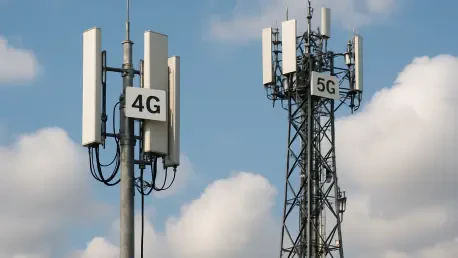
This shift represents a more mature phase of 5G deployment where the focus has moved from initial coverage maps to actual performance reliability. As mobile users demand consistent 4G and 5G experiences regardless of their physical surroundings, the industry is recognizing that densification is the only way to meet these expectations. AirUnity provides the technical foundation for this transition, offering a way to boost signal quality without the logistical nightmares associated with massive new tower construction.
The Long Game: Strategic Network Densification and Infinite Demand
Infrastructure development in complex environments is a marathon, not a sprint, often requiring a commitment that spans 24 to 36 months from initial planning to full activation. Global carriers have learned that short-term fixes are no longer sufficient to keep pace with the exponential growth of data consumption. Consequently, the strategy has shifted toward integrated, permanent solutions that can grow alongside the community.
The AirUnity launch acknowledges these timelines by providing equipment that is built for longevity and adaptability. Rather than replacing hardware every few years, operators can now invest in a platform that supports a continuous cycle of optimization. This approach aligns with the current economic reality where efficiency and scalability are just as important as raw speed, allowing for a more deliberate and effective rollout of next-generation services.
Converged Architecture: Technical Prowess of the AirUnity Portfolio
At the heart of the AirUnity line is a unified technical architecture that solves one of the most pressing dilemmas for modern operators: the need to balance legacy 4G LTE with 5G New Radio (NR). It is the first portfolio of its kind to integrate a baseband capable of supporting both standards simultaneously across standalone and non-standalone modes. This hybrid capability ensures that essential services like Voice over LTE (VoLTE) and IoT connectivity remain robust even as the network pivots toward the higher speeds of 5G.
Moreover, the hardware is engineered to handle both Frequency Division Duplex (FDD) and Time Division Duplex (TDD) spectrum. This flexibility allows operators to maximize their existing frequency assets, using mid-band waves for high-density capacity while relying on lower bands for wider area reach. By consolidating these functions into a single unit, Airspan reduces the physical footprint and power requirements of the site, making it an ideal choice for space-constrained urban environments.
Strategic Collaborations: The Move Toward Software-Defined Infrastructure
The intelligence behind AirUnity is bolstered by a significant partnership with EdgeQ, which utilizes a “base station on a chip” design. This innovation merges complex processing functions into a single, highly efficient processor, moving away from the rigid hardware setups of the past. Expert consensus indicates that this software-defined approach is the most viable path for managing the complexity of global spectrum portfolios while keeping hardware costs manageable.
By utilizing a programmable silicon platform, Airspan ensures that its small cells can be updated and refined as network standards evolve through the end of the decade. This collaboration provides a blueprint for the future of telecommunications hardware, where flexibility is baked into the silicon. This allows for rapid adjustments to network behavior without the need for expensive technician site visits or hardware swaps, significantly lowering the total cost of ownership for the operator.
Implementation Strategies: Enterprise, Urban, and Rural Environments
Deploying next-generation small cells requires a surgical approach that prioritizes economic efficiency over massive, indiscriminate overbuilds. For private enterprises and university campuses, the priority was to ensure that 5G signals could reach deep into lecture halls and office suites where macro signals often failed. In these settings, AirUnity acted as a private network backbone, providing secure and reliable connectivity for internal operations and guest services alike.
In contrast, the strategy for urban corridors focused on relieving the immense pressure placed on the macro layer during peak hours. Meanwhile, in rural and residential markets, these small cells offered a cost-effective framework for closing the digital divide. By providing high-speed access to underserved areas where traditional tower construction was financially impossible, the portfolio proved that high-performance connectivity did not have to be a luxury reserved only for the most densely populated cities.