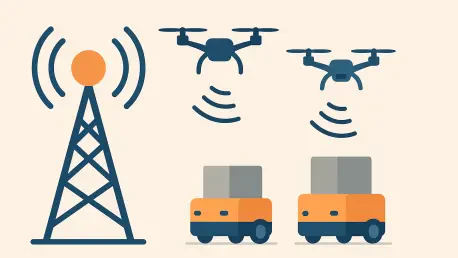

The transition to AI RAN ensures that robots and drones can operate without the massive battery drain caused by high-performance onboard processing chips. This shift represents a fundamental transformation in how physical artificial intelligence is conceived and deployed across the globe. Rather than requiring every individual unit to carry a heavy, power-hungry computational core, the intelligence is effectively outsourced to the surrounding infrastructure. This allows for sleeker, more agile robotic designs that are not weighed down by excessive hardware or cooling requirements. The current landscape in 2026 demonstrates that the commercialization of physical AI depends less on the internal mechanics of the machine and more on the robustness of the network it inhabits. Professor Kim Sung-ryun of Yonsei University has argued that the emergence of these “network brains” is the missing link needed to translate complex algorithms into fluid, real-world movements. This setup essentially turns a robot into a peripheral of the network.
Redefining Wireless Infrastructure as a Computational Engine
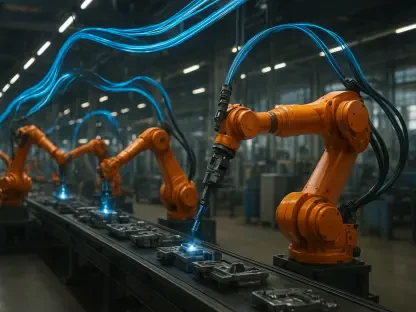
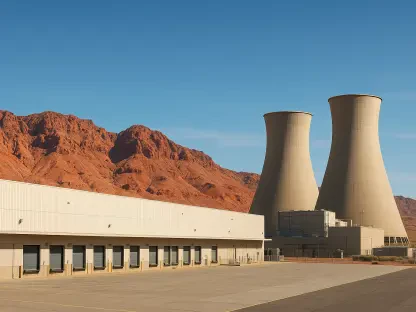
The telecommunications industry is moving away from the traditional role of providing simple data pipes and is instead hosting robust computational engines through AI RAN technology. This Virtualized Radio Access Network integrates significant computing resources, such as GPUs and CPUs, directly into the wireless infrastructure itself. By embedding these high-performance components within the base station, the network becomes capable of performing high-level AI inference and standard communication tasks simultaneously. This duality ensures a seamless flow of intelligence to any connected device, whether it is a delivery drone navigating a crowded city street or a specialized robotic arm in a manufacturing facility. The ability to process data at the edge of the network minimizes the round-trip time for signals, which is a critical factor for machines that must react to physical obstacles in milliseconds to maintain safety and operational efficiency.
Nvidia’s Aerial open-source platform has played a pivotal role in this transition by enabling software-defined, virtualized networks that prioritize computational flexibility. For robots and drones with strict power limitations, maintaining a constant connection to a nearby base station for heavy processing has become the new standard. This architecture ensures that machines can operate for extended periods without the performance throttling often seen in standalone systems. By offloading the most demanding tasks to the AI RAN, developers have managed to extend the operational life of robotic batteries by up to forty percent in some test environments. Furthermore, this approach allows for the deployment of more sophisticated AI models that would be too large to fit on a portable device. This creates a scalable environment where the intelligence of the robot can be updated or improved at the network level without needing any physical hardware modifications to the robot itself.
Validating Mobility and Industry Collaboration
A critical aspect of this technological leap has been the intensive collaboration between academic institutions and major industry players like LG Uplus. Their research has focused on verifying service continuity, ensuring that robots maintain stable connections as they transition between standard 5G networks and GPU-based AI RAN environments. This verification is essential for physical AI because any interruption in the data stream could result in a catastrophic failure of the autonomous system. The recent trials demonstrated that devices could automatically select the most efficient network available, adjusting their operational parameters in real-time based on the quality of the wireless link. This level of connectivity resilience proves that physical AI can maintain its operational integrity even while moving through complex urban environments or industrial zones with varying signal strengths. This mobility is the foundation upon which large-scale autonomous logistics and transportation systems are being built.
Beyond achieving technical stability, these collaborative testbeds have served as a vital resource for small and mid-sized enterprises that lack the capital to build their own dedicated testing networks. By providing a standardized environment for refinement, the partnership between LG Uplus and Yonsei University helps smaller firms prepare their products for both domestic and international competition. This open access is crucial for fostering a diverse ecosystem where innovation is not restricted to a few global conglomerates with the largest research budgets. Smaller manufacturers can now focus their efforts on mechanical design and specialized task algorithms, knowing that the heavy lifting of network integration and AI inference is handled by a shared, standardized infrastructure. This democratization of high-level AI resources is expected to accelerate the deployment of niche robotic solutions across various industries, from specialized healthcare assistants to local agricultural drones.
Coordinating Swarm Intelligence and Global Standardization
The potential of physical AI is fully realized when individual units work in concert rather than in isolation. In high-density environments like automated warehouses or smart ports, AI RAN facilitates collective coordination by allowing a central base station to oversee dozens of robots simultaneously. This capability enables what is known as swarm intelligence, where the network acts as a conductor for a robotic orchestra. By processing the positional data and task requirements of every unit in real-time, the central AI brain can optimize workflows and predict potential bottlenecks before they occur. This centralized oversight significantly reduces the risk of collisions and allows robots to operate in much closer proximity than was previously possible with independent onboard processing. The result is a dramatic increase in spatial efficiency and throughput, making the business case for large-scale robotic deployment much more compelling for logistics providers and manufacturing giants.
The successful integration of AI RAN technology into the global robotics industry marked a turning point for autonomous systems development. Stakeholders prioritized the development of interoperable frameworks that bridged the gap between hardware manufacturers and network providers, which was essential for overcoming ecosystem fragmentation. By adopting open-source standards like Nvidia’s Aerial, companies ensured their hardware remained compatible with the evolving 5G and 6G landscapes. Investment in edge computing was paired with advanced cybersecurity protocols to protect massive data flows between robots and their central network brains. These established secure, standardized pathways allowed autonomous systems to become both efficient and resilient against external interference. As the physical AI landscape matured, the emphasis moved from individual machine performance to the collective efficiency of the entire network, providing a clear roadmap for future deployments where wireless infrastructure serves as the permanent central nervous system.