
Global telecommunications carriers are transforming their core infrastructure into distributed computing hubs to manage the real-time demands of physical artificial intelligence. This shift represents a move away from traditional connectivity where networks merely served as tunnels for data,

Structural failures in a sensor field often stem from the compromise of critical nodes that act as indispensable bridges for data transmission across the terrain. As of 2026, the proliferation of Wireless Sensor Networks (WSNs) has transformed them into the primary nervous system for environmental

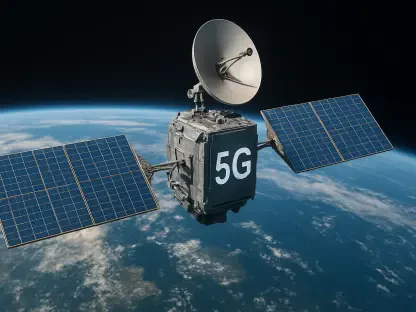
Sateliot has successfully expanded its satellite constellation to 11 low-Earth orbit units to enhance 5G non-terrestrial network capabilities for global Internet of Things connectivity. This milestone reflects a broader continental shift where connectivity is no longer strictly tethered to

Specialized transmission technologies like radio frequency and microwave systems provide essential connectivity in industrial and remote settings where physical wiring is cost-prohibitive. This technological shift represents a broader movement in the global wireless communication sector, which is

The deployment of eSIM-based connectivity ensures that livestock tracking solutions remain scalable and adaptable for global markets beyond the borders of Brazil. Precision ranching has transitioned from a niche experimental field into a critical pillar of modern agricultural economics, driven by

The convergence of network monitoring and cybersecurity within a single interface reduces the time required for industrial operators to respond to potential hardware breaches. This integration is becoming essential as the Internet of Things shifts from small experiments to massive, multi-national