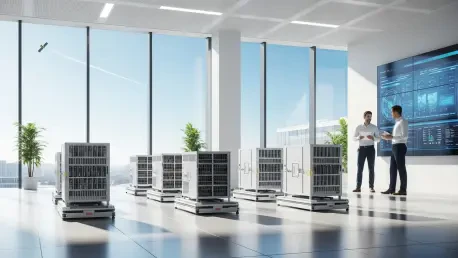

The modern enterprise currently faces a digital reality where a single minute of network downtime carries a staggering nine-thousand-dollar price tag. This financial pressure, coupled with the complexity of multi-cloud environments, has rendered the traditional "Franken-network"—a patchwork of
The shift from a mobile network infrastructure designed for human consumption to one dominated by autonomous digital entities marks a fundamental turning point in how global telecommunications must function. As AI agents begin to outnumber human subscribers, the traditional architecture of the

The End of the "Buffer Wheel" Era The frustration of a video call dropping the moment one steps into the kitchen or a gaming session lagging in the basement remains a universal modern grievance. As fiber-optic speeds reach record highs, the primary bottleneck has shifted from the street to the

The telecommunications landscape is currently undergoing a radical transformation as traditional, static infrastructure fails to keep pace with the instantaneous demands of modern digital life. While previous network generations relied on manual configurations and centralized cores that often

The telecommunications industry currently stands at a critical crossroads where the demand for hyper-personalized artificial intelligence services clashes directly with increasingly stringent global privacy mandates. As operators handle staggering amounts of sensitive information, ranging from

The rapid migration of computational intelligence from massive, centralized cooling halls to the volatile and diverse environment of the network edge has exposed a critical flaw in traditional infrastructure. As real-time applications demand instantaneous processing, the industry has reached a