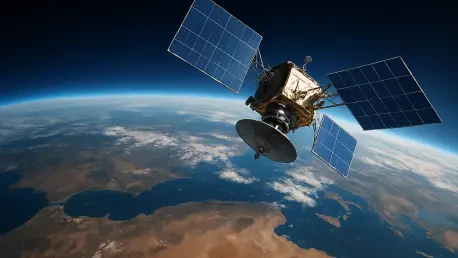

The final frontier is rapidly transforming from a distant dream into a tangible, multi-trillion-dollar economic reality, heralding a profound shift in global commerce and national strategy. Space, once the exclusive domain of geopolitical superpowers engaged in a high-stakes race, is undergoing a remarkable democratization. This new era is defined by accessible technology, reduced launch costs, and a surge of private enterprise, allowing a diverse array of nations and innovative companies to stake their claim. This analysis explores the key drivers behind this explosive economic trend, using the strategic formation of Singapore’s new national space agency as a prime case study to illuminate how nations are positioning themselves to capitalize on the vast opportunities and navigate the complex challenges of this burgeoning sector.
The Commercialization and Growth of the Space Sector
The narrative of space exploration has pivoted from one of pure scientific discovery to one of immense economic opportunity. This transition is not merely theoretical; it is backed by substantial market growth and formalized through deliberate national strategies. Countries are no longer just looking at the stars; they are creating concrete plans to integrate space-based assets into their economic and security frameworks, recognizing that a foothold in orbit is becoming essential for terrestrial prosperity and influence in the 21st century.
The Trillion Dollar Frontier Market Growth and Projections
The global space economy is experiencing exponential growth, a trend underscored by stark financial projections. Valued at an impressive $630 billion in 2023, the sector is on a trajectory to triple in size, with forecasts predicting it will reach an astonishing $1.8 trillion by 2035. This surge is fueled by what experts term the “democratization of space,” a powerful trend driven by technological innovation and falling barriers to entry. Advancements in satellite miniaturization, reusable rocket technology, and streamlined manufacturing have dramatically lowered the cost of accessing and operating in space.
Consequently, the orbital arena is no longer reserved for a handful of government agencies. A vibrant ecosystem of startups, established corporations, and a growing number of countries are now active participants. This influx of new players is accelerating innovation and expanding the scope of what is commercially viable, from Earth observation and global communications to in-orbit manufacturing and resource extraction. The result is a dynamic, competitive marketplace where agility and specialization are creating unprecedented opportunities for growth and disruption.
From Theory to Orbit A National Strategy in Action
Singapore’s establishment of the National Space Agency of Singapore (NSAS) serves as a compelling case study in how nations are translating space ambitions into actionable policy. By creating a dedicated agency, the city-state is formalizing its commitment to becoming a key player in the global space ecosystem. The NSAS is tasked with providing decisive leadership and consolidating national efforts, moving beyond ad-hoc projects to a cohesive, long-term strategy designed to secure sovereign interests and capture economic value.
The agency’s strategic initiatives are targeted and pragmatic, reflecting a clear understanding of both national needs and global trends. A core objective is the development of sovereign satellite capabilities to enhance critical services like maritime security, urban planning, and environmental monitoring. To harness the power of this data, a multi-agency operations center will be established to provide bespoke geospatial analytics for government functions. Furthermore, recognizing the growing threat of orbital debris and congestion, the NSAS will prioritize the development of Space Situational Awareness (SSA) capabilities to protect the nation’s valuable assets in orbit.
Expert Perspectives on the Evolving Space Ecosystem
The strategic importance of this new economic frontier is increasingly being recognized at the highest levels of government. As articulated by Minister Tan See Leng, space has fundamentally evolved into an accessible domain where nations beyond the traditional superpowers can make meaningful contributions. This perspective underscores a global shift where strategic investment and specialized expertise can allow smaller, technologically advanced countries to carve out significant niches and influence the direction of the industry.
This high-level government backing is critical for transforming national aspirations into a tangible reality. The stated objectives for the NSAS—to cultivate world-class R&D, foster a thriving domestic space industry, and advance international partnerships—are not merely aspirational goals but a clear roadmap for economic development. Such a comprehensive vision requires sustained political will and significant financial commitment to build the necessary infrastructure, talent pipeline, and regulatory frameworks. This approach signals to international partners and private investors that the nation is a serious and “credible contributor to the global space ecosystem.”
Navigating the Future Opportunities and Challenges
The path forward in the new space economy is paved with both immense opportunities and significant challenges. Targeted investments in emerging fields are expected to drive the next wave of innovation. For instance, advancements in satellite remote sensing are being harnessed for precise carbon monitoring to address climate change, while research in microgravity environments holds the promise of breakthroughs in human health sciences and materials development. These high-value sectors offer a pathway for nations to lead in specialized areas rather than competing across the entire value chain.
To capitalize on these opportunities, nations are increasingly focused on creating a complete domestic ecosystem, from component manufacturing to complex assembly, integration, and testing (AIT). This vertical integration accelerates development cycles and fosters a self-sustaining industrial base. However, this rapid growth also presents a formidable challenge: an increasingly congested and contested orbital environment. The critical need for robust SSA capabilities and innovative technologies for debris remediation has become a paramount concern for ensuring the long-term sustainability of space activities. Nations can further leverage their unique terrestrial strengths; for example, Singapore’s position as a premier financial and logistics hub makes it an ideal launchpad for providing regional space services and attracting global talent and capital.
Securing a Place Among the Stars
The exponential growth of the space economy has firmly established it as a critical frontier for 21st-century commerce and security. The trend showed that participation is no longer optional but a strategic necessity for nations seeking to maintain a competitive edge. Singapore’s comprehensive approach with the NSAS illustrated a powerful model for how a nation can consolidate its expertise, direct its resources, and engage with the international community to build a credible and influential presence in space.
This analysis confirmed that capitalizing on this trend required more than just ambition. Proactive national strategies, targeted investment in high-value R&D, and the development of robust, pro-innovation regulatory frameworks were essential components for success. By focusing on niche sectors where they can build a distinct competitive advantage, emerging space-faring nations have developed a viable and powerful blueprint. This strategic specialization, rather than attempting to replicate the legacy models of space superpowers, has proven to be the most effective path for securing a lasting and prosperous place among the stars.