
The fundamental architecture of telecommunications is undergoing a profound transformation, evolving from a centralized model of data processing to a distributed network where intelligence resides at the very edge of the network. This review explores Telefónica’s strategic deployment of edge cloud nodes in Spain, analyzing the key features of its plan, its performance objectives, and its role within a broader European initiative for digital sovereignty. The purpose of this review is to provide a thorough understanding of this strategy, its current implementation, and its potential future impact on the industry.
The Strategic Imperative for Telecom Edge
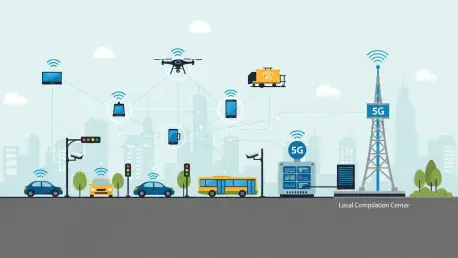
The shift toward telecom edge computing is driven by a simple yet powerful principle: reducing the physical distance data must travel to be processed. By bringing computation and storage resources closer to end-users and devices, this model drastically cuts latency, enabling a new class of real-time, interactive applications. This approach leverages advanced 5G networks and repurposed legacy infrastructure to create a distributed computing fabric.
This strategic pivot is a direct response to two critical market forces. First, the escalating demand for AI-powered services, immersive experiences, and the Internet of Things requires processing speeds that traditional cloud architectures cannot guarantee. Second, telecommunications operators face immense pressure to monetize the billions invested in 5G and fiber networks, moving beyond the role of a mere connectivity provider to become an enabler of a sophisticated digital ecosystem.
Telefónicas Blueprint for Edge Deployment
From Copper Exchanges to Cloud Nodes
Telefónica has adopted an innovative and sustainable approach to its edge expansion by converting its decommissioned copper exchanges into modern cloud nodes. Following the complete shutdown of its copper network in May 2025, the company was left with a nationwide portfolio of secure, well-connected real estate. These facilities are now being repurposed as high-availability edge data centers, a strategy that accelerates deployment while minimizing construction costs and environmental impact.
The deployment timeline for this initiative is ambitious and already well underway. With ten edge nodes currently active across Spain, the company is on track to complete its initial goal of seventeen nodes by the end of 2026. This tactical use of existing assets allows for an efficient and rapid expansion of compute and storage capacity, placing powerful processing capabilities within miles of businesses and consumers.
Enabling AI with GPU as a Service
A cornerstone of Telefónica’s edge offering is its GPU-as-a-Service model, designed to democratize access to high-performance computing. This service allows companies and public institutions to harness the power of advanced graphics processing units for demanding artificial intelligence and machine learning workloads without the prohibitive upfront capital investment in specialized hardware.
By integrating this capability directly into its edge nodes, Telefónica delivers more than just computational power. Customers benefit from the inherent advantages of the edge, including ultra-low latency that is critical for real-time AI inference and enhanced data sovereignty, as sensitive information is processed locally rather than being sent to a distant, centralized cloud.
Monetizing 5G and Fiber Networks
The new edge infrastructure is strategically designed to unlock the true commercial potential of Telefónica’s extensive 5G and fiber-to-the-home networks. The high bandwidth and low-latency characteristics of these access technologies are fully realized only when paired with proximate computing resources, enabling services that were previously technically unfeasible.
This strategy aligns perfectly with the goals of the Open Gateway project, an industry initiative to expose network capabilities through standardized APIs. The edge nodes serve as the distributed platform where developers can build and deploy advanced services—from smart factory automation to connected vehicle systems—creating a vibrant ecosystem that generates new and sustainable revenue streams.
8ra Europes Collaborative Cloud Edge Continuum
Telefónica’s strategy is not unfolding in isolation; it is a key part of a much larger, pan-European push for digital autonomy. This broader initiative operates under the framework of the Important Project of Common European Interest for Next Generation Cloud Infrastructure and Services (IPCEI CIS). Branded as 8ra, this program aims to develop a federated, multi-provider cloud-edge continuum that is secure, interoperable, and independent of non-European hyperscalers.
Supported by €1.2 billion in public funding and an additional €1.4 billion in private investment, 8ra fosters collaboration among Europe’s leading technology and telecommunications firms. Telefónica’s “Edge Plan” is one of 104 projects under this umbrella, alongside contributions from operators like Deutsche Telekom. This unified effort signals a collective commitment to building a sovereign digital infrastructure that ensures data portability and strengthens the continent’s technological competitiveness.
Driving New Revenue with Edge Native Applications
The practical value of this edge infrastructure is demonstrated through its real-world applications across various industries. Telefónica’s “Edge Plan” is explicitly designed to support a new generation of low-latency use cases that can now be effectively commercialized. This includes enabling Industry 4.0 with real-time analytics on the factory floor, advancing assisted driving systems that require instantaneous data processing, and optimizing logistics with intelligent tracking.
Furthermore, the infrastructure is poised to handle massive communication events and power sophisticated digital twins, which are virtual replicas of physical systems used for simulation and predictive maintenance. By providing the foundational platform for these edge-native services, Telefónica is not just enhancing its network; it is actively creating and monetizing an entirely new market for advanced digital solutions.
Addressing Challenges Through Infrastructure Innovation
Deploying a distributed edge network presents significant financial and logistical challenges, which Telefónica’s strategy directly addresses through innovation. The high cost of constructing new data centers from the ground up is effectively mitigated by repurposing its legacy copper exchanges, turning a decommissioned asset into a strategic advantage.
Simultaneously, the GPU-as-a-service model lowers the financial barrier for enterprises seeking to adopt artificial intelligence, stimulating demand for the new edge capabilities. On a macro level, the collaborative 8ra framework provides a strategic counterweight to the market dominance of established cloud providers, fostering a more competitive and resilient European digital landscape.
The Future of European Digital Sovereignty
The long-term vision behind these initiatives extends toward the establishment of genuine digital sovereignty for Europe. A federated cloud-edge network, built on principles of openness and interoperability, promises seamless data portability and gives customers greater control over their information. This empowers businesses and governments to operate without being locked into a single proprietary ecosystem.
Future developments, such as the Lab8ra testbed, will serve as a proving ground for new technologies and multi-provider services, further accelerating innovation across the continent. Ultimately, the success of 8ra and its constituent projects could redefine Europe’s position in the global digital economy, ensuring its ability to compete and innovate on its own terms.
Final Review and Key Takeaways
Telefónica’s strategy represented a forward-thinking and pragmatic model for modern telecommunications operators. Its effectiveness was rooted in its clever leveraging of existing assets to build future-ready capabilities, transforming sunk costs into a foundation for growth and innovation. The initiative successfully integrated infrastructure development with a clear plan for monetization through high-value services like GPU-as-a-Service and support for an edge-native application ecosystem.
The plan’s alignment with the broader 8ra initiative positioned it not just as a national project but as a vital contribution to Europe’s quest for digital sovereignty. By demonstrating a viable path to creating a distributed, intelligent network, this initiative provided a blueprint for how telcos could redefine their role in the digital age, moving from connectivity providers to central orchestrators of the next wave of technological innovation.